
One Person, One Identity: Nigeria's New NIMC Identity Law and What It Promises
by
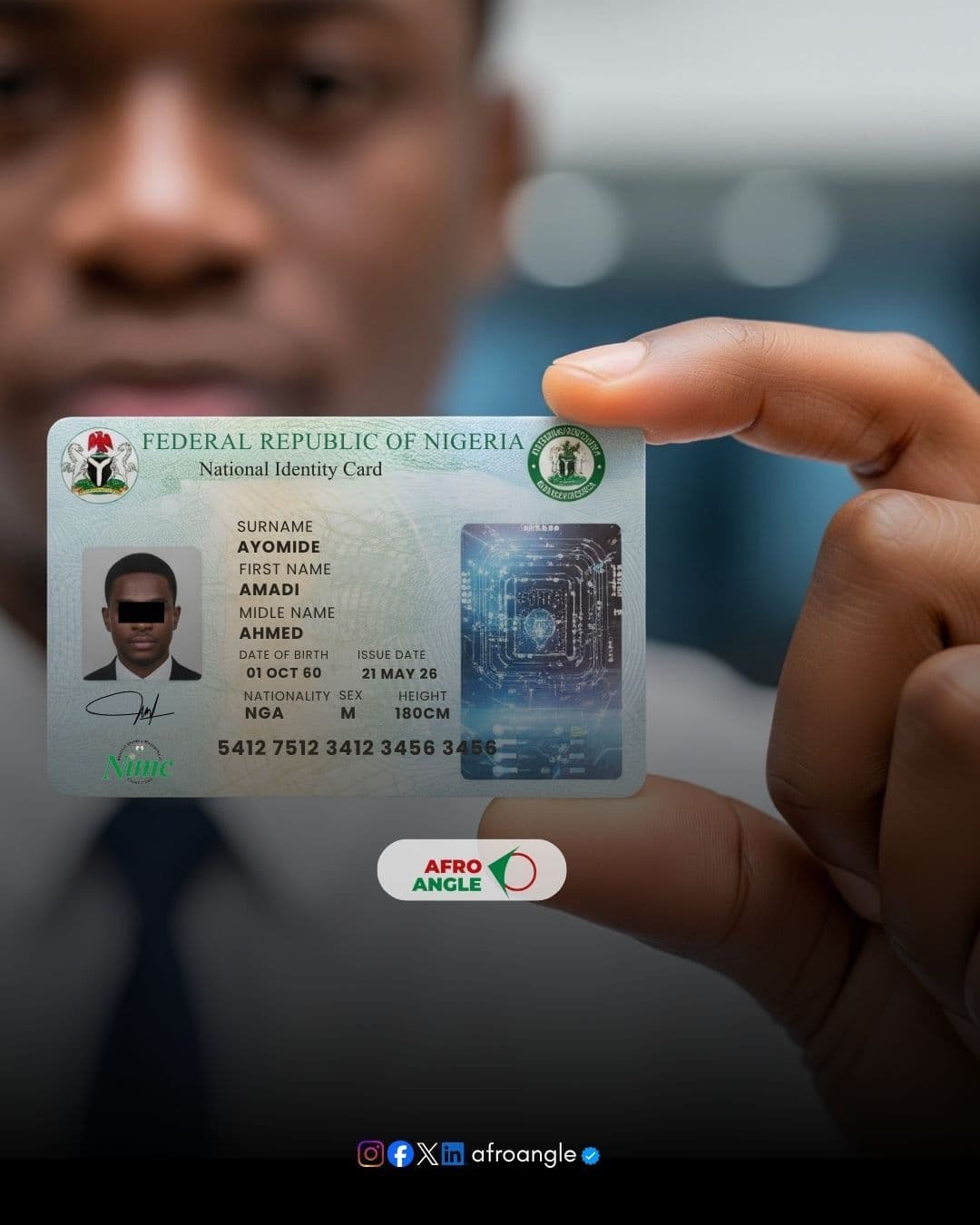
For most Nigerians, having a universal means of identification has always been a problem. Processing an international passport to travel, opening a bank account, applying for a government scheme, or even getting a driver's licence require varying documents for identification. While some agencies want your National Identification Number (NIN), some prefer a Bank Verification Number (BVN) or voter's card. Due to this tangle of cards, identification numbers and biometric captures, the average Nigerian has registered themselves into existence, at least three or four times, into systems that never connect to each other.
But on Friday, June 26, 2026, President Bola Tinubu signed the National Identity Management Commission (NIMC) Act 2026 into law aiming to fix this issue of identification faced by many Nigerians. According to the President, the Act expressly says Nigerian’s personal information cannot be accessed without their consent, cannot be used beyond the purpose for which they gave it, and any access must go through proper legal channels. Critics opine that if the Act is duly followed, it is the most serious legal attempt Nigeria has made in nearly two decades to bring the country's identity infrastructure to conform with the 21st century global standard. The original NIMC Act was signed into law in 2007, when smartphones were still a novelty and mobile money was barely a concept in most African markets.
The law created NIMC and set up the NIN as the Nigerian foundational identity credential. At the time, the law did important work, but the world kept evolving with the advent of the digital economy through technology, banking, and expansion in e-government services. The 2007 NIMC law had no real framework for digital trust, provision for protecting data in a connected economy, and no mechanism to make the NIN actually integrated across the dozens of government agencies and private institutions that were each building their own separate identity silos. Nearly two decades later, the gap between what the law provided and what the digital economy demanded had grown too wide to ignore. The new Act is an answer to fill the gap.
What the New NIMC Law Solves
The NIMC Act 2026 will be doing three broad things. First, it settles the question of who is in charge. Nigeria has too many identity systems maintained by too many institutions. NIMC now becomes the legal root of trust for all of them. In technical terms, the Act designates NIMC as the Root Certification Authority for Nigeria's National Public Key Infrastructure (PKI) and Digital Public Infrastructure (DPI). This simply means NIMC is now the single authority that certifies that a digital identity is genuine, a digital document is authentic, and that an electronic transaction can be trusted. Every government agency, bank, fintech platforms will be able to anchor their own digital services to this trusted foundation instead of building their own from scratch.
Second, it makes the NIN actually mean something across systems. The National Identification Number is now formally the cornerstone of identity in Nigeria, not just for NIMC registration, but across all public and private platforms. The principle is "One Person, One Identity." The law reinforces this, and it empowers NIMC to enforce it, cracking down on multiple registrations, identity theft and impersonation with stiffer penalties than before.
Third, it protects Nigerians' data. The new Act introduces stronger privacy safeguards, aligning Nigeria's identity framework with the Nigeria Data Protection Act (NDPA). The idea is that every Nigerian’s personal information, biometrics, address, and the next-of-kin details submitted must be handled, stored and shared in line with clear legal standards.

The Gaps the New NIMC Law Bridge
Nigeria's identity problem is not just an inconvenience. It has real economic and social consequences. Millions of Nigerians, particularly those in rural areas, people with disabilities, internally displaced persons, and those without permanent addresses have been locked out of formal systems because they could not produce the kind of documentation those systems demanded. Without identity, you cannot open a bank account, access government benefits, register a business, or in some cases even receive healthcare. The new Act specifically addresses this by introducing an identifier system for vulnerable persons and mandating measures to make enrolment accessible to underserved populations.
There is also the security dimension to it as Nigeria's fragmented identity databases have made it easier for criminals, terrorists and fraudsters to operate with multiple identities. The Interior Minister, Olubunmi Tunji-Ojo, noted at the signing ceremony that integrated databases had already helped security agencies apprehend terrorist operatives. This suggests the foundation for what the new law formalises was already showing results.
For businesses, particularly fintechs, telecommunications, insurance and any company operating in the digital economy, the absence of a reliable, linkable identity layer has been a persistent cost. Customer verification is slow, fraud detection is difficult, and building digital services on top of broken identity infrastructure is like constructing a building without a reliable foundation. The new law is meant to give them a foundation they can actually build on.
If the law is implemented well, a few things could shift in a meaningful way for ordinary Nigerians. Getting a passport, a driver's licence, or access to government welfare programmes will become less complicated, because the systems holding those services will be drawn from the same identity database. Identity verification at banks and financial platforms will become faster and more reliable. Diaspora Nigerians, who have long faced bureaucratic obstacles to accessing identity services remotely, are explicitly covered under the new framework. Digital transactions like payments, contracts, applications could also become more trustworthy. The Public Key Infrastructure provision means that digital certificates can be issued to authenticate documents and signatures in ways that are legally recognised and cryptographically secure.
What Next?
A law is only as strong as its implementation. Nigeria has a complicated history with reforms that look transformative on paper and move slowly in practice. The 2007 Act itself promised a lot and took years to deliver even partial results as most Nigerians only began registering for their NIN in significant numbers after the Central Bank tied it to Subscriber Identity Module card registration in 2020, thirteen years after the original law was passed.
The NIMC Act 2026 gives the Commission authority to issue regulations, guidelines and subsidiary instruments to bring the law to life. The process will matter enormously. Civil society, journalists, and the public will need to watch how NIMC exercises this authority — particularly around data protection, which has historically been one of the weakest links in Nigeria's digital governance. While the promise seems real, whether the infrastructure, political will and institutional capacity can match the ambition of the law is the question that will define whether this Act will be remembered as a turning point or another law that only resides on paper. The next chapter depends on what happens after the signing ceremony ends.
Waris Hamzat
Waris Hamzat is a freelance journalist and content writer based in Ibadan, Nigeria, and a recent First Class graduate of Library, Archival and Information Science from the University of Ibadan. He writes opinion and analysis on Oyo State politics, local governance, and the issues shaping everyday life in southwestern Nigeria. His reporting interests span human-centred journalism, indigenous knowledge, digital inclusivity, education, and AI literacy, with a focus on telling underreported stories at the intersection of information, technology, and society.
comments
No comments yet