
Inherited Frames: How Family Dynasties Built Nollywood Movie Industry
by

In the early 1990s, Nigeria’s film industry began to take shape with the rise of direct-to-video production, supported by video parlours that drove its reach and visibility. Starting with Video Home System (VHS) releases like Ken Nnebue’s Living in Bondage, the model evolved into Nollywood–now widely regarded as one of the world’s largest film industries by output. Nollywood produces over 2,500 films each year, contributes about 154bn to Nigeria’s GDP, and is estimated to also create over 4.2 million jobs. Box office revenue reached ₦15.6 billion in 2025 and is projected to rise to ₦20 billion in 2026, driven by cinema releases and streaming platforms.
Yet behind these headline figures lies a quieter truth: Nollywood’s endurance owes as much to a handful of multi-generational families as it does to market forces. These families have passed the torch from celluloid pioneers to digital-age storytellers, sustaining the industry through piracy crises, funding droughts, and cultural shifts. This multi-generational involvement ensures a constant influx of experienced and new talents, often resulting in intergenerational collaborations that leverage diverse skills within the same family unit. In doing so, they contribute to Nollywood’s broader economic and cultural impact, which includes job creation, export of Nigerian cultures, and the strengthening of creative industries across Africa.
Jonathan Haynes’s book Creating Nollywood: Conditions and Foundations argued that Nollywood is not a product of informal institutions but rather an industry rooted in informal social systems. Central to this emergence, according to Haynes, is the role of family, demonstrating that early filmmaking in Nigeria relied heavily on interpersonal relationships, where collaboration was driven by familiarity rather than contracts. These family-like structures became the backbone of production, enabling filmmakers to mobilize resources quickly and efficiently. This system was particularly important in the 1990s, when Nollywood’s direct-to-video model required speed and adaptability. Family networks, therefore, were not just supportive, they acted as an informal infrastructure that sustained the industry’s early growth.
Hubert Ogunde’s Travelling Theatre and the Birth of Family Dynasties in Nollywood
The travelling theatre movement in Nollywood was pioneered by Hubert Ogunde and it occupies a foundational place in the history of Nollywood and in the emergence of family-driven performance traditions in Nigeria. Beginning in the 1940s, Ogunde built one of the country’s earliest indigenous theatre companies, taking live performances across towns and cities in southwestern Nigeria. His productions blended music, dance, folklore, political commentary, and Yoruba cultural traditions, creating a distinctly African form of popular theatre at a time when colonial influence dominated formal entertainment spaces.
Ogunde’s travelling theatre also laid the structural and creative foundation for what later evolved into Yoruba-language cinema and, eventually, Nollywood itself. Many actors, dramatists, and filmmakers who shaped early Nigerian television and video films either emerged directly from travelling theatre traditions or were influenced by its style of production and storytelling. Beyond Entertainment, Ogunde’s theatre influenced the rise of families who have also contributed significantly to Yoruba-language cinema.
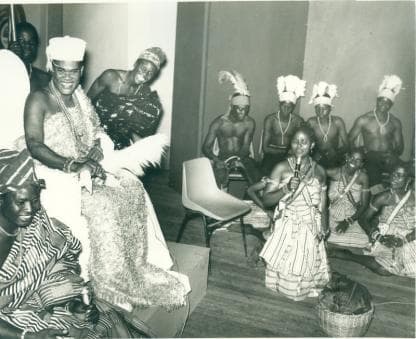
Thirty-six years after his demise, contemporary Nollywood carries his legacy’s imprint through Owobo Ogunde, Hubert Ogunde’s youngest son, who recently returned prominently to the screen with a stellar performance as Baṣorun Ogunjimi in the Netflix series Aníkúlápó: Rise of the Spectre. Owobo had earlier appeared in Ogunde’s stage and film productions as a child actor, learning directly within the family’s theatrical ecosystem.
The Ogunde family’s contribution extends beyond acting. Several of Ogunde’s children and relatives have remained connected to theatre administration, cultural preservation, and film production, ensuring that the Ogunde name continues to occupy a symbolic place in the evolution of Yoruba cinema and Nollywood. His daughter, Abosede Ogunde Oloyede, founded the Hubert Ogunde Memorial School in honour of her father’s legacy, while the Ogunde estate in Ososa, Ogun State, remains historically tied to Nigerian theatre culture. In many ways, the Ogundes represent one of the earliest examples of how family continuity helped sustain Nigeria’s entertainment industry, from the travelling theatre era to the streaming age of Nollywood.
The Amata Family: From Celluloid to Global Screens
The Amata family is one of Nollywood’s foundational pillars. The family’s story begins with John Ifoghale Amata, credited as one of the first Africans to shoot a feature film on celluloid with Freedom in 1957. His wife, Joy Amata, also featured in the production as an actress. Their children expanded that foundation. Zack Amata, the eldest son, became known through television roles in the 1980s, particularly in Behind The Clouds. Fred Amata, the second son, produced the long-running soap opera Ripples (1987–1994) and appeared in films like Mortal Inheritance (1996). Ruke Amata, the third son, worked across directing, editing, and cinematography.
The next generation pushed further. Jeta Amata directed The Amazing Grace (2006), the first Nigerian film screened at Cannes, and Black November (2012), which premiered at the United Nations. The Amata’s family cultural belonging is closely tied to the socio-political realities of the oil-rich Niger Delta, a region historically marked by environmental degradation, economic marginalization, and resource conflict. With films like, Black November, the family was able to use cinema not only as entertainment but as a platform for advocacy and sociocultural expression, drawing attention to the struggles of local communities affected by oil exploration. The Amatas’ collective output spans more than 30 feature films and countless television dramas, blending commercial appeal with sociocultural advocacy. Their story illustrates how one family bridged Nigeria’s pre-independence theatre roots and Nollywood’s global reach.
The Afolayans: A Multi-Generational Force in Nollywood
The Afolayan family remains one of the most influential families in the history of Nollywood, with contributions spanning acting, directing, production, music, scholarship, and tourism. The dynasty traces its roots to Adeyemi Afolayan (Ade Love) who emerged from the travelling theatre tradition shaped by Hubert Ogunde. Ade Love helped link stage performance and indigenous filmmaking in Nigeria. He became famous not only for his charismatic screen presence but also for innovation in storytelling, including being credited as one of the earliest Nigerian actors to play a double role in a film– an achievement that demonstrated technical creativity at a time when the industry was still evolving. Through films rooted in Yoruba culture, folklore, and morality, Ade Love helped define the narrative identity that later became central to Nollywood. The mantle has been sustained by his children, siblings, and grandchildren.

Kunle Afolayan, has become one of the industry’s leading directors and producers, known for films such as Ìràpadà, The Figurine, October 1, Citation, and Aníkúlápó, which raised production standards and expanded Nollywood’s international reputation. Gabriel Afolayan has combined acting with music production, contributing soundtracks and musical performances that blend seamlessly with Nigerian cinema. Aremu Afolayan and Moji Afolayan have also sustained the family’s strong acting tradition across Yoruba and English-language productions. Ade Love’s sister, Lola Idije, further extends the family’s influence within Yoruba cinema, reinforcing how deeply performance and storytelling are embedded within the Afolayan lineage. Kunle Afolayan’s daughter, Eyiyemi Afolayan, has already begun appearing on screen, signaling the continuation of a legacy that stretches from the travelling theatre era to the streaming age. Their enduring relevance reflects more than family fame; it demonstrates how artistic traditions can be sustained through adaptation, innovation, and collective participation.
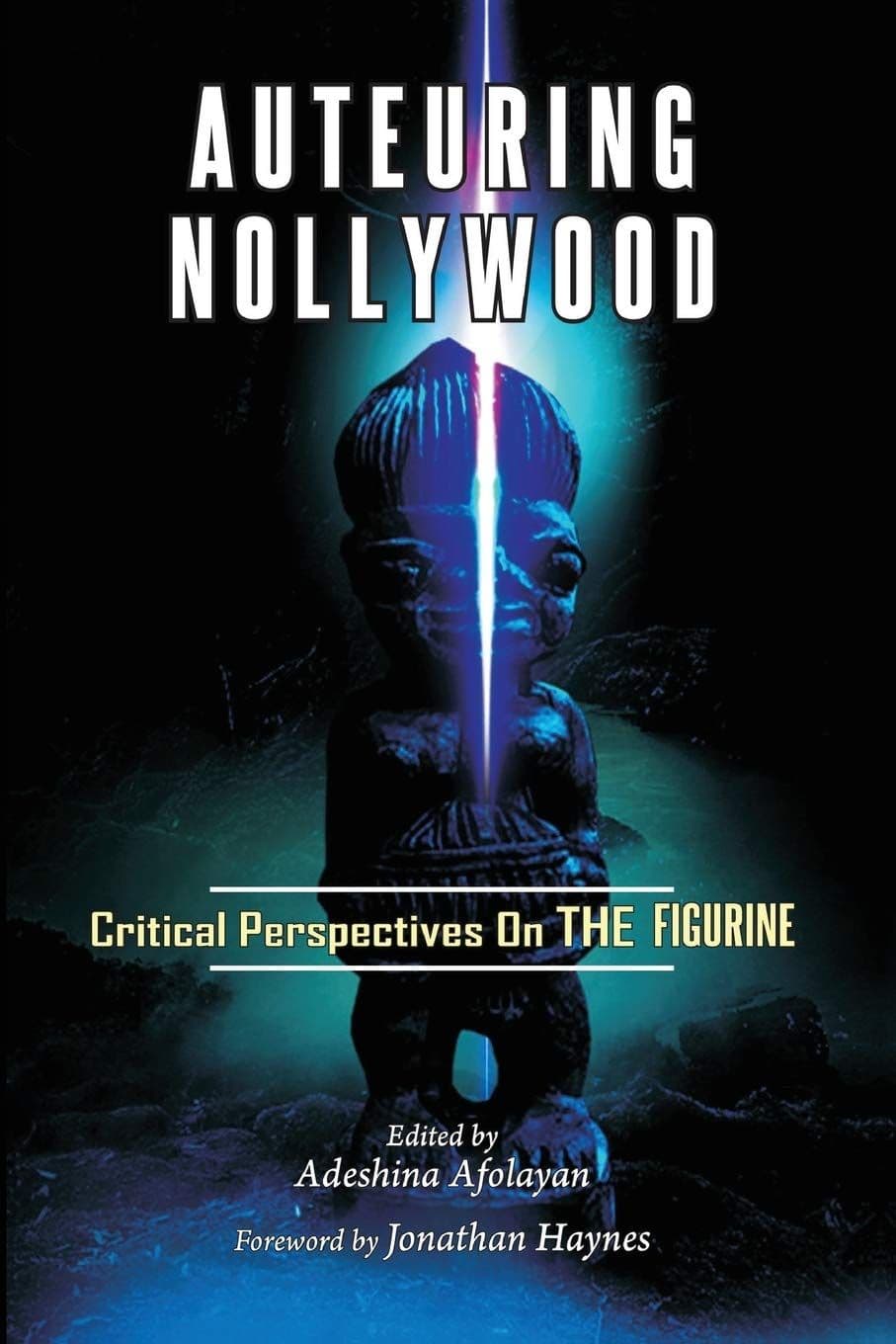
Beyond filmmaking itself, the family has contributed significantly to the intellectual and cultural discourse surrounding Nollywood. Kunle Afolayan’s brother, Adeshina Afolayan, is an academic at the University of Ibadan whose work engages philosophy, film criticism, and Nollywood studies. His scholarly reflections on Nigerian cinema including the critique of Kunle’s The Figurine, titled Auteuring Nollywood. Critical Perspectives on The Figurine, represent an important expansion of the family’s contribution from entertainment into intellectual engagement. This intersection between filmmaking and scholarship is relatively rare in Nollywood and highlights the Afolayans’ broader commitment to shaping how the world understands, interprets, and preserves Nigerian cinema.
The Afolayans have also extended Nollywood’s influence into tourism and cultural infrastructure. Through the establishment of the KAP Film Village and Resort in Igbojaye, Oyo State, Kunle Afolayan created one of the country’s most ambitious attempts to merge filmmaking, tourism, and cultural preservation. The resort serves not only as a film production location but also as a cultural destination that celebrates Yoruba architecture, food, history, and aesthetics. In doing so, the family has contributed to the growing idea of “film tourism” in Nigeria, where cinema becomes a tool for economic expansion, cultural promotion, and destination branding. This represents a major shift from the earlier days of Nollywood, when filmmakers often worked with limited infrastructure and temporary locations.
The Kosokos, Salamis, Edochies, and Ejiros: Families That Sustained Nollywood Across Generations
Several families have played defining roles in sustaining Nollywood across generations, helping the industry survive major technological and structural transitions. Jide Kosoko represents one of the most enduring legacies in Yoruba cinema. Beginning as a child actor from the famous Kosoko royal family of Lagos, he evolved from travelling theatre and television into one of Nollywood’s most recognizable faces. His career spans analogue television, VHS films, and the streaming era, while his daughters: Sola Kosoko, Bidemi Kosoko, and Temilade Kosoko continue the family’s presence in contemporary productions.
Similarly, Adebayo Salami helped transition Yoruba travelling theatre into film and television. Across more than 300 productions, he became both an actor and mentor within Nollywood’s early ecosystem. His sons, including Femi Adebayo and Tope Adebayo, now work across acting, directing, and production, reflecting how family networks sustained Nollywood through apprenticeship and collaboration.
In English-language Nollywood, the Edochie family remains one of the industry’s most respected dynasties. Pete Edochie became iconic through Things Fall Apart, while his sons Yul Edochie and Linc Edochie continue the family’s acting tradition. Meanwhile, Zeb Ejiro and Chico Ejiro shaped the VHS revolution of the 1990s, pioneering direct-to-video filmmaking and helping to establish the production framework that transformed Nollywood into a global film industry.
Family, Continuity, and the Future of Nollywood
Despite its global rise, Nollywood continues to face significant structural challenges, including rising production costs, weak distribution systems, piracy, and the migration of creative talents in search of better opportunities abroad. Yet, amid these uncertainties, family networks have remained one of the industry’s most reliable pillars of stability. From the travelling theatre era to the age of Netflix and Prime Video, these dynasties have sustained storytelling traditions, preserved technical knowledge, nurtured younger talents, and maintained cultural continuity within the industry. Their contributions reveal that Nollywood’s growth has not been driven solely by market demand or technological change, but also by inherited systems of mentorship, collaboration, and collective identity.
To discuss the rise of Nollywood without acknowledging the role of these families would be to overlook one of the industry’s most important foundations. Their legacies continue to shape the present and future of Nigerian cinema, ensuring that the flame of Nollywood burns across generations.
Abdulkabeer Tijani
Abdulkabeer Tijani is a Nigerian freelance journalist and visual storyteller with expertise on Nigeria’s media landscape. He has written for leading international media outlets including Al Jazeera, Minority Africa, International Journalists Network, The Continent, University World News and The Republic.
comments
No comments yet