
The Lifeline Sustaining the Violence in Northern Nigeria
by
Northern Nigeria Security Situation Report (August 16–22, 2026)
Introduction
In the North-east, the Nigerian military has continued its sustained air and ground offensive against the Islamic State West Africa Province (ISWAP). The campaign comes against the backdrop of the US-Nigeria joint operation in May, which Nigeria appears to have maintained, producing considerable tactical and operational results. The operations have reportedly disrupted the group's leadership and frontline fighters, including the elimination of a senior ISWAP commander known as Wal-gege. This disruption appears to have heightened concerns within the group that members could leak the movements of senior commanders to the military. ISWAP has reportedly responded by restricting communication between field commanders and fighters. While this could reduce the group's exposure to intelligence leaks, it could also create gaps in command and control that the military should seek to exploit.
At the strategic level, President Bola Ahmed Tinubu has approved the immediate preparation of a comprehensive National Threat Assessment and a rolling five-year Strategic Defence Operations Plan aimed at improving coordination across Nigeria's defence, intelligence and security capabilities. The initiative comes as the country faces an increasingly complex security environment that requires greater coordination between its various security institutions.
However, while the northern region remains the epicentre of Nigeria's violence, there are less visible actors operating behind the conflict landscape who continue to sustain and facilitate the capabilities of armed groups. These actors are often treated as secondary threats, despite their role in providing the networks, resources and logistical support that allow violent groups to remain operational. The earlier Nigeria identifies these enablers and develops a comprehensive strategy to disrupt them, the greater the chance of cutting the lifelines that continue to sustain violence across the region.
Weekly Review
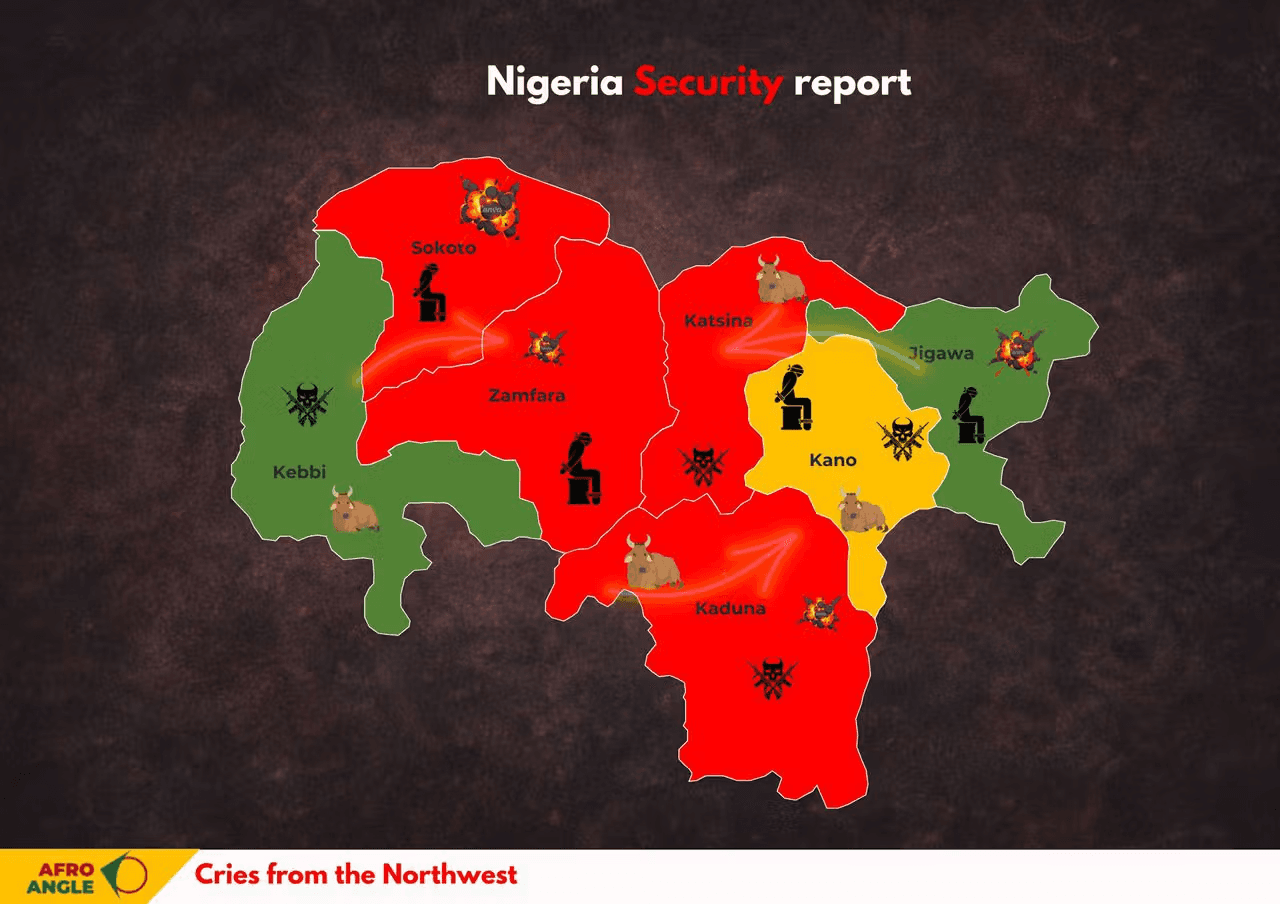
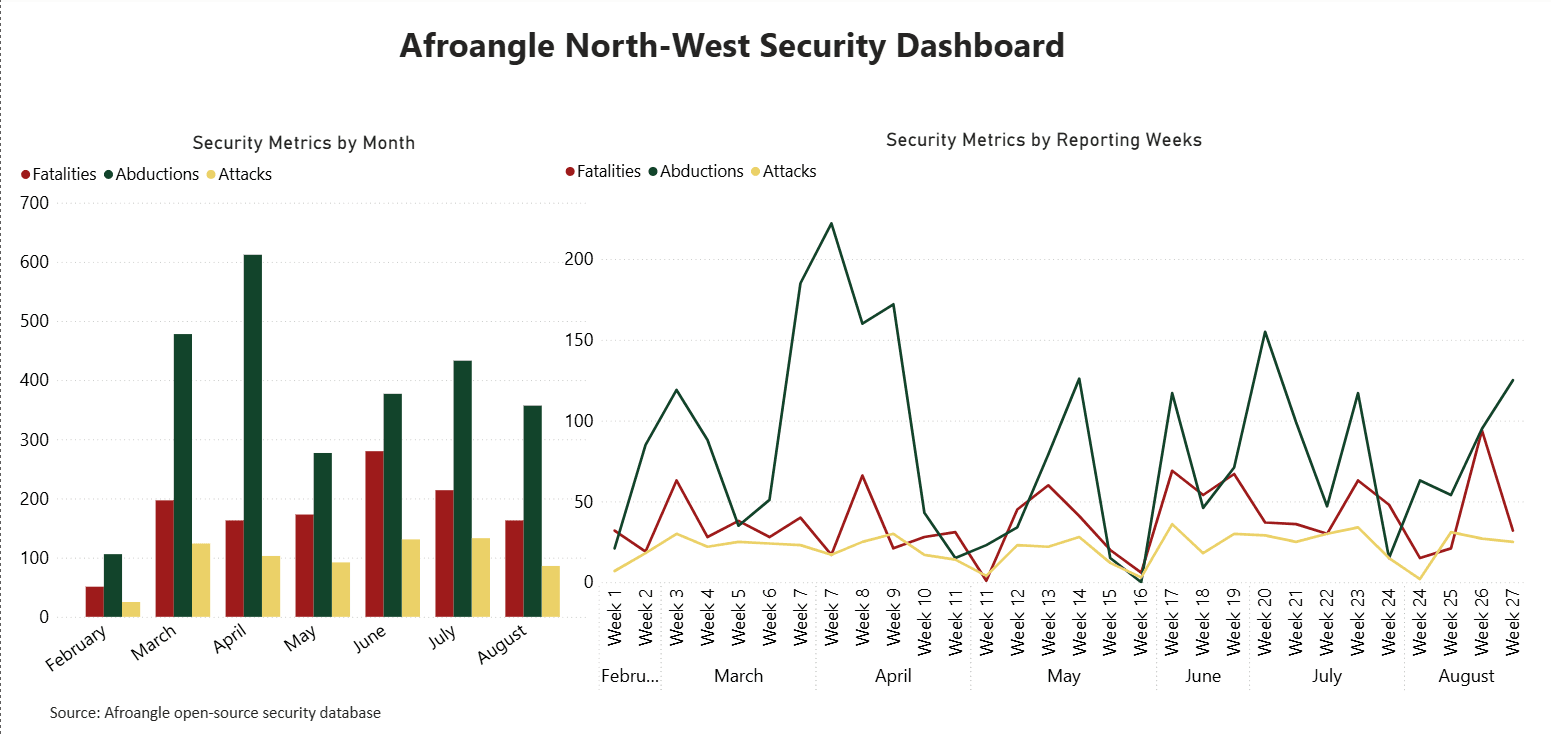
During the reporting period, violence persisted across the Northern region, with large-scale attacks and abductions recorded in several communities. Available data provides a broader picture of the security situation across the region. Abductions increased significantly by 98%, rising from 63 victims in the previous week to 125 during the reporting period. Fatalities, however, declined by 8%, from 35 to 32, while the number of incidents increased by 25%, from 20 to 25. Katsina, Zamfara and Sokoto remained the main hotspots. Katsina recorded the highest number of fatalities with 13, followed by Sokoto with 11. For abductions, Zamfara recorded 60 victims and Sokoto 36. Katsina also recorded the highest number of incidents at 17, followed by Zamfara with five, demonstrating the continued geographic spread of violence across the region.
Among the notable incidents was an attack in Kebbe Local Government Area of Sokoto State that reportedly killed 22 people and involved the rustling of a large number of cattle. In another incident in Rabah Local Government Area, at least 30 people were reportedly abducted. Sokoto has also continued to experience a surge in violence linked to Lakurawa in recent weeks.
In Musawa Local Government Area of Katsina State, community security forces repelled an attack by bandits attempting to abduct residents. In Zamfara, armed bandits reportedly killed two people and abducted 40 others in the Tungar Bore community, Talata Mafara. An IED explosion was also reported along the Gwasho-Gurusu road in Bukkuyyum Local Government Area, targeting civilians returning from the market. Similar attacks involving IEDs have become increasingly common along key highway corridors in the state, including in Anka Local Government Area.
In the North-central, activities linked to Lakurawa and communal clashes continue to escalate. In Borgu Local Government Area of Niger State, Muslim worshippers were reportedly kidnapped from a place of worship during Friday prayers. The group also attacked three communities, including Dekara, where 60 people were reportedly abducted, although local sources indicated that the actual number of victims could be higher. The incident points to the growing volatility of the Kainji-Borgu corridor and the vulnerability of communities along the route. Armed groups are increasingly relying on the corridor for movement and operations. The same area was previously linked to the Woro attack and mass kidnapping attributed to JAS-Sadiku, further highlighting its strategic importance to armed groups operating across the region.
In Plateau State, communal violence between Berom, Fulani and Mwaghavul communities has also continued to escalate. At least 20 people were reportedly killed in Binper community, Mangu Local Government Area, in what appears to be another episode of retaliatory violence that has increasingly characterised tensions between the competing communities in recent weeks.
How Informants and Logistics Suppliers Sustain the Violence Cycle
Across northern Nigeria's conflict landscape, the activities and operations of armed groups have remained central to policymaking, military strategy, academic research and security analysis. However, there are secondary actors deeply embedded within the conflict environment whose activities continue to sustain the violence cycle. These include informants and logistics supplier networks. The former Chief of Defence Staff previously described these networks as the "oxygen and lifeblood" of insurgency, highlighting how difficult it is for armed groups to sustain their operations without them.
Minors (Children) as informants
In the North-east, there have also been reports of children being used as informants because their presence attracts less suspicion. They can provide information on troop movements, scout communities and identify wealthy residents, community leaders or specific houses that could be targeted for kidnapping. Armed groups have also recruited unemployed or disgruntled young people within communities to provide information in exchange for financial incentives.
Rouge Security Personnel as informants
There are also compromised insiders who have access to sensitive information. These can include rogue security personnel, local vigilantes or traditional leaders who pass information to armed groups, either for financial gain, under coercion or because of local grievances. Their access to information can make them particularly valuable to armed groups operating in areas where security forces maintain a presence.
Logistics suppliers as informants
Informants and logistics suppliers have a strategic advantage because they are often invisible, locally embedded and difficult to distinguish from ordinary members of the communities in which they operate. Informants effectively serve as the eyes and ears of armed groups, providing actionable intelligence on troop movements, patrol routes and military positions. This information can be used to plan ambushes against military patrols and bases.
On the logistics side, suppliers and couriers sustain armed group operations by moving ammunition, food, fuel and medication from urban centres into forests and camps. Fuel transported in jerrycans, for instance, helps sustain the motorcycles that armed groups rely on for mobility. Suppliers also move basic provisions such as rice, maize and other food items to camps, helping sustain fighters and kidnapped victims held in captivity.
The network extends beyond basic supplies. Communication and technological equipment, including mobile phones, solar panels and commercial drones, can also be supplied through these networks. While armed groups have traditionally relied heavily on unemployed young men as couriers, they have increasingly adapted their methods by using individuals who attract less suspicion, including women, girls and older people.
Victims or Vanguards
It is important to recognise that not everyone involved in these networks participates willingly. Some individuals are coerced, while others are motivated by the financial incentives offered by armed groups. Regardless of the motivation, these networks remain important enablers of armed group operations and are often overlooked when assessing the threat environment.
The government has taken steps to disrupt these networks, including more rigorous checks at military checkpoints and increased efforts to identify suspicious movements and individuals. However, the clandestine nature of these networks makes them difficult to detect. Many of those involved can move through communities without attracting attention, making it difficult for security forces to distinguish between ordinary civilians and individuals supporting armed groups.
This means the government needs to treat these networks as a distinct component of the security threat. A more targeted counter-strategy should combine improved intelligence and situational awareness among troops with community-based messaging designed to discourage assistance to armed groups. Economic empowerment programmes should also target vulnerable individuals who may be attracted by the financial incentives offered by these networks.
Disrupting informant and logistics networks is as important as degrading the armed groups themselves. If the networks that provide intelligence, mobility, food, fuel and equipment are weakened, armed groups will find it increasingly difficult to sustain their operations and maintain their presence in affected communities.
Outlook
In the coming weeks, the security situation across northern Nigeria is likely to remain challenging as armed groups continue their operations while the military intensifies its counter-offensive.
In the North-east, the Nigerian military is likely to sustain its offensive against ISWAP. Under increasing pressure, ISWAP may respond with larger attacks against vulnerable military positions. This will require sustained surveillance around military super camps, outposts and Forward Operating Bases (FOBs) across Borno, Adamawa and Yobe states.
The North-west will likely continue to experience attacks from both bandit groups and insurgent organisations such as Lakurawa as security forces intensify operations against them. The threat could also continue expanding towards the North-central, particularly around the Kainji-Borgu corridor. The convergence of armed groups operating across this area, combined with the region's difficult terrain and vulnerable communities, could sustain elevated levels of violence as the military responds to recent abductions and other attacks.
Afroangel Intel Admin
Afroangle Intel Admin
comments
No comments yet