
Clash Abroad, Cries at Home: US-Iran Conflict Is Deepening Economic Hardship in Nigeria
by
Listen to this article
On 28 February 28 2026, coordinated strikes by the US and Israel targeted Iran’s nuclear facilities, middle installations, and key military infrastructure. The escalation drove global crude oil prices above $100 per barrel and heightened concerns over potential disruptions in the Strait of Hormuz, a critical artery for global oil shipments. For Nigeria, the impact has been immediate. Despite its status as a major oil producer, the country remains heavily reliant on imported fuel, even with the Dangote Refinery now dominating domestic refining capacity because local petrol prices are pegged to international benchmarked rates and the dollar exchange rate, leading to higher pump prices and transport costs.
Following the removal of fuel subsidies in 2023 and the shift to a market-driven pricing system, domestic petrol prices now move in line with global oil trends, leaving consumers directly exposed to international price shocks. According to the National Bureau of Statistics, inflation is currently at 15.38%, driven in part by the rising transportation fare that is further straining household incomes. For Daniel Amokachi, an Ibadan tricycle rider, who now leaves home very early to join a long queue at a petrol station not close to his house since the US-Iran conflict escalated. A year ago, he was able to afford a full tank of fuel to work. He can barely do that now– a result of this conflict that has pushed petrol prices from around N838 to over N1,300 per litre. This sharp increase, driven by the global oil disruptions has filtered directly into transport costs and daily survival for many Nigerians.

For riders like Daniel, the impact is immediate and has further brought hardship to his sustainability as a family man. Across the country the situation is the same and there is no clear relief in sight. Analysts warn that as long as global oil markets remain volatile, fuel prices may continue to fluctuate, keeping drivers like Daniel trapped in a cycle of instability. Nigeria is Africa’s largest oil producer but it remains deeply vulnerable to global price shocks. The removal of fuel subsidies by President Tinubu in 2023 has only left drivers without any buffer against the rising costs of fuel.
Nigeria’s Transport Economy Is Under Pressure
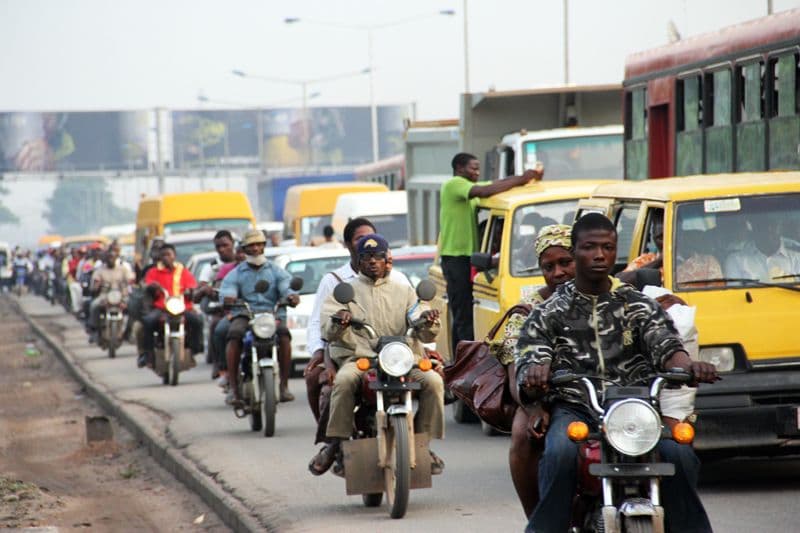
Nigeria’s transportation system is overwhelmingly informal and road-dependent for most of the people. The most common means of transportation is road, much of it powered by small-scale operators–minibus drivers (korope), motorcycle riders (okada), and tricycle operators (keke napep). This structure makes the sector extremely sensitive to fuel price fluctuations.
Petrol prices surged rapidly across the country within days of the escalation of the conflict. On March 7, fuel sold for about ₦995 per litre, rising to roughly ₦1,175 by March 9. By the following day, prices had climbed again to around ₦1,230 in Lagos and over ₦1,260 in Abuja. The upward trend continued through March 14, March 21, and March 22, when prices peaked at approximately ₦1,332 per litre. By the end of the month, petrol was selling between ₦1,300 and ₦1,350 nationwide.
Nairametrics 2026 economic analysis revealed that Nigeria is entering a renewed inflationary cycle driven largely by external shocks, particularly the surge in global oil prices linked to the Iran-US conflict. It highlights how the rise in crude oil prices – now above $100 per barrel – has directly translated into higher domestic fuel costs, pushing from below N900 to over N1,350 per litre. This has created a classic cost-push inflation dynamic, where increased energy costs raise production, transportation, and distribution expenses across sectors. The report effectively situated inflation not as an isolated economic indicator but as a systemic outcome of interconnected pressures across fuel, manufacturing, and food supply chains.
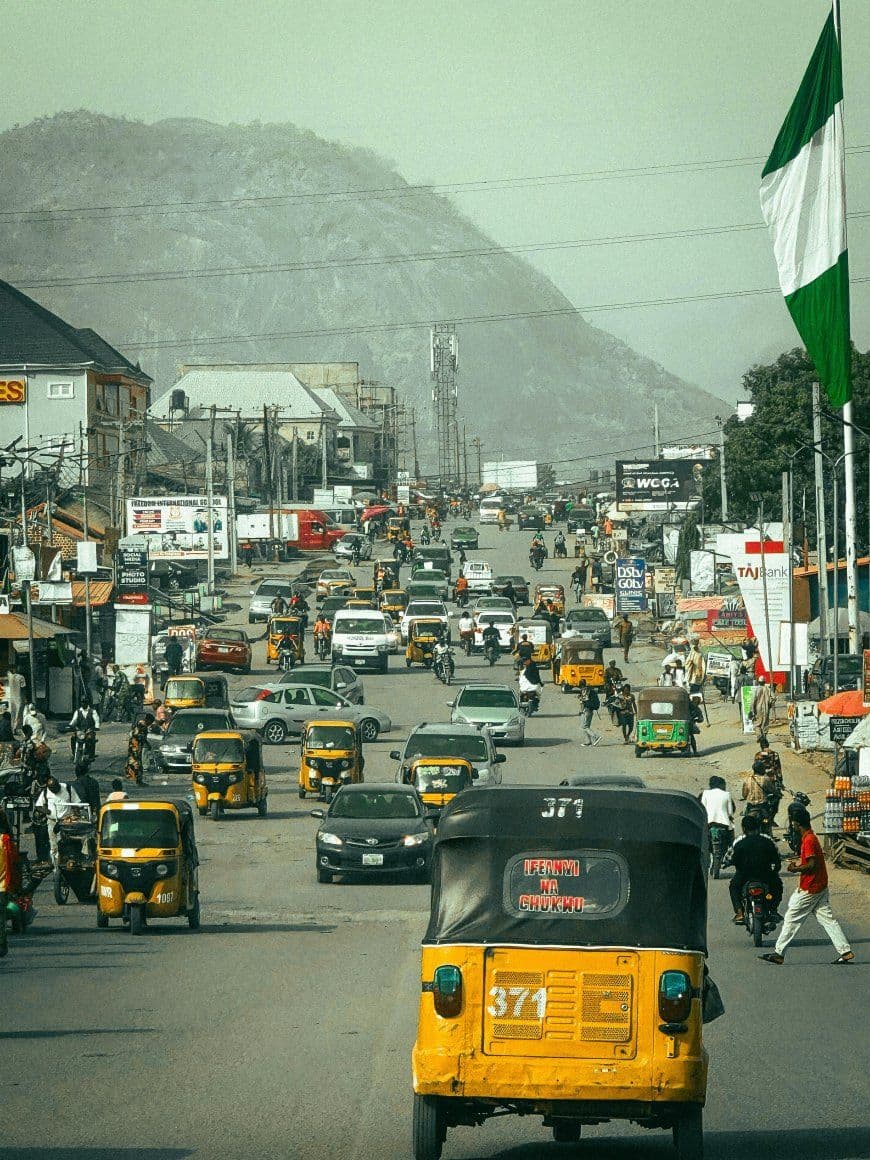
The impact of this externally influenced economic pressure continues to impact the everyday reality of transport workers. Wasiu Bello, for instance, cannot remember the last time she made a profit that can significantly impact her well-being. She works from morning till evening and what she makes is not enough to cater for her two kids. Nigeria’s macroeconomic indicators, according to Reuters, show signs of resilience, but this rising fuel costs continue to push inflation and strain household income for micro drivers like Daniel and Wasiu. This rising petrol cost has also reshaped supply chains for essential commodities; goods have become more expensive to move, market costlier to access, and the burden ultimately falls on the people.
Soaring Fuel Costs is Reshaping Nigerian Family Life
Beyond the transport sector, the crisis has intensified Nigeria’s broader cost-of-living challenges. Higher fuel prices have raised the cost of moving goods across the country, leading to significant increases in food prices and essential commodities. This has reinforced a cycle of cost-push inflation, where rising logistics costs drive up market prices, further eroding household purchasing power. Analysts warn that this inflationary pressure is structural, as Nigeria’s dependence on road transport and imported refined fuel makes it highly vulnerable to global shocks. The result is a widespread economic strain: small businesses are scaling down, informal workers are earning less, and households are increasingly unable to meet basic needs.
For many Nigerians, the crisis has resulted into a deeper, more personal form of hardship - one that goes beyond economics into questions of responsibility and survival. Many households now face rising food prices, higher transport costs, and stagnant incomes all at once. Reports indicate that families are already adopting distress coping mechanisms, including skipping meals, reducing children’s school attendance, and taking on debt to survive. The psychological burden is significant: the inability to meet basic needs undermines both financial stability and social expectations of parenting. By this token, the US–Iran conflict is no longer a distant geopolitical event, it has become a lived economic crisis, reshaping daily life and deepening vulnerability across Nigerian households.
Dr. Muda Yusuf, CEO of the Centre for the Promotion of Private Enterprise, explains the chain reaction clearly: rising fuel costs increase transportation costs, which then drive up food and commodity prices across the economy. Similarly, Dele Oye, former president of the Nigerian Association of Chambers of Commerce, Industry, Mines and Agriculture (NACCIMA), notes that higher diesel prices directly impact production and logistics, forcing businesses to pass costs to consumers.
Civil society groups have been even more direct. In a recent statement, ActionAid Nigeria warned that petrol prices now range between ₦1,200 and ₦1,400 per litre in many parts of the country, pushing households into deeper hardship and forcing coping strategies such as skipping meals and withdrawing children from school. The organisation’s country director, Andrew Mamedu, framed the crisis as both global and domestic: a product of international oil shocks and longstanding policy failures. At the macro level, Nigeria’s government is already feeling the strain. Finance Minister Wale Edun recently acknowledged that while higher oil prices increase national revenue, they also worsen inflation and the cost of living for citizens.
For micro drivers like Daniel and Wasiu, this policy paradox offers little relief. Mayowa Tijani, an analyst with The Cable, argued that the best path forward is likely to eliminate regulatory costs while quietly sweetening the naira-for-crude deal for medium-term relief. “Temporary subsidy should remain the last resort. Whatever Tinubu decides, Nigerians will feel it in their fuel tanks, their food bills, and ultimately their wallets,” he said.
Abdulkabeer Tijani
Abdulkabeer Tijani is a Nigerian freelance journalist and visual storyteller with expertise on Nigeria’s media landscape. He has written for leading international media outlets including Al Jazeera, Minority Africa, International Journalists Network, The Continent, University World News and The Republic.
comments
No comments yet