
Armed factions' rivalry escalates sporadic violence in the north central
by
Northern Nigeria: Security Situation Report (June 28 – July 4, 2026)
Introduction
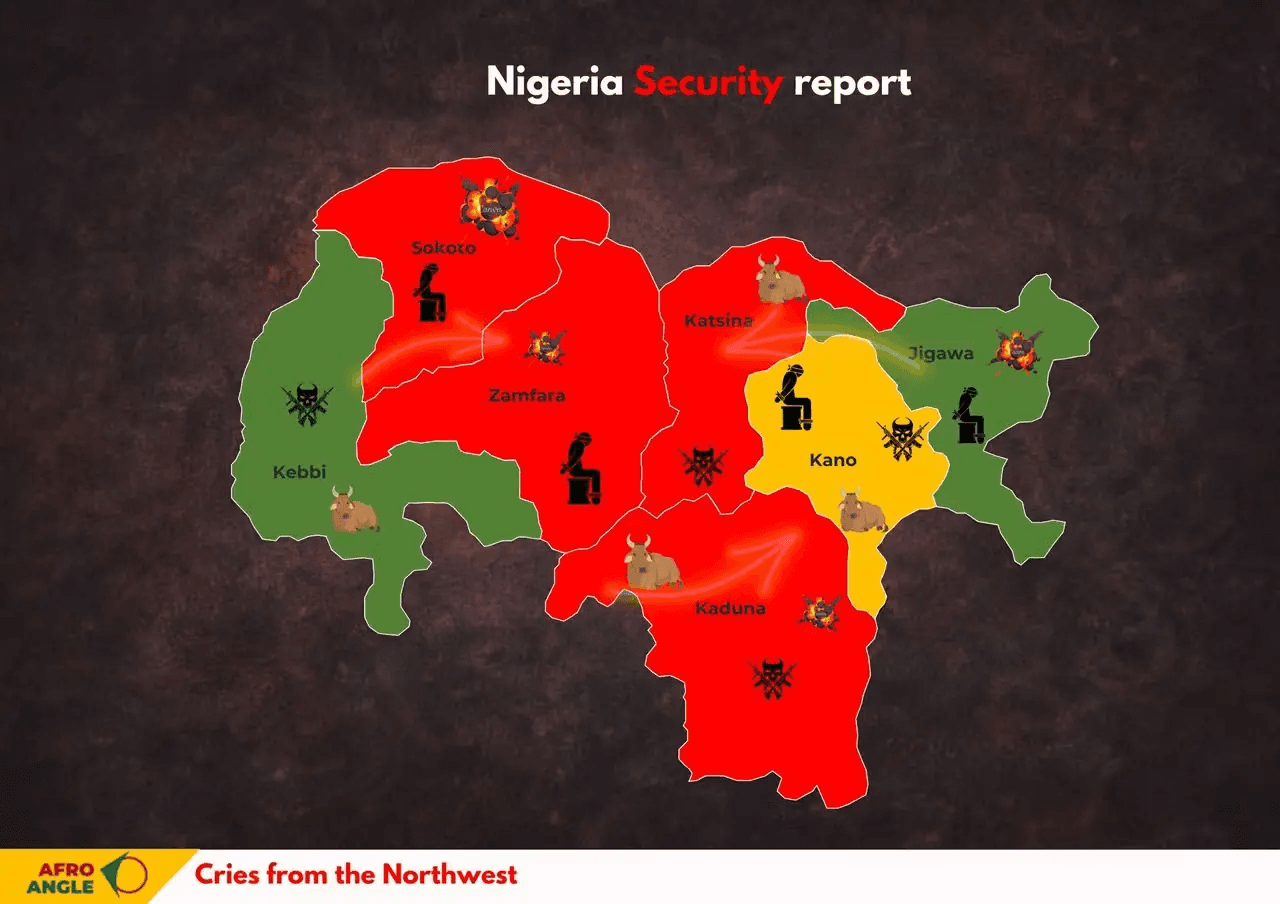
In the reporting period, bandit groups and insurgent factions linked to ISSP and Lakurawa continued to ravage communities across the northwest, particularly in Sokoto, Zamfara, and Katsina states, killing civilians, looting property, and rustling livestock. These attacks remain consistent with the operational patterns that have characterised the activities of these groups over time.
Violence also spread into Kano State, where an armed group attack in Gwarzo Local Government Area resulted in large-scale cattle rustling. This incident suggests that armed groups are increasingly extending their operational reach into areas that were previously less affected. Although Kano has experienced periodic armed group incursions in recent months, this latest attack may signal a renewed resurgence of their activities within the state.
Sustained military operations against insurgent groups in the northeast further continue to produce tangible operational outcomes. Multiple waves of Islamic State – West Africa Province (ISWAP) fighters, including senior commanders, have surrendered or defected in recent weeks. Since the elimination of ISWAP's senior leader, Al-Mainuki, alongside several other key commanders, the group has experienced large defections. Combined with continued military pressure, these developments point to emerging organisational and structural weaknesses that could influence the group's operational posture in the near term.
In the north-central, Plateau State continues to witness an unprecedented cycle of reprisal attacks between Fulani and Berom militias. These communal clashes have triggered successive rounds of retaliatory violence between affected communities, further compounding the state's already fragile security environment.
Perhaps the most significant development, however, is the emergence of rivalry and direct clashes between armed groups operating in the north-central region. Such competition has traditionally characterised the insurgency in the northeast, particularly between ISWAP and Jama’atu Ahlis Sunna Lidda’awati wal-Jihad (JAS). Its appearance in the north-central region introduces another layer of complexity to the conflict landscape. Consequently, the government and security agencies should not treat these rivalries as peripheral developments. Instead, they should actively exploit these internal divisions to create operational opportunities and weaken the capabilities of armed groups across the region.
Weekly Review
Data from the North-West region indicates a sustained increase across nearly all tracked security metrics during the reporting period, continuing the upward trajectory observed in previous weeks and highlighting the deteriorating security environment. The number of recorded incidents rose from 28 in the previous week to 37, representing a 32% increase. Fatalities, however, declined from 67 to 43, reflecting a 36% reduction despite the higher volume of attacks. Abductions recorded the most significant increase, rising from 76 victims in the previous week to 138, an 82% surge. In one notable incident, notorious bandit leader Bello Turji abducted 50 people from Tarah community in Sabon Birni Local Government Area of Sokoto State, underscoring the operational freedom these groups continue to enjoy in vulnerable communities.
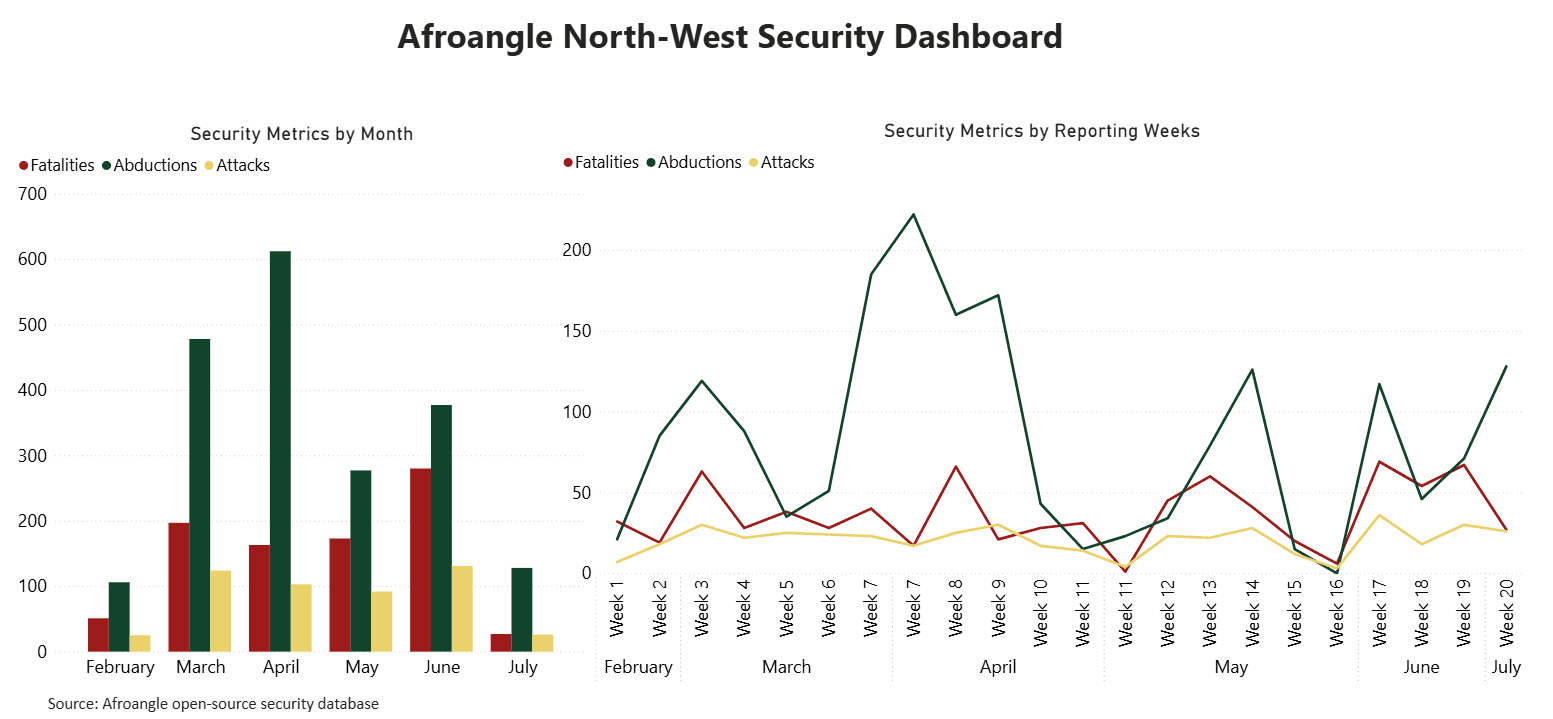
At the state level, Katsina, Sokoto, and Zamfara remained the principal hotspots of violence across the region. Sokoto recorded the highest number of fatalities with 24, followed by Katsina with 14. In terms of attack frequency, Katsina accounted for 13 incidents, while Sokoto recorded 14. Abductions remained heavily concentrated in Sokoto, which accounted for 103 kidnapped victims, followed by Zamfara with 23. These figures reinforce the continued exposure of civilians to kidnapping and armed attacks across the region.
Bandit Factions Clash in Niger State
In a significant development, Lakurawa fighters clashed with an armed bandit group operating around the Tapkin Giyayya axis of Mashegu Local Government Area in Niger State. The confrontation reportedly began after bandits attempted to rustle livestock from Tundun Magajji village. Local vigilantes pursued the attackers, while Lakurawa fighters based in the Mashegu Forest joined the confrontation. The exchange of gunfire reportedly resulted in the deaths of several bandits and the capture of six others. During interrogation, the captured fighters reportedly confessed that a Niger State-based bandit commander, Ali Kachalla, had invited them from Zamfara State to reinforce local criminal operations.
Beyond the immediate incident, this clash signals an emerging trend that could reshape the conflict landscape in North-Central Nigeria. Historically, inter-armed group violence has largely characterised the insurgency in the North-East, where ISWAP and JAS frequently clash over territorial control, influence, taxation networks, recruitment, and ideological differences.
These rivalries have often produced casualties far greater than those inflicted during engagements with state security forces. For example, one major confrontation between the two factions in late-2025 reportedly killed more than 200 fighters. The recent clash in Niger State suggests that similar patterns of armed group competition may now be emerging in the north-central theatre.
This rivalry also reflects the growing convergence of different armed actors within the region. Competition between local bandit networks and insurgent groups such as Lakurawa, and potentially ISSP, may increasingly shape the security environment. Unlike local bandits, Lakurawa appears to be repositioning itself as a protector of rural communities by confronting criminal groups that engage in livestock rustling and attacks on civilians. This strategy could help the group build local legitimacy, recruit members, and establish a stronger foothold within vulnerable communities.
At the same time, another potential flashpoint could emerge between Lakurawa and ISSP. Both groups seek influence across similar operating areas, while ideological differences and competition for territory, recruits, and local support could increase the likelihood of future confrontations.
These developments also present an operational opportunity for the Nigerian military. In the North-East, security forces have occasionally benefited from exploiting rivalries between insurgent factions. A similar approach should guide operations in the north-central. Intelligence, surveillance, and reconnaissance assets should closely monitor areas where rival armed groups operate, while security forces should exploit periods of confrontation to conduct precision strikes against weakened factions.
Likewise, strengthening local vigilante groups and improving intelligence-sharing mechanisms could enable rapid exploitation of these clashes before armed groups regroup or relocate. As rivalry among armed actors becomes a defining feature of the conflict, the speed at which Nigerian security agencies exploit these divisions could significantly influence the trajectory of the conflict and shift the operational balance in the state's favour.
Outlook
In the coming weeks, the conflict landscape across Northern Nigeria is likely to remain highly volatile. In the North Central, particularly in Plateau State, communal violence may intensify as reprisal attacks between rival militias continue. This trend underscores the need for rapid military intervention alongside strengthened local conflict resolution mechanisms to reduce tensions and prevent further escalation.
In the North-East, the Nigerian military will likely sustain offensive operations, particularly airstrikes targeting insurgent strongholds, while ISWAP will continue to exploit the rainy season to launch attacks against military positions and remote communities. Meanwhile, the North-West will likely experience continued attacks on civilian communities, alongside the growing possibility of further clashes between bandit groups and insurgent factions competing for territory, influence, and access to local resources
Afroangel Intel Admin
Afroangle Intel Admin
comments
No comments yet