
Climate change is rewriting childhood in Africa
by
Listen to this article
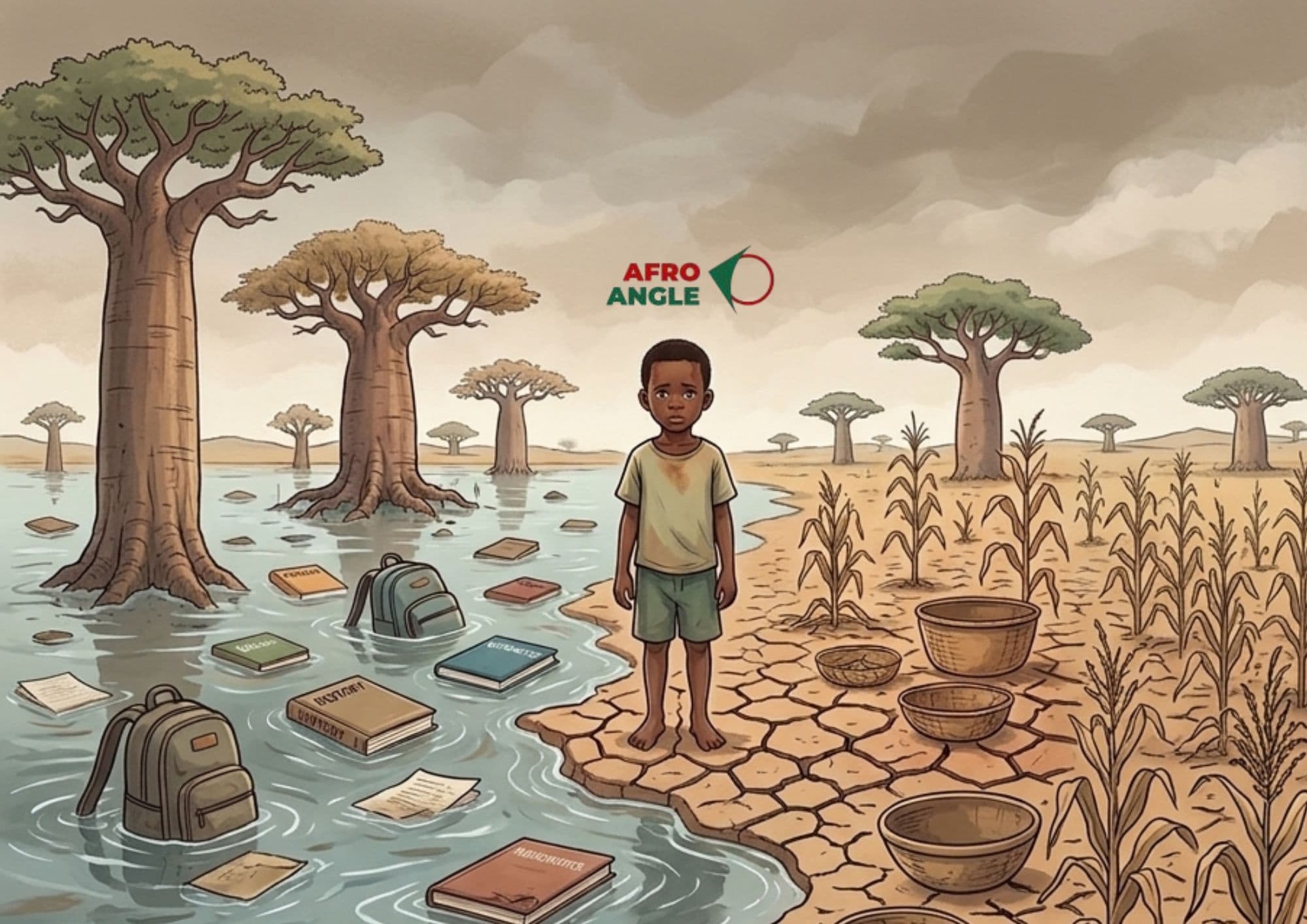
In 2022, severe flooding across several Nigerian states displaced over a million people and forced hundreds of schools to seize operation for some time. Classrooms were submerged, textbooks destroyed, and families relocated to temporary shelters. For thousands of children, education paused not because of a holiday or health concerns, but because rising waters disrupted their academic calendar.
Similar disruptions have followed cyclones in Mozambique and prolonged droughts across the Horn of Africa. These are not isolated environmental incidents. They are markers of a changing climate that is no longer waiting for the future to manifest its atrocities. It is shaping the present, and most profoundly for children.
Learning in an Unstable Environment due to Climate Change
Climate-related disruptions do not only interrupt schooling; they unsettle the broader structure that shapes children’s daily lives, affecting how they organise their time, interact with peers, and experience stability.
These interruptions may appear temporary, but their effects accumulate over time. Some children miss extended periods of schooling due to flooding or displacement, while others continue learning in fragmented ways shaped by irregular attendance and unstable conditions. Children already outside formal education systems are not left out of climate pressures as they face limited access to informal learning opportunities and social development as well. According to a UNESCO 2023 report, disruptions to learning environments can significantly affect both access to education and the quality of learning outcomes, particularly in vulnerable contexts.
Childhood is not defined by schooling alone; it is shaped by routine, relationships, play, and a sense of continuity that children engage in– all of which are disrupted when families face displacement, economic strain, or repeated environmental instability. A research by James J. Heckman, a Nobel Prize–winning economist known for his work on early childhood development, shows that instability during early years can have long-term effects on cognitive and social development.
These effects are not experienced equally, as children in more stable urban environments may face only short interruptions, while those in rural or climate-vulnerable communities often encounter prolonged disruption to both learning and daily life, thereby widening existing inequalities and deepening the gap between those with access to stable support systems and those without.
Growing Up Hungry, Growing Up Uncertain
Climate change is already affecting food production across parts of Africa. In northern Nigeria and the wider Sahel region, erratic rainfall, desertification, and rising temperatures have contributed to declining agricultural yields. The Food and Agriculture Organization (FAO) notes that climate variability is a major driver of reduced crop productivity in the Sahel. Lower agricultural output affects food availability in local markets and contributes to rising prices. The World Bank reports also note that climate shocks such as droughts and floods disrupt supply chains and increase food price volatility across African economies. When supply drops and prices rise, families are forced to reduce how much and how often they eat.
For children, the consequences are immediate as adequate nutrition is essential for physical growth and brain development. When meals are reduced or lack nutritional value, children experience slower development, weakened immunity, and difficulty concentrating in school. Evidence from the World Food Programme shows that millions across the Sahel and parts of East Africa face food insecurity linked to climate-related shocks. Water scarcity compounds these challenges. Drought reduces access to safe drinking water, while flooding contaminates available sources. The World Health Organization (WHO) highlights that unsafe water significantly increases the risk of disease, particularly for children with weakened immune systems. Extreme heat further places stress on young bodies that are still developing.
Climate-related hazards also drive displacement. In Nigeria, seasonal flooding has repeatedly forced families to leave their homes, while prolonged drought in parts of East Africa has pushed households to relocate in search of water and livelihood. According to the Internal Displacement Monitoring Centre (IDMC), millions of people across sub-Saharan Africa are displaced each year by weather-related events. Displacement disrupts the structure children depend on. Schooling is interrupted, social networks are broken, and daily routines become unstable. In temporary shelters or unfamiliar environments, children must adjust quickly to new conditions, often without adequate support systems. These disruptions affect not only their education but also their sense of safety and belonging.
Within displaced households, economic pressure becomes more visible. Children observe parents struggling to rebuild livelihoods or recover lost income. In some cases, they take on additional responsibilities, such as caring for siblings or supporting small-scale family activities. These changes, though gradual, reshape what childhood looks like. Children in these contexts are often described as resilient, and community support systems can ease immediate hardship.
However, resilience should not be mistaken for protection. Repeated exposure to disruption places sustained pressure on children’s emotional and psychological well-being. Climate change is not only affecting what children eat or where they live; it is shaping how they grow, relate to their environment, and understand stability.
What Lies Ahead?
What lies ahead is not only how Africa responds to climate change, but how it protects the conditions that make childhood possible. Children are already adapting to disruption, but that adaptation is coming at a cost to their development, dignity, and sense of possibility. A generation raised within recurring instability may learn resilience, but it may also inherit a narrowed understanding of safety and security. Addressing the climate crisis in Africa therefore requires more than environmental action; it demands a commitment to preserving childhood as a space for growth, imagination, and protection, rather than one defined by survival. The choices made now will shape not only environmental outcomes, but the kind of society that emerges in the years to come.
Oluwatoni Honour Afinjuomo
Oluwatoni Afinjuomo is a climate policy analyst whose work focuses on climate governance, institutional frameworks, and the systems that enable effective climate action across Africa. Her work examines how governance structures shape climate responses and their implications for issues such as food insecurity, displacement, and social inequality, with a commitment to grounding climate policy in African realities.
comments
Mohammed Labaran
27w
My mentor. Nice piece. 🔥