
HOW DEMOLITION IS PUSHING MAKOKO’S CHILDREN OUT OF SCHOOL
by
Listen to this article
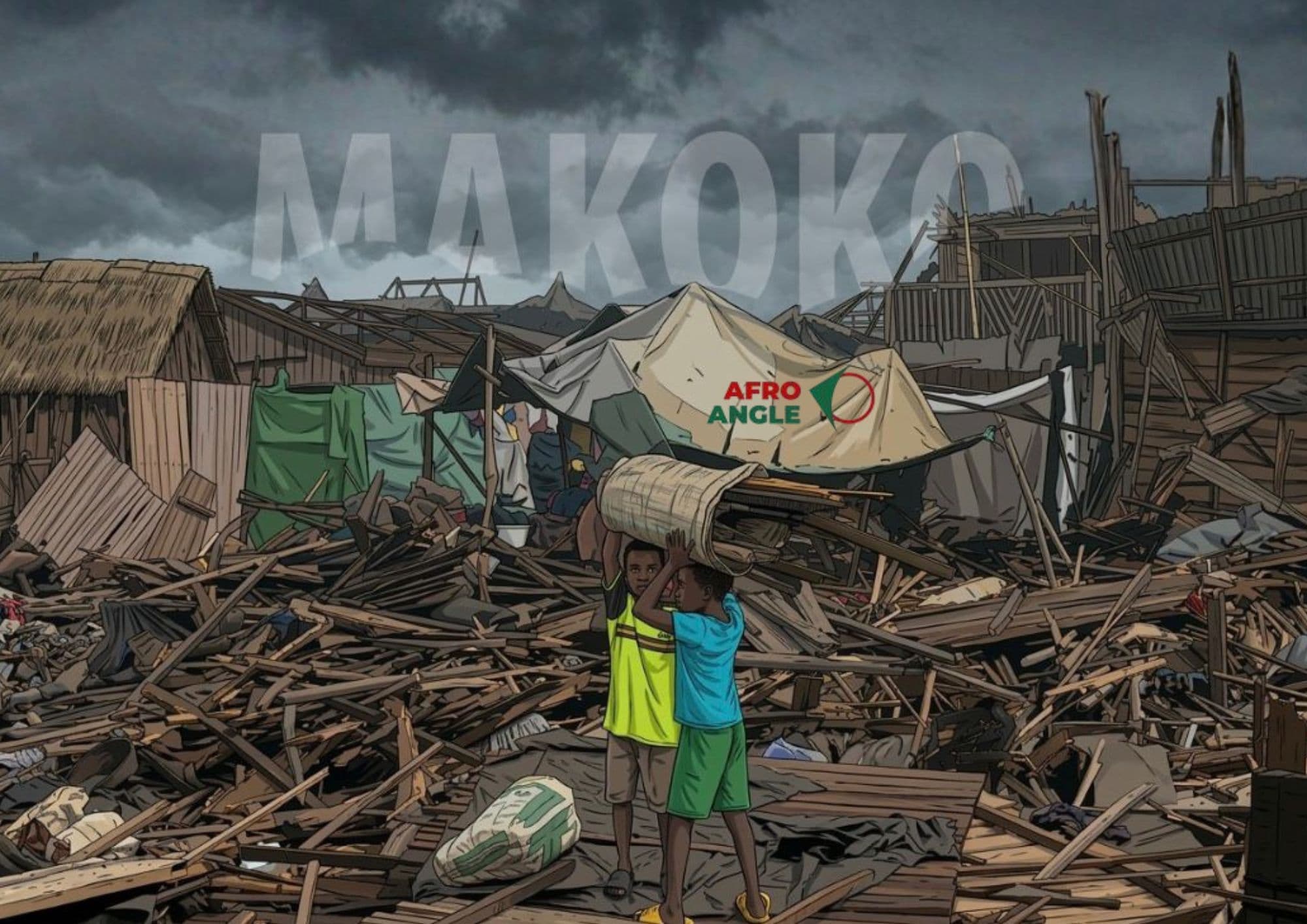
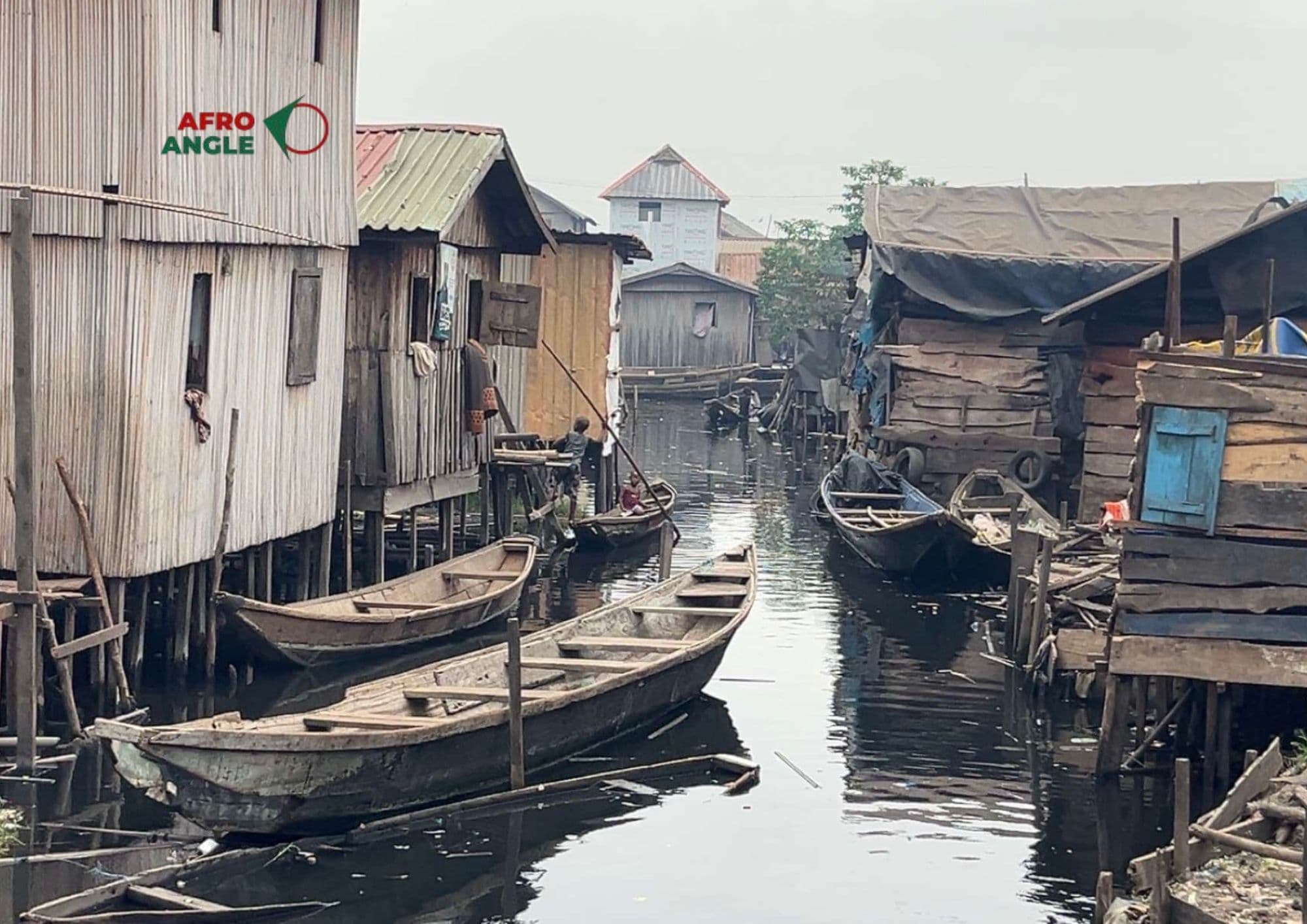
Lagos, Nigeria — Three months after the Lagos State Government demolished large parts of Makoko, the waterfront settlement known as Nigeria's Venice, the impact on the community's schools is visible and growing. The first thing you notice in this floating community is not the silence that followed the coming of excavators and uniformed men who came with them. It is the sound of children trying to read on a Monday morning at Mawumadoka Orphans and Less Privileged Home and School.
On the school premises, one would easily notice the absence of a teacher in a classroom filled with children, desks without reading materials and two rooms which now double as sleeping quarters of displaced residents following the demolition.
In a narrow corridor between splintered wood and corrugated iron sheets just behind the school, Mrs Koret sits on an overturned paint bucket, peeling some oranges. She is the mother of John, 12, a schoolboy who will never return to that classroom; he died during the protest march to the Lagos State Assembly on Friday, January 16, after the demolition.
She recalled that he had just been awarded a scholarship for his secondary school education. Confirming her words, Mr. Martins Joshua, the school’s founder, noted that his death resulted from tear gas fired by the Lagos police in an attempt to disperse the crowd of Makoko protesters. The emptied seat that used to mark John’s presence among his peers has now become a monument of loss.
Government’s Position and Makoko Community’s Response
This state-backed demolition exercise, according to Mr. Gbenga Omotoso, the Lagos State Commissioner for Information & Strategy, is driven by the urgent need to protect lives, uphold the rules of law, and advance comprehensive urban renewal initiatives aimed at improving living conditions for residents. But many residents strongly dispute that justification, describing the exercise as a violent eviction that has disproportionately harmed them.
To address their grievances, an ad-hoc committee of the Lagos State House of Assembly on Thursday, 5 March 2026, concluded its initial investigation into the demolition, with affected residents presenting varying demands over compensation and relocation. The process to address these grievances remains ongoing while residents contend with the ruins of their former homes.
However, the Lagos house of assembly has proposed the relocation of residents of Makoko, Oko-Agbon and Sogunro waterfront communities to Agbowa in Epe local government area of the state to continue their fishing activities. This was deliberated during a plenary session held on Wednesday March 11, 2026 to adopt the committee’s report on the demolitions.
The Schools Still Standing in Makoko
Mr. Joshua said attendance dropped sharply in the weeks following the demolition. Many families relocated, some lost their means of livelihood and parents who could no longer sponsor their children through private schools realised that government schools nearby were already stretched beyond capacity. But he thinks he can solve this problem by building a new school outside Makoko.
He sees the forced relocation as a fixed reality requiring more pragmatic steps to ensure the displaced children are not left behind their peers when they should be educated. But this pragmatic step he proposed has its own challenge — money. The school project cost 25 million naira and this means that he must either get the support of the government or appeal to the goodwill of private citizens to make education accessible to the children of Makoko.
Noah Shemede who founded Whanyinna Nursery and Primary School in 2009 to combat illiteracy in the community, expressed dissatisfaction with the violent demolition in the area as well. He noted that they did not get an eviction notice from Lagos State. He further expressed how the demolition has brought devastating loss to the 205 students that his school was educating. “The Children are now at home. Many of them have been displaced due to the demolition. I am still thinking of a solution to help because it’s a free education but for now, I don’t have any means.”
One of the displaced children is Zanu Sarah, a primary four pupil at Mr. Joshua’s Mawumadoka Orphans and Less Privilege Home and School. She now lives with her grandmother far from her former classroom. The distance has made regular class attendance difficult, though her zeal for education has kept her from dropping out of school. For Zanu, the goal is bigger than the difficulty. She wants to become a doctor to help improve the healthcare available to residents of Makoko community.
A Broader Pattern of Demolitions
United Nations Special Rapporteurs Balakrishnan Rajagopal, on the right to adequate housing, and Paula Gaviria Betancur, on the human rights of internally displaced persons described this demolition as a continued effort of Lagos State Government to clear informal settlements in Lagos. “More and more urban poor in Lagos are losing their homes, access to services and opportunities, while the government justifies these actions in the name of development,” they said in a joint statement.
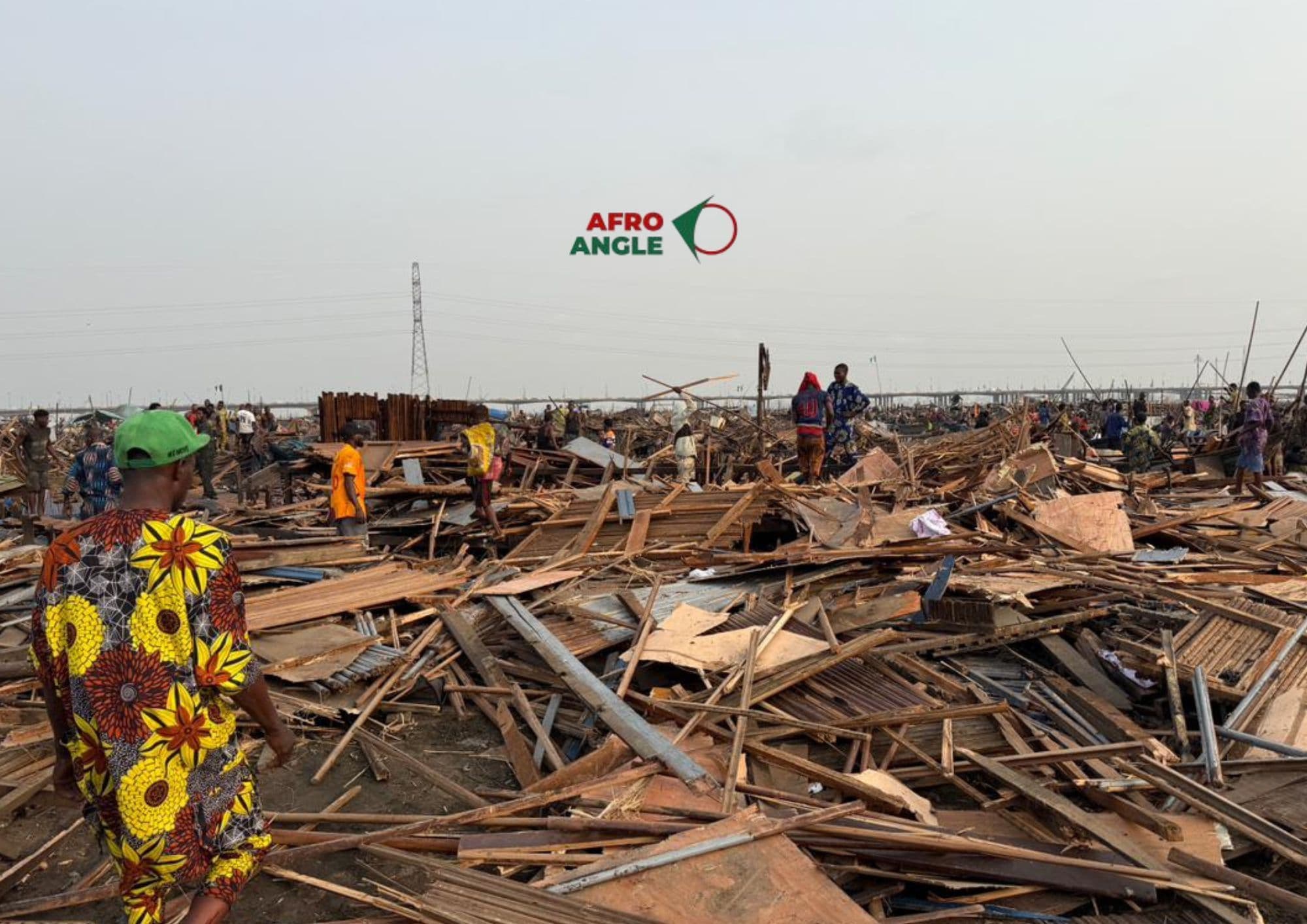
This eviction drive began in 2023. Since then, thousands of Lagosians have been displaced from Aiyetoro, Oworonshoki, Baba Ijora, Oko Baba and Ilaje-Otunmara, and other waterfront areas of Lagos considered a prime site for luxury housing development, they said. This makes Makoko demolition a part of a disturbing pattern of eviction without adequate resettlement plans. Makoko itself was first subject to major demolition in 2012 and by 2017, about 30,000 of its people already lost their homes.
The Guiding Principles on Resettlement and Guiding Principles on Internal Displacement, state that where displacement is inevitable, governments must resettle the people affected in conditions that protect their right to adequate housing, sustained livelihoods and cultural cohesion. But, the Lagos State is yet to publish a resettlement plan that meets those international standards.
A National Problem, A Local Consequence
Civil society organisations and Non-profit groups have consistently highlighted the strain on Nigeria’s education system, pointing to poor infrastructure, underfunded public schools, and teacher shortages. UNESCO estimates that Nigeria has one of the highest figures of out of school children in the world with over 10 million at the elementary school level alone. UNICEF Nigeria placed the figure as high as 18.3 million with the inclusion of children of secondary school age in 2024.
In Makoko, the demolitions have sharpened the existing pressures. The demolitions destabilised community-run schools that were filling the gap left by the state and the spaces where children once learned now serve as their shelter. Without alternative learning provisions built into any resettlement plan by the Lagos State Government, this number is likely to rise.
For both Mr. Joshua and Mr. Shemede, keeping the schools running is possible. Their hope is driven by the belief in the possibility of recovery. Nonetheless, the question neither of them can answer with certainty is the one that is most important: how much longer can the children of Makoko afford to wait?
Abdulkabeer Tijani
Abdulkabeer Tijani is a Nigerian freelance journalist and visual storyteller with expertise on Nigeria’s media landscape. He has written for leading international media outlets including Al Jazeera, Minority Africa, International Journalists Network, The Continent, University World News and The Republic.
comments
No comments yet