
To Whom Does the Voting Power Belong in a Nigerian Political Party? Consensus Candidacy and the Fraying of Democracy
by
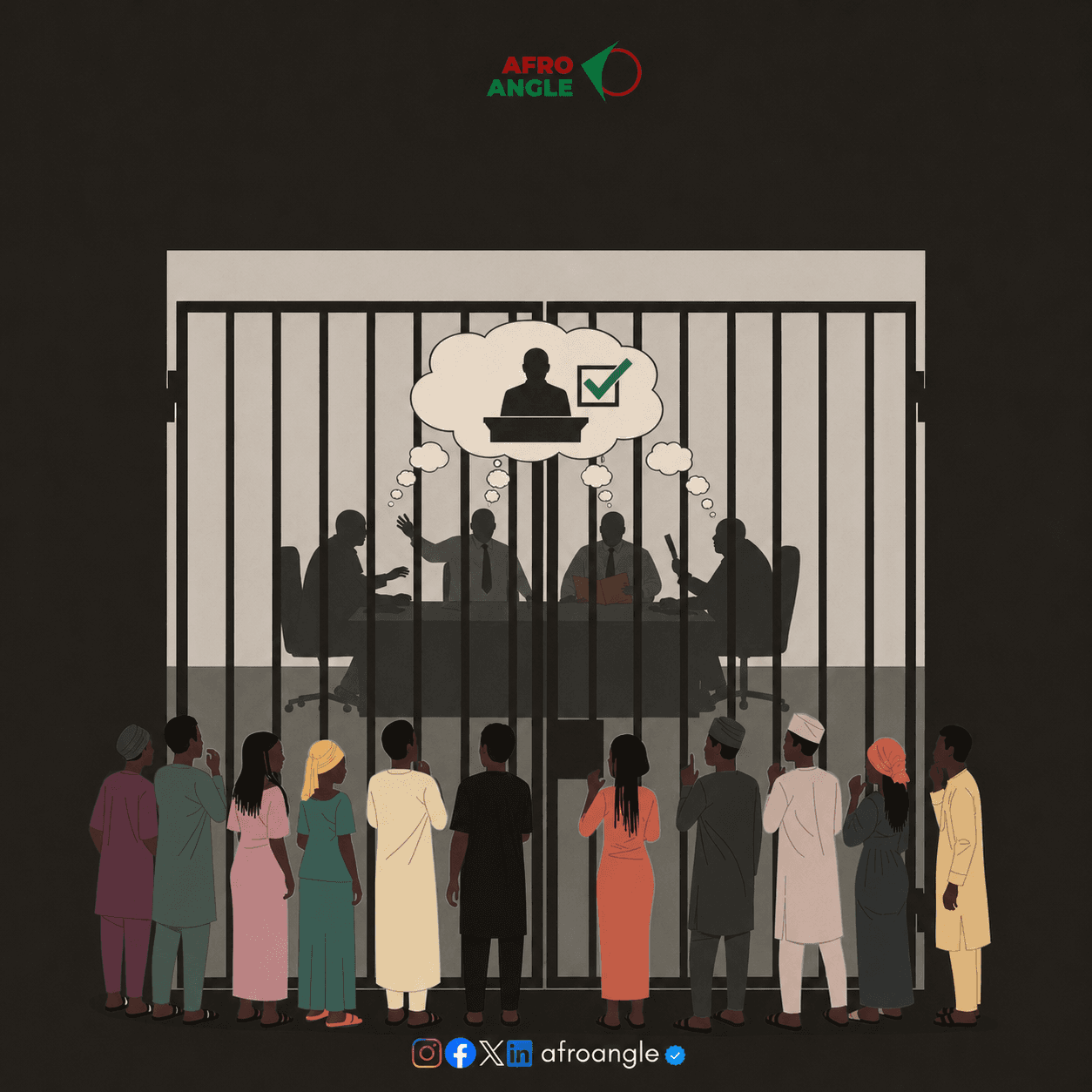
Consensus candidacy is redefining what political participation means in the Nigerian democratic landscape. Is it the government of the people by the leaders and for the party? Or is it the government of the leaders for the party and the people? These questions are pertinent because they help us examine the caliber of people who should determine democratic representation and the processes.
In June 2022, Olusegun Dada was captured in tears during the All Progressive Congress's (APC) national convention at Eagle Square. His tears were not meant to mourn a human loss to death or an expression of joy that required tears. It was a form of lamentation, an outcry for being outsmarted in a party election that he believed he could win. But the APC had a different candidate in focus and the emergence of this party favourite required him to step down. Since he could not proceed with his ambition to lead the youth wing of the party and had to comply with the Party’s directive, crying became his last and only acceptable reaction.
In hindsight, this was a remarkable moment in the national history of APC because it brought consensus candidacy to the stage of Eagle Square and normalised the imposition of candidates for an elective office by party leaders. As the 2027 election draws nearer, consensus candidacy has become a democratic method for the APC. But to what extent can we call it representative of the popular will?
Why Consensus Candidacy?
Consensus candidacy is legal under Section 84(2) of Nigeria's 2022 Electoral Act, which states that “the procedure for the nomination of candidates by political parties for the various elective positions shall be by direct, indirect primaries or consensus.” If all aspirants agree, then consensus candidates are allowed to be adopted by political parties. The process is supposed to diminish costly and polarizing primaries and build party cohesion in the run-up to elections.
Advocates say the consensus process helps political parties to prevent internal crises which can compromise prospects in elections. Consensus is often justified as a means of stability in a politically charged climate which has repeatedly harmed parties through long and contentious litigation. But critics say it is not only about consensus, it is about how it is gradually being applied in the most opaque and elitist way.
Is Consensus Candidacy a Free and Fair Electoral Process?
In several states, there seems to be a pattern to the language used in recent disputes. Consistent complaints from aspirants revolved around the subject of “imposition,” “lack of consultation” and manipulation within the party’s internal structure. In Oyo State, the APC stakeholders aired their opinions about attempts to impose candidates as an assault on the internal democracy of the party and called for direct primary elections as the most credible way to choose candidates. Following a protest at the party’s secretariat in Ibadan, the party leadership opted for a direct primary which did not resolve the internal crisis.
The exercise, which is currently being disputed, eventually produced Senator Sharafadeen Alli, who had earlier emerged as the consensus candidate backed by the party establishment, as the governorship flag bearer. Aggrieved aspirants and their supporters, particularly those aligned with former Minister of Power, Adebayo Adelabu, rejected the outcome, alleging irregularities and manipulation. The fallout exposed deep divisions within the party, with some defeated aspirants publicly denouncing party leaders. In a widely circulated video after the primary, a disappointed aspirant, Hon. Segun Olaleye, was seen moving around angrily cursing party stakeholders over what he described as an unfair process.
The conflict in Ondo State also flared up when it was reported that the APC National Working Committee was adamant against the proposed consensus arrangement and sought direct primaries. This opposition to consensus arrangements is not restricted to the grievances of discontented aspirants. In a number of states, there is a growing resistance to the practice.
Same was the case in Gombe State where APC stakeholders headed by Governor Inuwa Yahaya reportedly endorsed Jamilu Isyaku Gwamna as the party's consensus governorship candidate ahead of 2027. But the move immediately received opposition from other influential aspirants such as former Governor Danjuma Goje, Senator AnthonyYaro, former Minister of Communications and Digital Economy Isa Pantami and Saidu Ahmed Alkali. The process was criticised as illegitimate because candidates who had already completed required formalities such as buying nomination forms were allegedly excluded from consultations.
This reveals the sentiments of many party members who view consensus candidacy as an illegitimate articulation of power tinged with unfair competitive edge where the popular will ought to prevail. While there are different perspectives to this, we can at least conclude that consensus candidacy has triggered more conflicts, dissatisfaction and also forced many party faithfuls to nurse their wounds in silence as they lack adequate sources to fight back. What this is pointing out is the volatility of political representation where a direct primary election could become a taboo when it seems unfavorable to a politician with means and network.
What Should a Healthy Democracy Do with a Consensus Candidate?
One thing which is evident is that the issue of consensus candidacy is no longer just an intra-party affair. It is now a question of political participation, democracy and access to power. This is particularly important for young Nigerians. Nigeria has one of the youngest populations in the world. The NBS estimates that more than 70 million persons are between the ages of 15 and 34, while demographic statistics estimate that youths make up more than 60 per cent of the population. However, this demographic majority hardly influences democratic outcomes.
Youth representation in elective positions is still low despite the enactment of the Not Too Young To Run law in 2018. Findings by Yiaga Africa and other election monitoring organisations after the 2023 elections showed that although more young people contested for offices, older politicians who enjoy elite networks continue to dominate government positions and assemblies at national and state levels.
The Not Too Young To Run law reduced constitutional restrictions on participation, yet failed to dismantle the internal mechanisms that determine who has meaningful access to party tickets. For many younger would-be leaders, the problem is not constitutional but political exclusion. Consensus politics is deepening this exclusion.
Younger candidates who have no financial connections, party relations or influence over governors have to rely on open contests to build visibility and challenge established power blocs. Competitive primaries offer at least a theoretical chance for outsider candidates, who are often young and not part of the existing power bloc, to raise support. Consensus arrangements, however, move decision-making away from general participation and toward negotiations among influential actors.
Consequently, partisan politics has become more intractable for younger politicians, regardless of their popularity or abilities. This was why the emotional moments of aspirants like Segun Dada in 2022 struck such a chord. There was also a symbolic message behind the tears: the political space is shrinking for ambitious younger players within mainstream parties.
One implication of this trend is the growing political apathy among young Nigerians. When aspirants and party members begin to think that political outcomes are predetermined through elite negotiations, participation in democratic processes may decline.
Another repercussion is the likelihood of defections and fragmentation. It is common in the Nigerian political space for politicians who are dissatisfied with their party’s internal arrangements to cross carpet. Aspirants who feel excluded from transparent competition often seek alternative platforms, further contributing to instability within parties. More significantly, too much reliance on consensus processes can undermine policy innovation. Political establishments are more likely to support known players with established influence and connections instead of brilliant minds with notable field experience.
Legitimacy of procedures is just as important as electoral outcomes in a democracy. If party members and aspirants feel elections are won on the basis of political connection and financial capability, they gradually lose faith in the democratic participation. As political activities intensify ahead of 2027, discourse around consensus candidacy will likely become even more polarised within major parties.
Consensus may remain a tool for political elites to maintain stability and suppress opposition. But for many younger Nigerians, it increasingly symbolises a political culture where access is determined less by merit or public support than by proximity to established power. The bigger worry is that Nigeria may eventually normalise a democratic culture where competition is formally acknowledged but substantially limited in practice.
Olanshile Ogunrinu
Olanshile Ogunrinu is a Nigerian freelance journalist and graduate of Communication and Language Arts from the University of Ibadan. His works have appeared in notable local and international media platforms, where he reports on education, governance, politics, and human rights. He is interested in public-interest journalism, social justice, and accountability reporting, using storytelling to amplify underrepresented voices and contribute to informed public discourse.
comments
No comments yet