
How Communal Violence is further Driving Conflict in the North-east
by
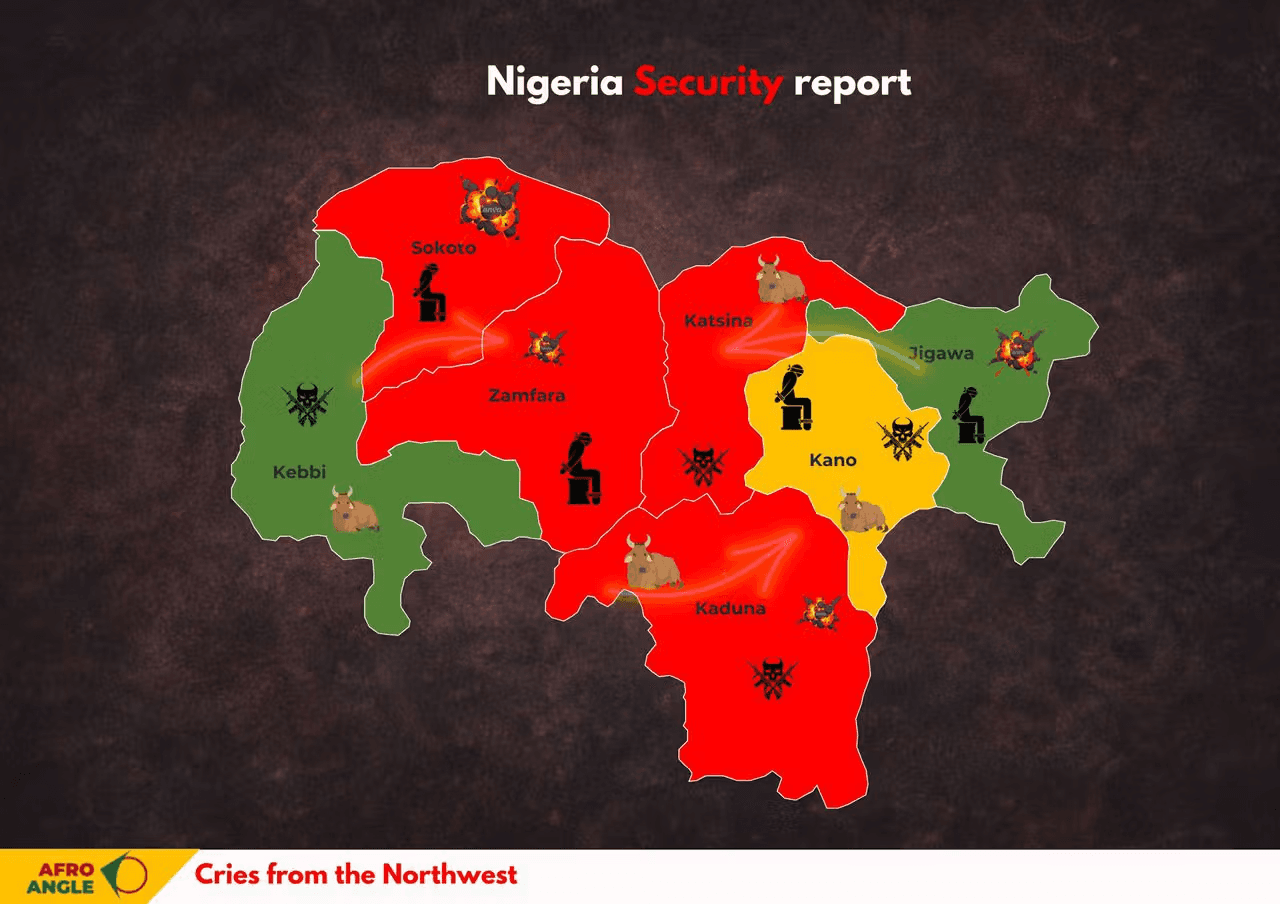
Northern Nigeria Security Situation Report (September 27 - October 3, 2026)
Introduction
The reporting week began with an improvement in the welfare of Nigerian troops, following the confirmed payment of the increased salary package. In August, the federal government approved a new salary package for armed forces personnel, ranging from 30 to 80 percent, with around 250,000 personnel expected to benefit. This is a significant development at a time when insecurity is rising across the country. The increase could provide an incentive and morale boost for troops, particularly those serving on the frontline. The development also comes as the threat level on the battlefield increases. Two IEDs were detected and recovered on the frontline in the North-east, including in Gwoza and along the Maiduguri-Damboa highway, an important movement corridor. The presence of IEDs could impede military advances and disrupt civilian movement along the route.
In the North-west, the military is also expanding its presence to bring troops closer to areas facing high levels of insecurity. Three new battalions were activated in Zamfara, including battalions in Bakura, Kaura Namoda and Anka, all areas that have experienced frequent bandit incursions and attacks. An Army Brigade was also established in Birnin Kebbi, alongside a tank battalion in Yauri and an Artillery Regiment in Kaoje. These deployments are part of efforts to strengthen military presence and security operations in Kebbi as armed group violence continues to grow.
Furthermore, amid internal friction and reported purges within ISWAP, the group continues to experience surrenders among its members. The latest involved 17 people linked to the group who reportedly surrendered to the Nigerian military. Lastly, the North-east security landscape remains largely dominated by the insurgency affecting much of the region, particularly Borno, Adamawa and Yobe states. However, a separate and lingering crisis continues to develop beneath the wider insurgency. The crisis is longstanding and rarely receives the same national attention, but it is also causing serious disruption to communities and livelihoods across the region.
Weekly Review
Armed attacks, kidnapping, communal violence, insurgent attacks on communities and security-force engagements continued to dominate the security landscape across northern Nigeria, posing significant threats to rural communities, farming activities and key movement corridors.
In the North-west, the threat remained high. Bandit groups reportedly attacked the Illelar Dawagari community, abducting nine residents and rustling more than 200 livestock. In Dange Shuni Local Government Area, armed bandits attacked Wababe village on September 27. A subsequent confrontation and reported ambush along the Wababe-Bubu axis resulted in the deaths of about eight Army personnel, while another soldier was injured. The incident highlights the risks faced by security personnel during pursuit and response operations. In Zamfara, five people were reportedly killed and more than 30 abducted in Gidan Diko, Gumi Local Government Area. The Dansadau-Magami corridor also experienced attacks and movement disruption.
In the North-east, insurgent attacks against vulnerable communities became more prominent. Suspected ISWAP members reportedly killed 15 farmers and abducted three others in Marte Local Government Area. Although the group responsible cannot be independently confirmed, if the attack was carried out by ISWAP, it could represent a significant shift in the group’s operational approach towards communities. Such a shift could be influenced by growing military pressure on the group. In Taraba, a deadly communal clash between Mambilla residents and Fulani pastoralists resulted in seven deaths, the killing of 186 livestock and the destruction of more than 340 homes in Sardauna Local Government Area. The violence also forced more than 1,000 residents to flee the community.
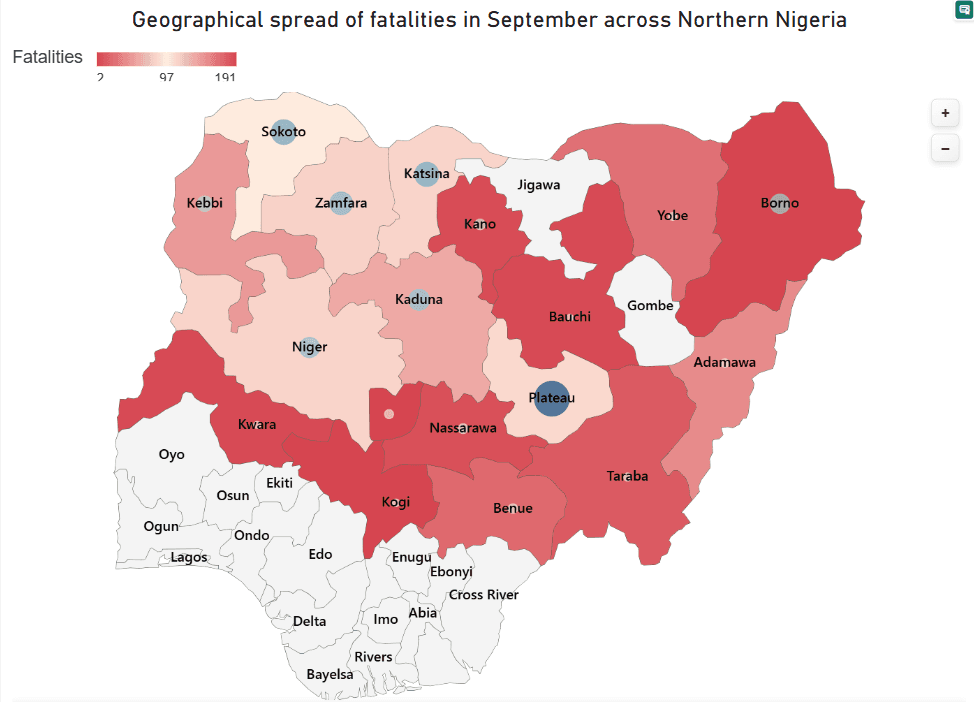
In the North-central, around 20 kidnapped victims, including women, were released from Tyomu community in Makurdi Local Government Area after an ₦8 million ransom was reportedly paid, alongside foodstuff and groceries worth more than ₦500,000 provided to the perpetrators. Communities remain under pressure to pay ransom to secure the release of relatives. These payments, however, continue to provide incentives that sustain kidnapping for ransom across the country. In Plateau, communal violence also continued, with a young herder reportedly killed in Wereng community in Riyom Local Government Area. The reporting week therefore shows a combination of attacks on communities, threats to livelihoods and a growing crisis of ethnic and communal violence across northern Nigeria.
North-east Communal Violence Crisis
Across Nigeria, the North-central region has often received the most attention as the centre of communal, ethnic and tribal-linked violence, particularly in Benue and Plateau. These conflicts are often driven by competition over resources and livelihoods and intensified by ethnic differences between opposing communities. The North-east is also experiencing similar forms of conflict, but these clashes are often overshadowed by the extensive reporting and attention given to the insurgency ravaging the region. As a result, communal violence continues to affect communities, destroy livelihoods and deepen mistrust between groups with comparatively less national attention. This dynamic could further complicate the insurgency if the underlying tensions remain unaddressed.
The recent deadly attack in Taraba involving Mambilla residents and pastoralist communities brings this issue into focus. Communal violence in the region has frequently occurred in Taraba and Adamawa, with hotspots including Sardauna on the Mambilla Plateau, Karim Lamido, Wukari, Takum and Bali in Taraba. In Adamawa, Lamurde and Lau have also experienced recurring communal tensions. The diverse ethnic composition of communities in these states, combined with clearly defined livelihoods, can create points of friction. In Taraba, for instance, violence between Fulani communities and the Mambilla ethnic group has often centred on farmland and grazing. A dispute over a single farm can escalate into a wider crisis involving entire communities.
The Mambilla Plateau has historically experienced repeated episodes of communal violence, including in 2007, 2017 and 2018, resulting in hundreds of deaths and significant property losses. Other communities, including Shomo, Karim, Wurkum, Karimjo and Bandawa, have also experienced clashes involving Fulani herders. Adamawa has similarly experienced recurring violence linked to a decade-old territorial conflict between the Bachama and Chobo communities, alongside tensions between Kwa and Kpasham communities.
Conflict Drivers
Several factors drive these conflicts, including land ownership, grazing rights and disputes over the rights of indigenous farmers. The December 2025 attack in Lamurde, for instance, involved a dispute between the Bachama and Chobo communities over family land ownership, which later escalated into wider violence. The recent incident in Taraba was also linked to disputes over land use, particularly whether land should be used for farming or as grazing routes for livestock.
As in other parts of the country, particularly the North-central, climate change has also intensified competition over scarce resources and land. In some cases, disputes over political representation and traditional authority titles, alongside reprisal attacks, further exacerbate existing tensions.
The humanitarian consequences have been severe, particularly in terms of food insecurity and displacement. Communal crises in Taraba have forced residents, particularly women and children, to flee their communities, with some seeking refuge across the border in Cameroon. In Adamawa, displacement caused by communal violence has overlapped with insurgent activity, uprooting communities and placing additional pressure on neighbouring areas. Criminal groups have also exploited these recurring communal conflicts to advance their own interests. Bandit groups and kidnapping gangs have used the violence to attack poorly protected settlements, loot property and rustle cattle. Some have also exploited the porous border with Cameroon to attack communities in Nigeria before retreating into remote areas of the border forests. The scale of the recent attacks in Taraba has therefore raised concerns about how criminal elements could have exploited the situation.
These clashes further complicate the security environment in a region already dealing with a longstanding insurgency. Federal and state authorities therefore need to address the grievances driving communal violence while preventing armed and criminal groups from exploiting them. Local dispute-resolution mechanisms should also be activated quickly to address underlying disputes before they escalate. Community-based early-warning systems would help identify signs of rising tensions and allow authorities and local actors to intervene earlier. This is important because if the underlying drivers of communal violence continue to expand, the conflict could develop into a wider security problem similar to what has occurred in parts of the North-central.
Outlook
The northern Nigeria security landscape is likely to remain volatile in the coming week. The North-west will continue to experience persistent violence from bandit groups and the Lakurawa insurgent faction against communities and livelihoods, as well as along critical highway corridors. The recent expansion of Army formations across states such as Kebbi and Zamfara could improve troop response times in high-risk areas and strengthen efforts to deter attacks by these groups. In the North-east, the communal violence in Taraba will require close monitoring to ensure that tensions do not escalate further.
The military is also likely to maintain pressure on ISWAP as operations against the group continue. In the North-central, Plateau will likely continue to experience communal violence, particularly in existing hotspots. These tensions could also become increasingly vulnerable to exploitation by political actors as the 2027 elections draw closer.
Afroangel Intel Admin
Afroangle Intel Admin
comments
No comments yet