
Islamic State Re-engagement with Bandit Groups Raises Fresh Security Concerns in North-West Nigeria
by
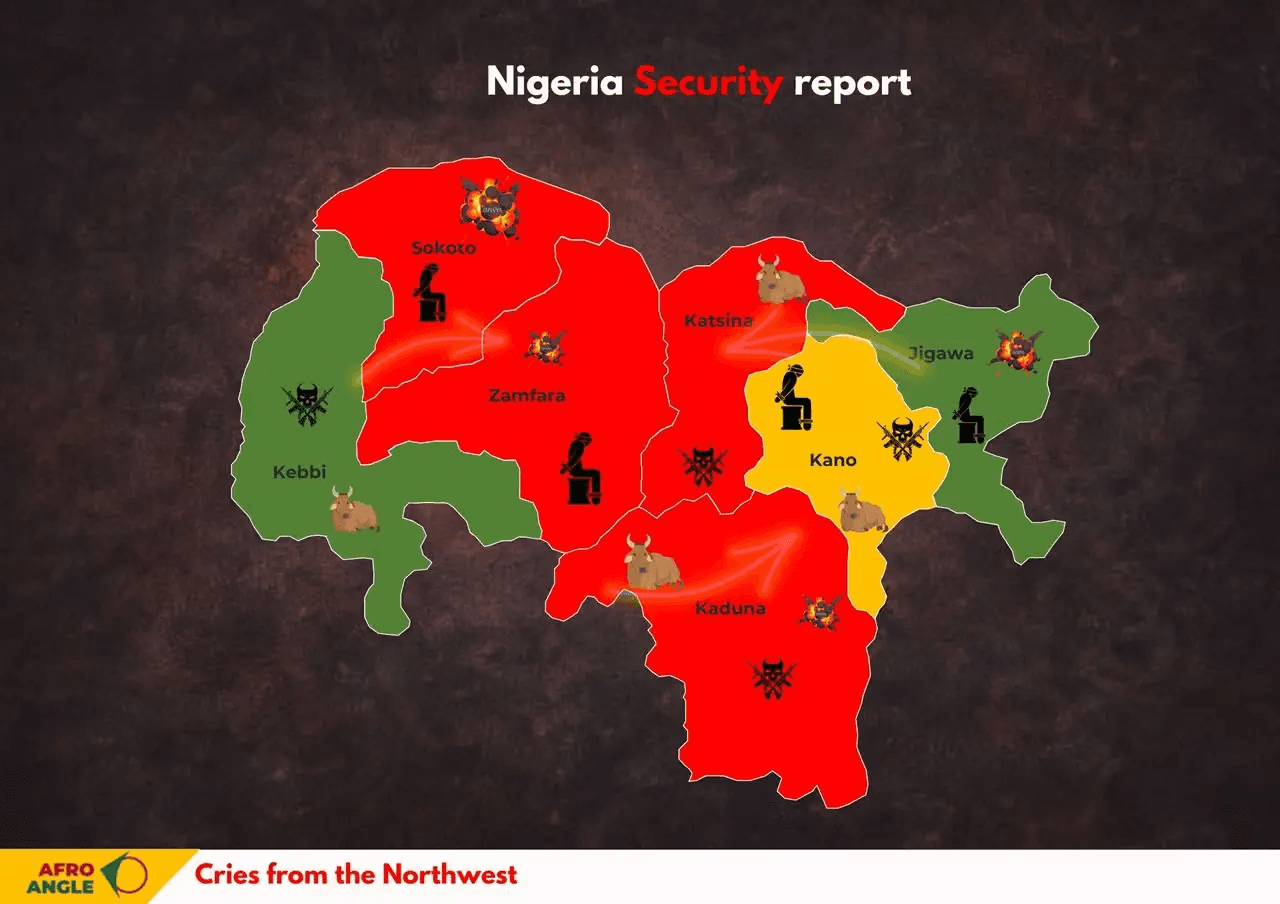
Northern Nigeria Security Situation Report | November 15–21, 2026
Highlights
- Nigeria’s Defence Minister stated that the United States is providing real-time intelligence, satellite imagery and training to the Nigerian military, supporting operations against terrorist and bandit leaders across security hotspots in the North. This marks a new level of cooperation and highlights the growing depth of the US-Nigeria security partnership.
- Nigeria has reached an agreement with neighbouring countries, including Cameroon, Niger and Chad, allowing its security forces to pursue armed groups up to 5km across their borders. The agreement follows concerns over armed groups using cross-border corridors to launch attacks and signals an improvement in security relations with neighbouring countries, particularly Niger and Chad.
- The Nigerian Senate has moved to transmit the State Police Bill to President Bola Tinubu for assent, following its approval by the National Assembly and all 36 state Houses of Assembly. This brings Nigeria one step closer to operationalising state police, although concerns remain over the cost and operational arrangements for establishing and managing state police forces across the country.
Introduction
Amid escalating insecurity across northern Nigeria, particularly in the North-West, the Nigerian Defence Minister has revealed concerns over renewed attempts by Islamic State Sahel Province (ISSP) to recruit criminal bandit groups operating in the region. The growing interaction between the insurgent group and local bandit networks could transform the criminally driven banditry that has plagued the region for years into a more dangerous ideological insurgency. This would bring together ISSP's wider networks, capabilities and operational experience with the bandits' knowledge of local terrain and communities. Such a convergence could significantly complicate Nigeria's security response and create a new threat that the government must act quickly to prevent.
Weekly Review
The security environment during the reporting period was shaped by continued violence from armed groups and ongoing counter-terrorism operations. However, security forces are still struggling to keep pace with the evolving threat environment.
In the North-west, bandits attacked a mosque in the low-cost area of Kaura Namoda, Zamfara State, killing the Senior Special Assistant to the state governor. The death toll later rose to seven, while approximately 15 people were abducted. The attack was reportedly linked to a bandit leader known as Bello Wakkala, also called "Dan Sadiya", although Afroangle could not independently verify this claim. Residents also expressed their frustration with the state government during the governor's visit to the victims' funeral.
In another incident in Bukkuyum LGA, Zamfara State, clashes between bandits and local vigilantes resulted in the deaths of 30 bandits and seven vigilante members. Reports also indicated that a notorious bandit leader known as Jijin was among those killed. In Kaduna State, bandits abducted 12 residents of Kurmin Wali community in Kajuru LGA.
In the North-central, police operatives in Kwara State arrested seven suspects over an alleged plot to abduct a businessman in Bode Saadu, Moro LGA. The operation also led to the recovery of a locally fabricated revolver and 30 rounds of ammunition. In Kogi State, a National Forest Guard personnel was killed while repelling a bandit attack along the Iluke-Ofere axis in Kabba/Bunu LGA. Reports indicated that he was conducting surveillance when he engaged the attackers. His intervention reportedly helped prevent a larger-scale invasion of the community.
In Niger State, suspected bandits attacked Lumman-Ba'are community in Borgu LGA during early morning prayers, killing the village head, his wife, children and several other worshippers. The attackers also set the village head's palace ablaze, while an unknown number of residents were abducted. A second attack occurred in Gada-Oli during the afternoon, killing an unspecified number of worshippers. In Plateau State, nine people were killed in an attack on the Zuwagal community in Mangu LGA following the lifting of the dusk-to-dawn curfew.
In the North-East, reporting during the period was largely dominated by sustained security and counter-terrorism operations. These included the arrest of a farmer found with 16 aluminium phosphide tablets suspected to be intended for terrorists operating in an enclave within the Sambisa Forest.
ISSP Moves Closer to Establishing Relationships with Bandit Groups
Before the Defence Minister confirmed ongoing communication between ISSP cells and bandit leaders, a report by humanitarian researcher Yusuf Anka had already highlighted the scale of the emerging security threat. The report included original recordings of communications between both sides and provided further insight into ISSP's attempts to establish a presence in the North-West.
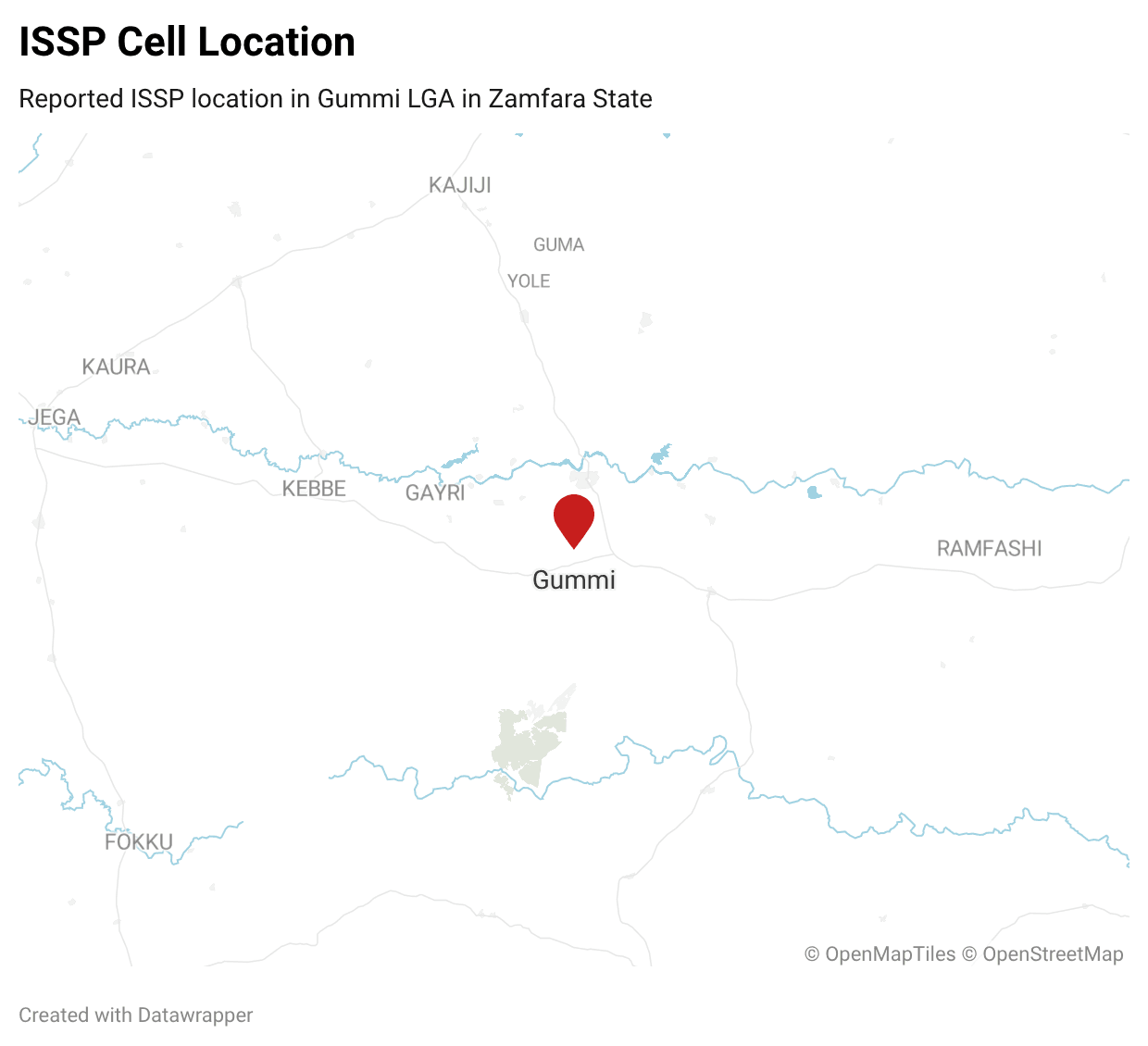
According to the report, ISSP arrived in Zamfara in early 2026 and established a small expeditionary cell around Lonka, a village in the Bardoki/Gwalli area of Gummi LGA. The group focused on two strategies: engaging bandits and establishing relationships with local communities.
On its engagement with bandit groups, ISSP cells reportedly created a WhatsApp group that included some of the region's most prominent bandit leaders, including Dogo Gide, Bello Turji and Ado Aleru. An analysis of the recorded conversations between both sides reveals some of the key issues surrounding ISSP's engagement with these networks and its gradual attempt to establish a presence in northwestern Nigeria.
Known ISSP Infiltration Tactics
Exploiting Ethnic Grievances
First, ISSP is attempting to exploit existing Fulani grievances. The group appears to be directing its message towards both Fulani bandit commanders and fighters, as well as the wider Fulani population. An excerpt from the report indicates that ISSP presents itself as a group willing to help people, particularly Fulani communities, who it claims are suffering from injustice and oppression. Fulani communities in the region have long faced perceived discrimination from government institutions and sections of the wider population. These perceived grievances have also featured in the narratives used by some bandit groups to justify their emergence and continued armed resistance. Some commanders have framed their activities as a response to decades of neglect and discrimination by the state, which they claim pushed them to take up arms.
By feeding into this narrative, ISSP is attempting to position itself as a group willing to defend Fulani communities against perceived injustice. This could create an opening for engagement with Fulani bandit networks and potentially attract support from a wider population that feels marginalised or oppressed. Its messaging therefore serves a purpose beyond recruiting bandit fighters. It could also help the group build relationships with communities that already have limited trust in state institutions.
Potraying as an ALternative Local Administration
Second, ISSP is attempting to present itself as an alternative form of local administration. The report indicates that the group has encouraged bandit fighters to avoid attacking people who have not harmed them. Bandit groups in the North-west are widely known for indiscriminate attacks, killings and the destruction or looting of livelihoods, often without regard for the ethnic identity of their victims.
ISSP's appeal for bandits to avoid targeting unarmed civilians could be part of an effort to distinguish itself from existing armed groups. By encouraging fighters to direct their violence towards the state rather than local populations, the group is attempting to present itself as a lesser threat and a more acceptable alternative. If this message continues, some communities could begin to view ISSP as a more acceptable partner, particularly in areas where state institutions have little or no presence. Communities living under the influence or control of bandit and insurgent groups could become more receptive to its activities.
Inciting Known Bandit Kingpins
Third, ISSP is attempting to attract influential bandit leaders into its network. The group has engaged several commanders in discussions, seeking to draw them towards its cause. This is not the first time insurgent groups have attempted to establish relationships with bandit networks in the North-west. These groups have considerable local influence and familiarity with the terrain, making their cooperation important to any insurgent organisation seeking to establish a presence in the region. Building relationships with them could also help ISSP secure its position without immediately provoking confrontation.
However, some bandit leaders have remained resistant to the group's outreach. Dogo Gide, for example, has reportedly shown little interest in ISSP's preaching. The group, on its part, appears determined to secure the cooperation of these networks. According to the report, ISSP fighters sent a delegation to apologise to a bandit group following a confrontation with its fighters in Gummi LGA. The report also suggests that relations between ISSP and commanders such as Ado Aleru and Bello Turji may be growing closer.
These developments present a serious dilemma for the Nigerian state. The North-west could face a new and more organised insurgent threat if ISSP succeeds in building relationships with established bandit networks and extending its influence into local communities. However, this outcome will depend largely on how quickly the Nigerian state responds to the emerging threat.
Potential Ways to Counter ISSP Expansion Attempts
The first priority should be to prevent ISSP from successfully exploiting existing Fulani grievances, particularly among local communities. This requires proactive sensitisation and awareness campaigns to counter the group's messaging and prevent its fighters from persuading Fulani communities to turn against the state. However, awareness campaigns alone will not address the problem. Once ISSP establishes a degree of trust and cooperation with bandit groups, its next step could be to engage local communities and win their support. The government must therefore ensure that visible signs of state presence remain in these communities and that local populations have access to functioning state institutions.
The proposed establishment of state police could help strengthen security and maintain government presence in vulnerable communities. However, the government cannot wait for that process to take effect. Relevant security agencies and state institutions must remain active on the ground to prevent ISSP and other armed groups from presenting themselves as alternative forms of administration.
There is also a wider regional implication. If ISSP further entrenches its presence in the North-west, clashes between armed groups could intensify along the corridors connecting Niger Republic to the border areas of Zamfara and extending towards Niger State. This could bring ISSP into further confrontation with JNIM cells and Lakurawa as these groups seek to expand their influence. Whether this develops into a wider regional security problem will depend on the Nigerian state's response to the evolving relationship between ISSP and local bandit networks.
OUTLOOK
In the coming weeks, northern Nigeria is likely to experience continued violence from armed groups alongside further clashes and counter-terrorism operations by state security forces and their informal security partners. In the North-west, armed bandits will likely continue attacking communities and disrupting livelihoods. Any further contact between bandit commanders and ISSP cells should be closely monitored, particularly as the group attempts to establish relationships with influential commanders and local communities.
In the North-east, the level of reported insurgent attacks appears to have declined over the past two weeks, possibly due to sustained military pressure. Counter-terrorism operations will likely continue, particularly as the country moves closer to the election period. However, continued military pressure does not rule out further attacks by insurgent groups. In the North-central, violence in Plateau State is likely to persist. The resurgence of armed group attacks in Kogi and Kwara also requires close monitoring, particularly in known hotspot LGAs across both states.
Afroangel Intel Admin
Afroangle Intel Admin
comments
No comments yet