
The Dynamics of Political Violence Ahead of the January 2027 General Election
by
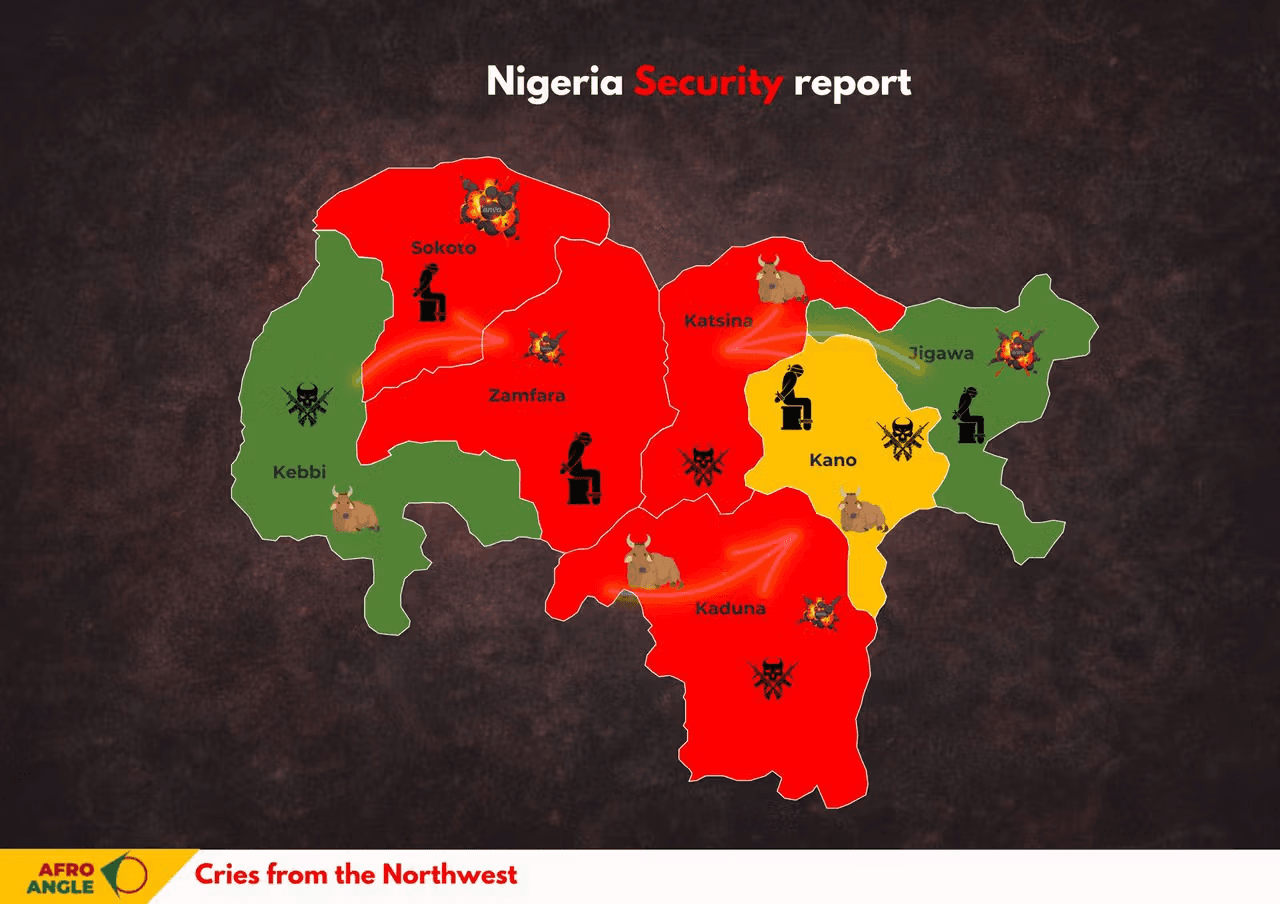
Northern Nigeria Security Situation Report | November 8–14, 2026
Highlights
- The US Congress held a hearing with State Department officials on Nigeria’s designation as a Country of Particular Concern (CPC). November marked one year since Nigeria was added to the list over allegations of Christian persecution. Open-source reports indicate that US officials argued that the violence had not stopped and that Nigeria had not done enough to justify removing the designation. This comes as the US and Nigeria continue to strengthen their bilateral and military cooperation against armed groups across the country.
- The Department of State Services (DSS) operatives intercepted a large shipment of weapons from the Republic of Niger and arrested a female courier in Goronyo Local Government Area of Sokoto State. The suspect was reportedly transporting the weapons, including an AK-47 rifle, to bandit groups on a camel to navigate the difficult terrain. The incident highlights the scale and methods of weapons smuggling across Nigeria. It also raises concerns as the country approaches the 2027 elections.
- Clashes between bandits and local vigilantes resulted in the death of 50 people in Bukkuyum, Zamfara State. The violence followed a large-scale abduction of residents from several villages, after which vigilante groups reportedly ambushed the bandits. The incident highlights the growing role of local vigilantes as a first line of defence for communities. However, their limited resources leave them struggling to sustain this role, while the threat of reprisal attacks continues to put both communities and vigilante groups at risk.
Introduction
Nigeria’s political environment is becoming increasingly tense as political parties intensify their campaigns, legal disputes intensify, and political rhetoric grows more hostile. Data from the CLEEN Foundation recorded 70 physical attacks resulting in 27 deaths across 19 states and the FCT. These incidents are taking place against a wider set of security and political developments that are shaping the campaign season and could influence the conduct of the election itself.
Weekly Review
Security developments across the North during the reporting period were marked by attacks from bandits and insurgents, cattle rustling and military operations against armed groups.
In Zamfara State, bandits attacked Gidan Taba village in Maradun Local Government Area, killing 12 residents, setting houses ablaze and abducting seven others. In Sokoto State, police operatives conducted an operation in Dan Tafki village, Yabo Local Government Area, and rescued two kidnap victims after a prolonged gun battle with bandits. The officers also destroyed the group’s hideout and nearby enclaves in the surrounding hills. In Kaduna State, police and local security forces repelled an attempt to rustle cattle in Illa village, Igabi Local Government Area. The operation led to the recovery of 39 cattle belonging to Fulani herders, while one person was wounded.
In the Northeast, the Nigerian military conducted a precision airstrike against insurgent positions around Bulabulutube in Ngala Local Government Area, killing 15 fighters. Aerial surveillance had identified approximately 30 suspected terrorists gathered under a tree in the area. A subsequent battlefield assessment also indicated the possible destruction of explosives and other military supplies belonging to the group. In Taraba State, troops dislodged a terrorist group from its hideout during a fighting patrol in Karim Lamido Local Government Area. They recovered five motorcycles suspected of being used for mobility and logistics. In Adamawa State, troops repelled an insurgent group attack in Gombi Local Government Area, killing two fighters and recovering weapons and ammunition, including two locally fabricated explosives.
In the North-Central, most of the reported violence occurred in Plateau State. In Barkin Ladi, a suspected militia attack killed four people, including a Nigerian Army soldier. Local residents blamed Fulani attackers, although this could not be independently confirmed. Meanwhile, troops launched operations against terrorist and bandit hideouts in Dajin Madam forest, which straddles Kanam and Wase local government areas. They destroyed several camps and killed two armed criminals during successive encounters. In Kogi State, troops and the Kogi State Vigilante Service rescued four kidnapped persons during a security operation in Ejiba community, Yagba West Local Government Area.
The reporting period reflects continued attacks on civilian communities and disruption to local livelihoods. Military operations have put pressure on armed groups, but security forces remain exposed to attacks across the region.
The Nature of Political Violence Ahead of the Election
As the campaign season gets underway, both the ruling and opposition parties have begun campaigning across the country. Political violence has also become more widespread, with reports of physical attacks, fatalities and breaches of peace agreements. According to ACLED, at least 30 political violence related incidents have been recorded since the campaign began in August.
These incidents have resulted in more than 10 fatalities, vehicle destruction, campaign disruptions and rising tensions. Although attacks have occurred across the country, they are particularly concentrated in Kano, Kaduna, Zamfara and Katsina. This pattern is largely driven by the strong opposition presence in these states and growing discontent with ruling party candidates. Perceptions of marginalisation, economic hardship and worsening insecurity have added to these grievances.
Other states, including Delta, Cross River, Lagos and Enugu, have also recorded incidents. In Ekiti State, 11 people were arrested following an attack on an African Action Congress campaign team. Recent incidents include the killing of one person during an NDC campaign in Asaba and an attack on a presidential candidate’s convoy in Calabar. These developments have raised concerns about the safety of political campaigns and the credibility of the upcoming election. More importantly, they reveal several dynamics shaping the current campaign season and likely to influence the polls.Indices of Election Campaign Related Violence
Several patterns have emerged from the recent violence. The first is the deliberate disruption of political campaigns. Unruly Alleged hired thugs and party supporters are increasingly targeting opponents. These attacks have involved armed groups disrupting campaign convoys and town hall meetings, burning branded vehicles and destroying campaign billboards. All major political parties have faced such attacks. More recently, reports emerged that the President’s convoy was stoned and booed, while APC posters were torn down. It remains unclear whether these incidents were coordinated attempts to undermine the ruling party’s campaign or spontaneous expressions of public discontent. Either way, they point to a changing pattern of political violence ahead of the election.
The second is the use of hired thugs to intimidate political opponents. Civil society organisations have reported that political actors recruit young people and arm them with guns, cutlasses and axes to attack rivals. In some cases, opposition parties have also reported alleged administrative restrictions, including difficulties accessing hostel accommodation and other facilities for delegates ahead of rallies. The use of political thugs is not new to Nigerian elections, but the reported restrictions on facilities available to opposition parties point to another way political actors may seek to limit their opponents’ activities.
Third, while some of these attacks appear politically motivated, they may also reflect deeper grievances against the ruling party. Campaign-related violence has largely concentrated in the Northwest, a region facing severe insecurity, widespread perceptions of marginalisation and growing household hardship linked to inflation and fuel prices. These pressures have followed the government’s economic reforms and may be contributing to public hostility towards ruling party candidates. Political actors could also exploit these grievances to mobilise support or target their opponents.
Finally, there are allegations that federal and state security forces have been involved in disrupting campaigns. In Sokoto State, ADC governorship candidate Daniya alleged that personnel from the Sokoto Marshal and the Sokoto State Community Guard blocked his convoy and prevented ADC members from entering parts of the state. ADC presidential candidate Atiku Abubakar also accused the federal DSS of planning to disrupt the party’s rally in Sokoto by mobilising paid protesters to cause unrest and force the authorities to impose a curfew. The Department of State Services denied the allegation.
These patterns are not entirely new to Nigeria’s political landscape, but they are becoming more volatile. Attacks are increasingly directed at candidates and campaign activities, while political actors may be exploiting existing grievances to weaken their opponents. The trend is likely to continue in the coming weeks. Any perception that opposition candidates are being systematically targeted could further heighten tensions and trigger more violence ahead of the election. The main concern is what this level of tension means for election day. If the campaign season is already this volatile, the risks could become more serious when voters head to the polls.
Outlook
In the coming weeks, Nigeria’s security environment is likely to remain tense as campaign-related violence overlaps with threats from armed groups. In the Northwest, bandit groups are likely to sustain attacks on communities, disrupting livelihoods and movement across the region. In the North-Central, persistent violence in Plateau State could continue to drive attacks on communities and reprisal violence. In the Northeast, the military is likely to intensify counter-terrorism operations against insurgent groups, although ambushes and IED attacks will continue to threaten troop movements and operations.
Afroangel Intel Admin
Afroangle Intel Admin
comments
No comments yet