
ISWAP's Leadership Structure Under Pressure Amid Intensified Nigeria-US Operations
by
Northern Nigeria: Security Situation Report (June 7 – June 13, 2026)
Introduction
Northern Nigeria is experiencing a significant shift in its security landscape, and developments during the reporting period highlight the growing instability of the security environment. While security forces recorded notable operational successes, the continued deterioration of security conditions across several theatres overshadowed these gains. During the reporting period, the Islamic State Sahel Province (ISSP) claimed its third attack on Nigerian territory, targeting Giro Masa in Shanga Local Government Area of Kebbi State. The claim reinforces concerns about the growing presence and operational activity of Islamic State-linked factions in the North-West. At the same time, attacks on farming communities intensified as the rainy season accelerated agricultural activities across the region. Armed groups increasingly targeted farmers and rural settlements, creating a direct threat to livelihoods and food production.
In one of the deadliest incidents of the week, armed groups killed 17 farmers in Maradun Local Government Area of Zamfara State. Open-source reporting indicates that armed groups have killed more than 50 farmers across Zamfara since the beginning of the month. These attacks underscore the growing vulnerability of farming communities and raise concerns about their long-term implications for regional and national food security.
Further south, in the North-Central region, media reports indicate that more than 100 Boko Haram fighters raided communities in Borgu Local Government Area of Niger State, killing an unspecified number of civilians and looting several settlements. Borgu remains one of the most vulnerable areas in the state due to its proximity to the Kainji National Park, which continues to serve as a sanctuary for multiple armed groups, including Jama'at Ahl al-Sunnah lil-Da'wah wal-Jihad (JAS), Jama'at Nusrat al-Islam wal-Muslimin (JNIM), Lakurawa elements, and local bandit factions.
Meanwhile, the most significant development in the North-East concerns the apparent weakening of the Islamic State West Africa Province (ISWAP) leadership structure. Recent Nigeria-US joint operations have killed at least five senior ISWAP leaders and commanders, including Abu Bilal al-Minuki, over the past several weeks. Furthermore, several high-value commanders and specialist operatives have reportedly surrendered to Nigerian forces following sustained aerial bombardment, intelligence-driven operations, and persistent surveillance campaigns.
Although ISWAP retains a capable fighting force and continues to pose a significant security threat, recent leadership losses have disrupted elements of the group's command-and-control structure, weakened fighter morale, and increased the likelihood of internal competition over leadership succession. The extent to which these developments affect the group's long-term operational effectiveness remains uncertain. However, they represent one of the most significant setbacks to ISWAP's leadership network in recent years.
Weekly Review
Security conditions across Northern Nigeria continued to deteriorate during the reporting period, with all major security indicators recording increases. The data reflects a worsening threat environment driven by sustained armed group activity across multiple theatres.
Recorded incidents increased from 33 in the previous week to 43, representing a 30% rise in the operational tempo of attacks. Fatalities also increased by 35%, underscoring the growing lethality of violence across the region. Most concerning is the continued rise in abductions. Kidnappings reached 146 victims during the reporting period, marking a 32% increase compared to the previous week and highlighting the enduring profitability and strategic importance of kidnapping within the armed groups' operational model.
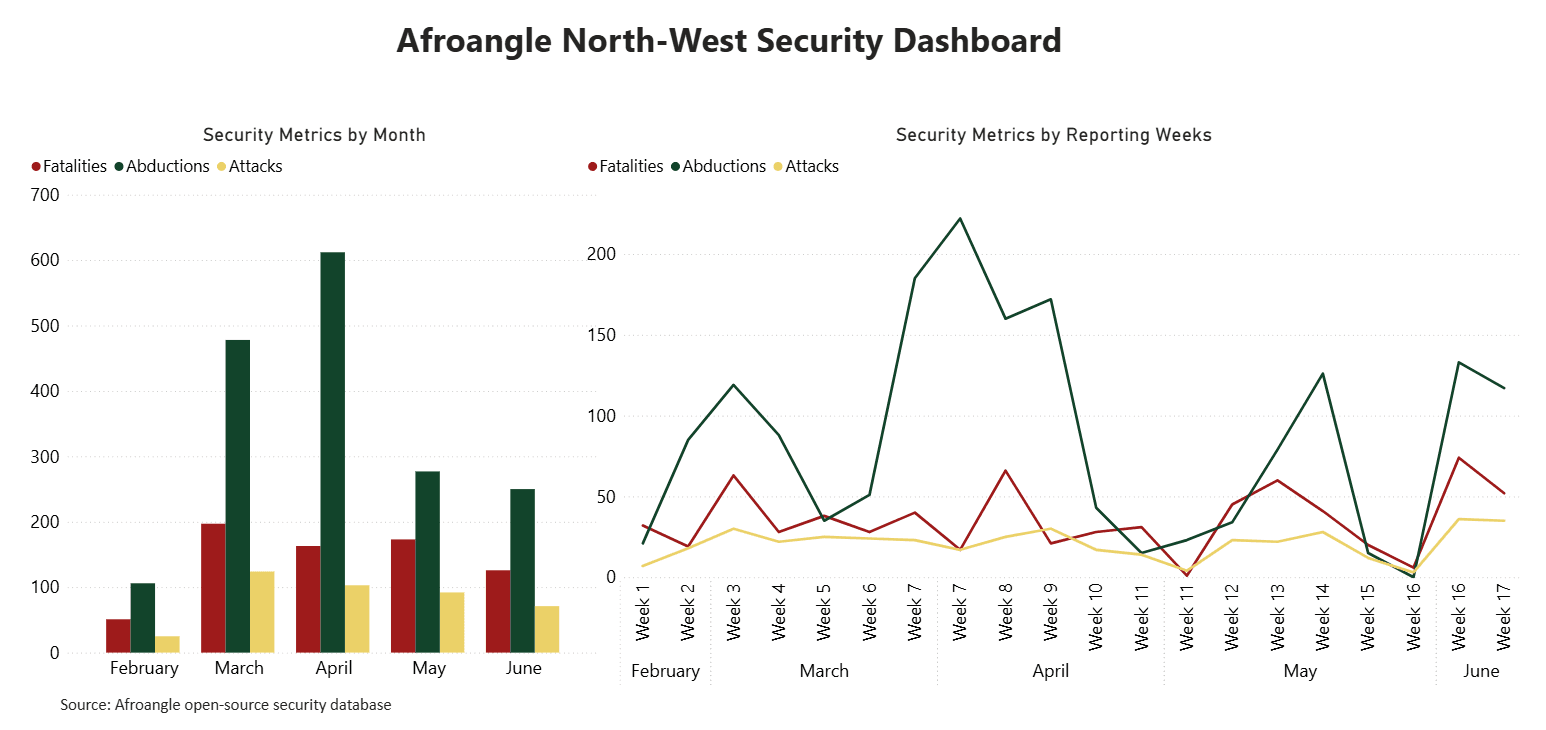
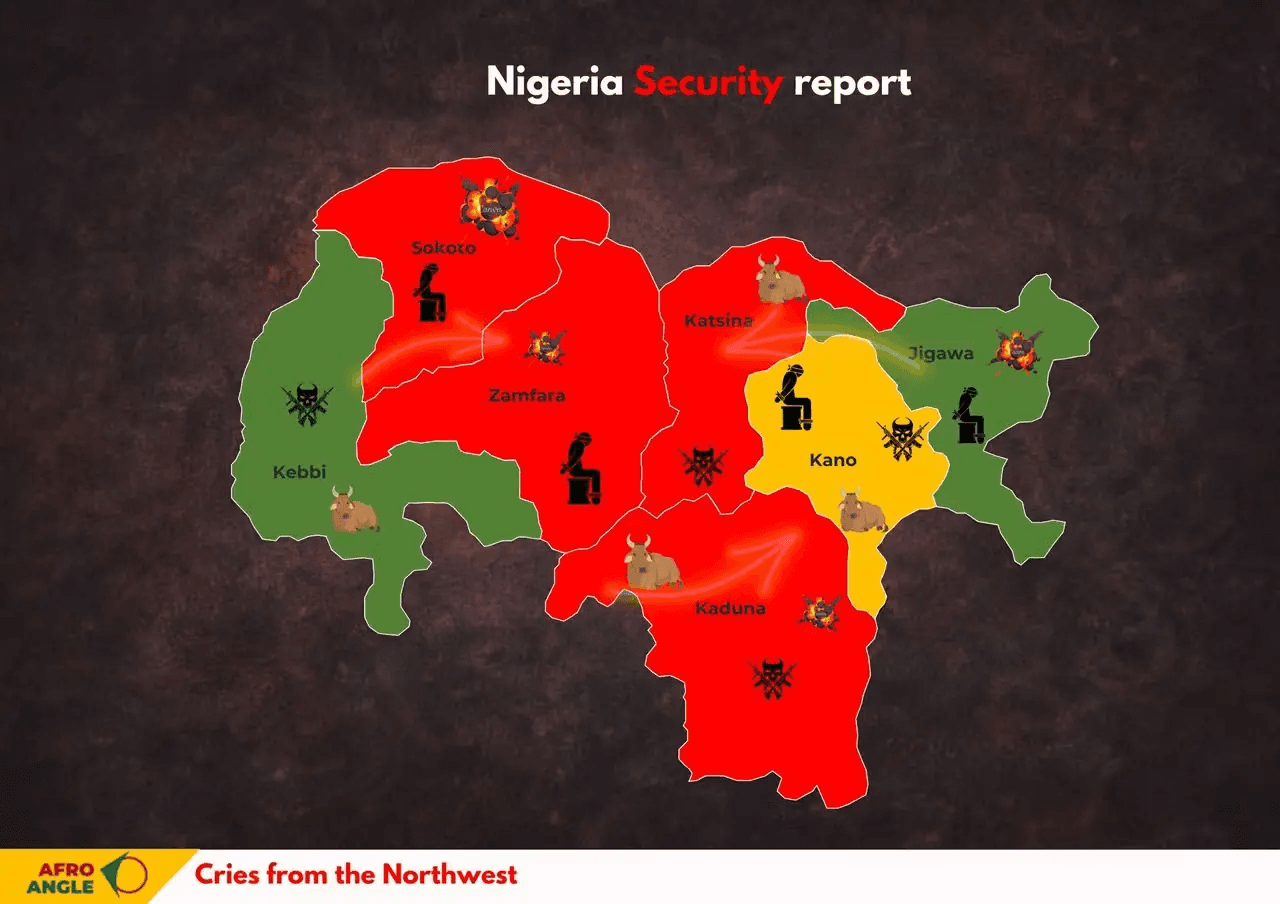
At the state level, the geographic concentration of violence continues to shift. Katsina emerged as the most affected state during the reporting period, with Zamfara closely following across all major security metrics. Both states recorded 23 incidents and 15 fatalities respectively, reflecting the intensity of violence in the region's core conflict zones. However, Zamfara accounted for the highest number of abductions, recording 82 kidnapped victims compared to Katsina's 34. This pattern highlights the evolving nature of the conflict and demonstrates how different armed groups continue to adapt their operational tactics across the region.
Analysis: Military Pressure Is Weakening ISWAP's Leadership Structure
Recent Nigeria-United States counterterrorism operations have placed unprecedented pressure on the leadership structure of the Islamic State West Africa Province (ISWAP). The joint operation that eliminated a senior ISWAP figure marked the beginning of a broader campaign targeting the group's command network. Subsequent airstrikes and intelligence-driven operations have neutralised several senior leaders and commanders. However, the full impact of these operations has become more visible only in recent weeks.
During the reporting period, two senior commanders identified as Ismail Mohammed and Abu Umar surrendered to Nigerian forces, further weakening the group's leadership cadre. Both individuals reportedly possessed extensive operational knowledge and played critical roles in sustaining the group's activities.
According to open source reporting, Ismail Mohammed maintained close ties with senior ISWAP leader Ba'a Shuwa and possessed detailed knowledge of the group's command structure, operational planning, and internal networks. Abu Umar reportedly served as a skilled explosives specialist responsible for the fabrication, maintenance, and deployment of vehicle-borne improvised explosive devices (VBIEDs) and other combat-support equipment used by the group. Their surrender represents a significant setback for ISWAP given their experience, influence, and technical expertise accumulated over years of involvement in the insurgency.
Beyond these individual losses, recent developments suggest broader disruptions within the group's leadership ecosystem. Reports indicate that the Islamic State has slowed the deployment of experienced foreign fighters from Iraq and Syria into the Lake Chad Basin and Sahel theatres as it reassesses its strategic posture amid intensified Nigerian and U.S. intelligence, surveillance, and reconnaissance operations.
Perhaps the most consequential challenge facing ISWAP is the question of succession. The deaths and defections of senior commanders have created uncertainty within the group's leadership hierarchy. Abu Bilal al-Minuki, widely regarded as one of the most influential figures within the broader Islamic State network in Africa, played a critical role in shaping the group's strategic direction. Replacing such a figure presents a significant challenge. Compounding the situation, Ba'a Shuwa, who many analysts considered a leading contender for succession, reportedly died during subsequent military operations. His reported death has further complicated the leadership transition process and increased uncertainty within the organisation.
While insurgent groups often possess established succession mechanisms, leadership transitions rarely depend solely on rank or seniority. Internal dynamics, including ethnicity, lineage, factional loyalties, and battalion affiliations, frequently influence leadership selection. The involvement of foreign fighters and external Islamic State networks may further shape the succession process, creating additional layers of complexity. The identity of ISWAP's next leader remains unclear. Nevertheless, Nigerian security forces and their international partners should continue to closely monitor developments within the group and exploit any emerging divisions, leadership disputes, or organisational fractures that could create strategic opportunities to further degrade the insurgency.
Outlook
In the coming weeks, Northern Nigeria is likely to experience sustained armed group activity across multiple operational theatres.
In the North-East, ISWAP will likely intensify attacks against military positions and government targets in an effort to demonstrate resilience, reassure its fighters, and project strength following recent leadership losses. Such attacks may also serve as retaliation for the ongoing Nigeria-United States counterterrorism campaign.
Meanwhile, in the North-West, bandit groups and Islamic State Sahel Province (ISSP) elements will likely continue efforts to consolidate their presence, strengthen local influence, and expand engagement with vulnerable communities. The evolving relationship between ISSP networks and local armed actors will remain an important development to monitor.
Equally concerning is the continued vulnerability of farming communities across the North-West. As the rainy season progresses and agricultural activities intensify, armed groups will likely continue targeting farmers through killings, kidnappings, extortion, and illegal taxation. These attacks threaten rural livelihoods and carry broader implications for food production and regional food security. Addressing this challenge will require the deployment of rapid-response security units, enhanced intelligence collection, and sustained protection of farming communities. Failure to secure agricultural areas could exacerbate food insecurity, deepen humanitarian pressures, and further undermine stability across the region.
Afroangel Intel Admin
Afroangle Intel Admin
comments
No comments yet