
Nigeria Emerges as a Centre for Regional Counter-Terrorism Coordination Amid Geopolitical Tensions and Division
by
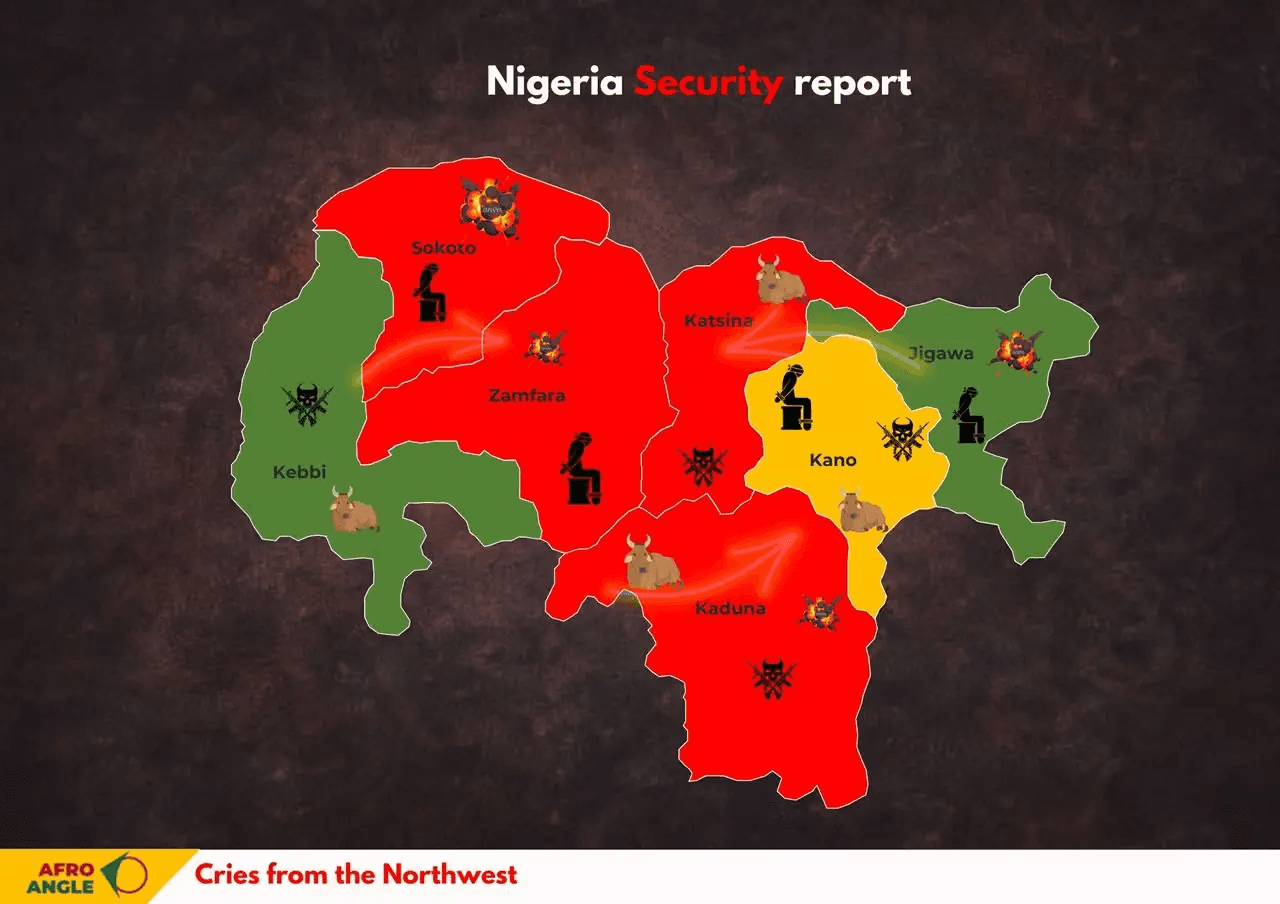
Northern Nigeria Security Situation Report | October 25–31, 2026
Highlights
- The Nigerian Navy Marines launched offensive operations against Boko Haram elements at the group's enclave in Dumba. The operation resulted in the killing of 28 terrorists and was supported by intelligence, surveillance, and reconnaissance (ISR) missions that tracked and monitored suspected terrorist positions. It also underscores the growing role of the naval forces in maintaining a presence, particularly along the waterways of Lake Chad.
- Armed men shot dead a prominent Islamic cleric, Sheikh Yahaya Masussuka, and his friend, Adamu Abubakar, in Dutsin-Ma, Katsina State. The Ansaru terrorist group reportedly claimed responsibility for the killing, although this has not been independently verified by the authorities. The cleric's death follows his plans for an interfaith summit and draws attention to the growing number of attacks on Islamic clerics in the North by violent extremist groups, particularly during the period the country approaches the electoral cycle.
- Nigeria's Defence Minister noted that the country will begin large-scale domestic production of defence equipment within the next year to meet military requirements and increase defence exports to other African countries. This follows government intervention to expand domestic manufacturing by supporting the Defence Industries Corporation of Nigeria (DICON) and other private defence companies to accelerate production and strengthen self-reliance amid growing security challenges.
Introduction
In a significant development in Nigeria's fight against terrorism, the country's National Counter-Terrorism Centre has been formally accredited as the African Union Regional Centre of Excellence for West Africa and the Sahel.
This designation positions Nigeria as a focal point for regional security operations, with responsibility for coordinating regional collaboration on intelligence gathering, operational training, policy development, and preventive mechanisms. However, this new role comes at a time of growing transnational threats from armed groups, geopolitical tensions, and strained relations with countries in the Sahel, which remain heavily affected by terrorist activities. As Nigeria assumes this position, it will have to navigate these constraints to ensure the effective delivery and coordination of regional security priorities.
Weekly Review
The reporting week was characterised by a mix of operational successes and continued attacks by armed bandits and insurgent groups against security forces and civilian populations. In the North-West, security forces, led by the police and local community security outfits, repelled an attempted bandit attack on Bukuyum town. More than 30 bandits were reportedly killed during the attack.
Separately, three Islamic clerics who were abducted by bandits in September were rescued unharmed through the combined efforts of security operatives from the Office of the National Security Adviser (ONSA), the Department of State Services (DSS) and the police. In Kebbi State, suspected Lakurawa and Mamudawa fighters launched a series of attacks on riverine communities in Karwa, Kestu and Waiwayi in Koko-Besse. The attacks lasted several days, leaving one police officer and 11 residents dead, while properties and houses were looted.
Reports indicated that the attacks by Lakurawa fighters were in response to the recent establishment of a military forward operating base in the area. Meanwhile, in Jigawa State, an attack on Tuje community in Kiyawa Local Government Area, allegedly carried out by youths from a neighbouring community in Bauchi State, left three people injured as cross-border community tensions escalated.
In the North-East, at least five people were killed in suspected Boko Haram attacks on the Gaya-Sikalmi and Gaya-Gartsanau communities in Hong LGA. Three people were killed by gunfire, while two others died in an IED attack. In Borno State, a coordinated airstrike killed 15 insurgents, including a high-ranking ISWAP commander, Abu Zubiru, at the group's enclaves in the Tunbunma area of southern Lake Chad. This forms part of the coordinated offensive operations launched by Nigerian troops against insurgent groups in the state. In the North-Central, armed men abducted a teacher in Nasarawa State and demanded a ₦50 million ransom. Meanwhile, in Benue State, troops of Operation Whirl Stroke foiled a kidnapping attempt along the Naka-Ahume Road during a patrol of the area.
Nigeria Leads Regional AU Centre of Excellence to Strengthen Counter-Terrorism Cooperation
Nigeria's emergence as the Regional Centre of Excellence for West Africa and the Sahel, as part of the African Union's efforts to coordinate and maintain synergy among regional states, is a testament to the country's leadership and capabilities in regional counter-terrorism policy and practice. This designation demonstrates Nigeria's contribution to collective African security through enhanced counter-terrorism cooperation and institutional capacity development.
The role also comes with expanded regional responsibilities, including supporting AU member states through specialised training, joint threat analysis, research, technical assistance, exchanges of lessons learned, and enhanced counter-terrorism cooperation.
However, Nigeria's formal designation does not automatically guarantee the participation or cooperation of the countries it is expected to coordinate. While the AU mandate provides the institutional platform for Nigeria to support regional counter-terrorism activities, its ability to deliver on this responsibility will depend partly on securing the cooperation of member states, particularly those in the Sahel. This presents a significant challenge given the strained relations between Nigeria and the frontline Sahelian states of Mali, Burkina Faso and Niger. Their participation will be important for effective regional intelligence sharing, joint training and operational coordination, particularly as terrorist groups continue to operate across national borders.
Consequently, Nigeria's challenge extends beyond establishing the centre's institutional capacity to building the diplomatic relationships required to make its regional mandate effective. Nevertheless, there are opportunities for coordination that Nigeria can leverage to advance the initiative.
How Nigeria Can Advance Counter-Terrorism Cooperation Initiative
- First, the recent Economic Community of West African States (ECOWAS) and the Alliance of Sahel States (AES) summit held in Dakar offers hope for possible collaboration, as it marked the first formal diplomatic engagement between both blocs. The meeting focused on maintaining formal cooperation to preserve regional stability, establishing joint working groups on critical areas, particularly security, trade and infrastructure, and reviving strained bilateral relations. This could provide an entry point for Nigeria to bring AES countries into the AU initiative under its leadership without creating suspicion or giving the impression of an ulterior motive.
- Another approach would be to utilise countries with working relations with the AES states, such as Senegal and Ghana, to facilitate their participation in an initiative focused on the broader interests of the region. Lastly, Nigeria also has informal channels it could utilise through traditional and religious leaders whose influence extends across the Sahel. A similar strategy was deployed during the strained relations between Nigeria and Niger from 2023 to 2024. These channels could also be used to encourage the participation of the Sahelian states. This is not to suggest that these countries will necessarily challenge Nigeria's leadership. Rather, these options are proposed in preparation for potential obstacles that could affect their involvement. Their participation in the AU initiative, with Nigeria serving as the Regional Centre of Excellence, remains crucial. These countries are frontline states confronting some of the region's most sophisticated terrorist groups, and their geographical proximity means that their non-involvement could have significant regional security implications through cross-border spillover effects. Therefore, for regional counter-terrorism operations, training and knowledge-sharing to take place effectively, Nigeria must ensure that it carefully manages its relations with these Sahelian states.
Outlook
Armed group threats across northern Nigeria will continue to persist. In the North-West, the recurring attacks by armed bandits on critical road corridors in Zamfara State in recent weeks will likely prompt increased troop deployments to secure these routes. Such attacks could affect not only trade activities but also political activities across the state as the country approaches the electoral cycle. Likewise, as Afroangle Intelligence has previously noted, the growing presence and capabilities of insurgent groups linked to Lakurawa and Mamudawa require urgent military intervention. This should be coordinated with troops in neighbouring states, including Niger State, to ensure that military pressure on their enclaves in Kebbi does not create opportunities for their expansion into Niger or Sokoto states.
In the North-East, the military will likely continue assaults on insurgent positions to maintain and strengthen its operational advantage ahead of a potential dry-season offensive against insurgent strongholds. Meanwhile, insurgent groups will continue to demonstrate tactical resilience and conduct opportunistic attacks to attract wider attention, particularly through continued assaults on military bases.
Afroangel Intel Admin
Afroangle Intel Admin
comments
No comments yet