
Political-Security Threat Nexus Ahead of Nigeria’s 2027 Election
by
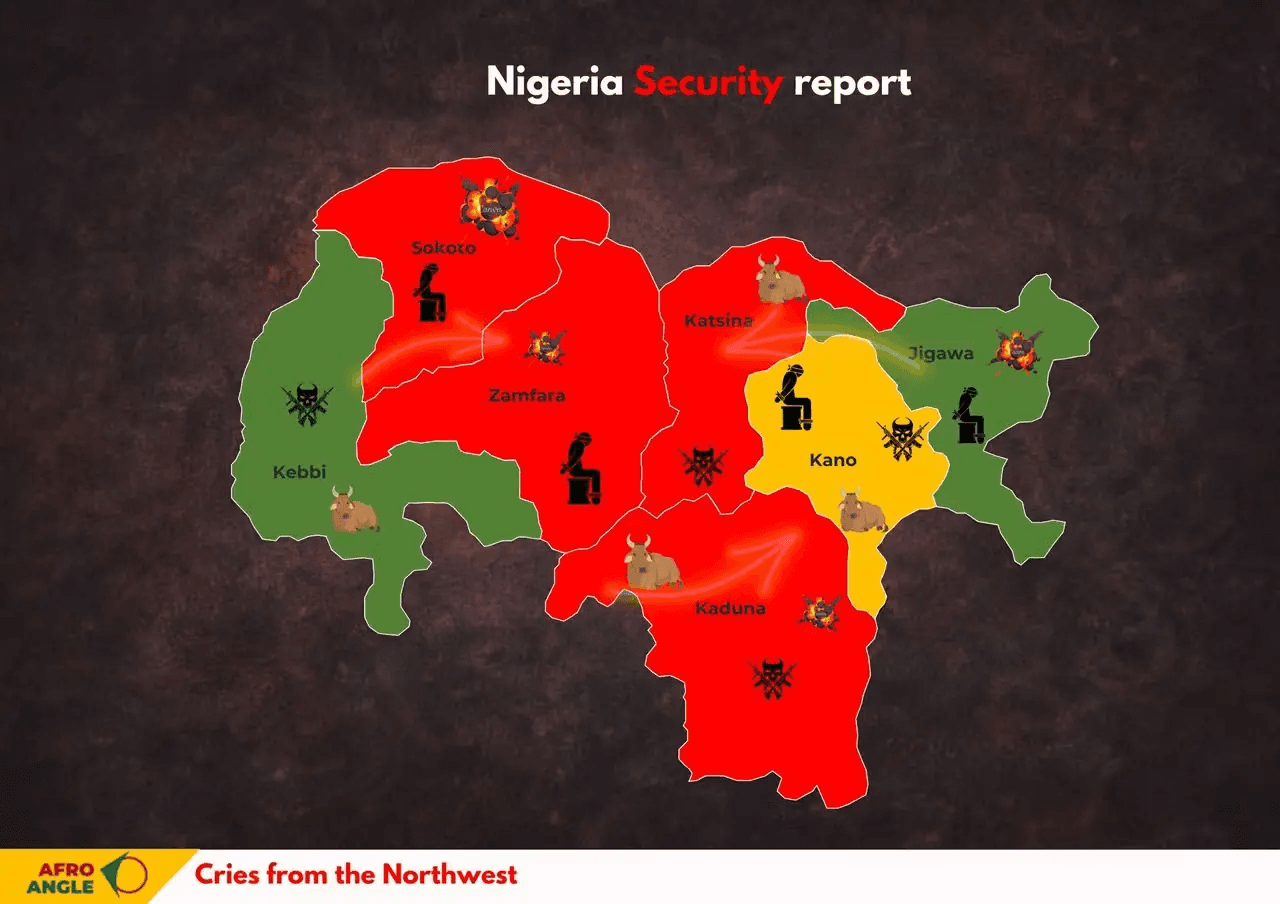
Northern Nigeria Security Situation Report (August 30–September 5, 2026)
Overview
The north-east continues to experience the most intense military pressure, as the Nigerian military sustains a combination of air and ground operations, alongside intelligence actions, to clamp down on insurgent groups, particularly ISWAP. According to open-source reporting, 152 terrorists were killed, 142 suspects arrested and 219 fighters surrendered in August, following sustained military pressure. In addition, 10 air assaults and interdictions were reportedly conducted, while nine IEDs were exploded along critical corridors across the region, with Borno remaining the epicenter. This level of military pressure is significant because it shows that the
Nigerian military is continuing to sustain and capitalize on the degradation of ISWAP following the coordinated US-Nigeria operation. Since that operation, the large-scale and sophisticated attacks that ISWAP has previously carried out, including overrunning military bases and formations, have reduced significantly. The group is now largely conducting episodic attacks, including mortar strikes and ambushes on patrols, which appear aimed at demonstrating resilience despite its weakened operational capability.
At the same time, the turf war between Boko Haram and ISWAP continues. Unconfirmed open-source reporting indicates that more than 23 terrorists were killed in a clash around the Chingolo axis of Bama Local Government Area, further highlighting the internal pressure facing the insurgency.
On the other hand, the political climate is becoming increasingly tense with the launch of the campaign season for political parties. Politically motivated violence and attacks are already becoming more visible. In Kano, thugs attacked journalists covering an APC political rally. This came months after three people were reportedly killed by suspected political thugs during the inauguration of a new deputy governor of the state. During the reporting period, the APC governorship candidate in Borno State also came under attack when his convoy hit an IED along the Gubio-Kareto-Damasak highway. A police armoured vehicle was completely destroyed, although no fatalities were reported.
Similarly, ahead of the election period, police officers in the Federal Capital Territory, Abuja, launched a major show-of-force operation across identified strategic flashpoints in the capital. The operation reflects growing concern that political mobilisation could create additional security pressures as campaigns begin and the election draws closer.
The 2027 election is therefore taking place against a particularly difficult security backdrop. Beyond the political competition and mobilisation among parties, the election is unfolding at a time of intense insecurity across several parts of the country. The emergence of election-related violence at this stage raises concerns that existing security threats could intersect with political competition, creating opportunities for armed and non-state actors to exploit the electoral environment.
Weekly Review
During the reporting week, security threats across the northern region remained high, with Kano in particular continuing to experience a rise in attacks against political officials and traditional rulers. In Kebbe Local Government Area of Sokoto State, armed bandits reportedly imposed a ₦40 million levy on the community and threatened to attack if the payment was not made. The development has reportedly increased fear among residents, with some already fleeing the area.
Similarly, in Rabah Local Government Area of Sokoto State, armed bandits attacked communities in Ghandi and Gidan Kare, killing five farmers and injuring another five. Media reports suggested the attack was carried out as a reprisal following a security operation that reportedly killed 15 bandits in Maikujera. If confirmed, the incident would reinforce the pattern of retaliatory violence following military operations in the region, where pressure on armed groups often result in attacks against vulnerable communities.
In Kano State, the security situation has become increasingly concerning, with repeated attacks targeting political officials and traditional rulers during the reporting period. Armed men reportedly abducted the chairman of Rogo Local Government Area in the town of Beli. About 24 hours earlier, armed gunmen reportedly killed the chairman of Bebeji Local Government Area and abducted his wife and two others. In another incident, three people were killed and five others injured, while the Sarkin Noma of Kano was abducted during an attack in Chiromawa, Garun Malam Local Government Area.
Nigerian troops rescued 23 abducted civilians and foiled a separate kidnapping attempt in Anka and Bungudu Local Government Areas of Zamfara State. The operations demonstrate that security forces continue to record tactical successes despite the wider deterioration in the security environment.
In the north-central region, security concerns remain concentrated around Benue, Kogi and Plateau states, with Plateau continuing to experience recurring and escalating communal violence. During the reporting period, one person was killed and another injured in an attack reportedly carried out by armed militias between Gaude and Mangu Halle in Mangu Local Government Area.
Overall, the security environment across northern Nigeria during the reporting period reflected a combination of operational successes by security forces and continued attacks against communities and influential individuals.
Heightened Security Concerns and Political Targeting Ahead of 2027
In less than five months, Nigeria will go to the polls for the general election to elect the president, governors and legislative representatives. Elections in Nigeria have historically been associated with different forms of violence, including political thuggery, attacks against political candidates and supporters, voter intimidation and suppression. The 2027 election is already showing similar warning signs, with tensions building and incidents of politically motivated violence beginning to emerge across states such as Lagos, Rivers and Kano. Security agencies have also started preparing for potential threats. However, the election is approaching at a time when the wider security environment is already highly fragile.
The 2027 election will take place against the backdrop of widespread kidnapping, insurgency, banditry and communal violence across several parts of the country. This creates a different security environment from previous election cycles because political activity will increasingly overlap with areas where armed groups already operate. During the 2023 election period, ACLED recorded 44 violent incidents involving INEC officials and staff. State-linked security outfits, including Amotekun, were also reported to have participated in or contributed to political violence. The current political environment could produce more complex threats as political competition intensifies. There have already been cases of political intimidation, including threats against voters by political actors, while misinformation and inflammatory rhetoric could further increase tensions as the campaign season progresses.
A more important concern is how existing armed groups could exploit this environment. Insurgent and bandit groups do not necessarily need to become directly involved in electoral politics to affect the election. Their presence across rural and semi-urban communities already creates conditions that can restrict political mobilisation and movement. The recent IED attack involving the Borno APC governorship candidate's convoy and the targeting of local government officials in Kano illustrate the type of threat political actors may face in areas where armed groups operate. While these incidents may not have been politically motivated, they demonstrate how the broader security environment can expose political officials to risks that would otherwise be less likely during an election period.
This creates a wider threat for politicians, electoral officials and voters. Political candidates could face abduction, IED attacks and ambushes while travelling to campaign locations, particularly across insecure northern communities. Electoral officials could face similar risks when transporting materials or moving between polling locations. Voters may also avoid rallies or polling stations if they perceive these areas as unsafe. This could further suppress voter participation, particularly in communities where turnout is already affected by insecurity.
The convergence of political competition and existing insecurity therefore creates the possibility of mutually reinforcing risks. Political actors may exploit insecurity to intimidate opponents or voters, while armed groups could exploit the disruption created by political tensions to expand their own activities. In areas where state authority is already weak, distinguishing between politically motivated violence, criminal activity and attacks by armed groups could also become increasingly difficult.
This makes election security planning particularly important. Security agencies, INEC, state authorities and other relevant stakeholders need to develop a coordinated framework that accounts for both conventional electoral violence and the wider security threats already affecting communities. The focus should be on identifying high-risk locations, protecting political and electoral actors, securing major campaign and polling routes, and ensuring that armed groups cannot exploit the disruption created by the election period.
The key concern is therefore not simply whether political violence will increase before the election. It is whether Nigeria's existing security crisis will create an environment in which political violence and armed-group activity begin to overlap, making the 2027 election more difficult to secure and potentially further reducing public participation.
Outlook
The security landscape across northern Nigeria is likely to remain tense in the coming weeks. In the north-west, bandit attacks are expected to continue across Sokoto, Zamfara and Katsina, while the recent violence in Garun Malam Local Government Area of Kano raises concerns that insecurity is moving beyond the state’s border local governments and further into the interior.
In the north-east, the Nigerian military is likely to sustain its pressure on ISWAP, with continued ground and air operations against the group’s enclaves around Sambisa and the Lake Chad area. This pressure could further constrain ISWAP’s operational capabilities, although the group may continue relying on ambushes, IEDs and other lower-scale attacks to demonstrate resilience.
In Plateau, the cycle of ethnic and communal violence is likely to persist, particularly as retaliatory attacks continue to deepen existing tensions between communities. At the same time, the approaching campaign season could see politically motivated violence and attacks against political candidates, party supporters and other political actors increase. The convergence of these threats will require a more proactive security response, particularly in areas where existing insecurity could create opportunities for political violence and armed groups to exploit the election environment.
Afroangel Intel Admin
Afroangle Intel Admin
comments
No comments yet