
Child Soldiers and the Conflict in Northern Nigeria
by
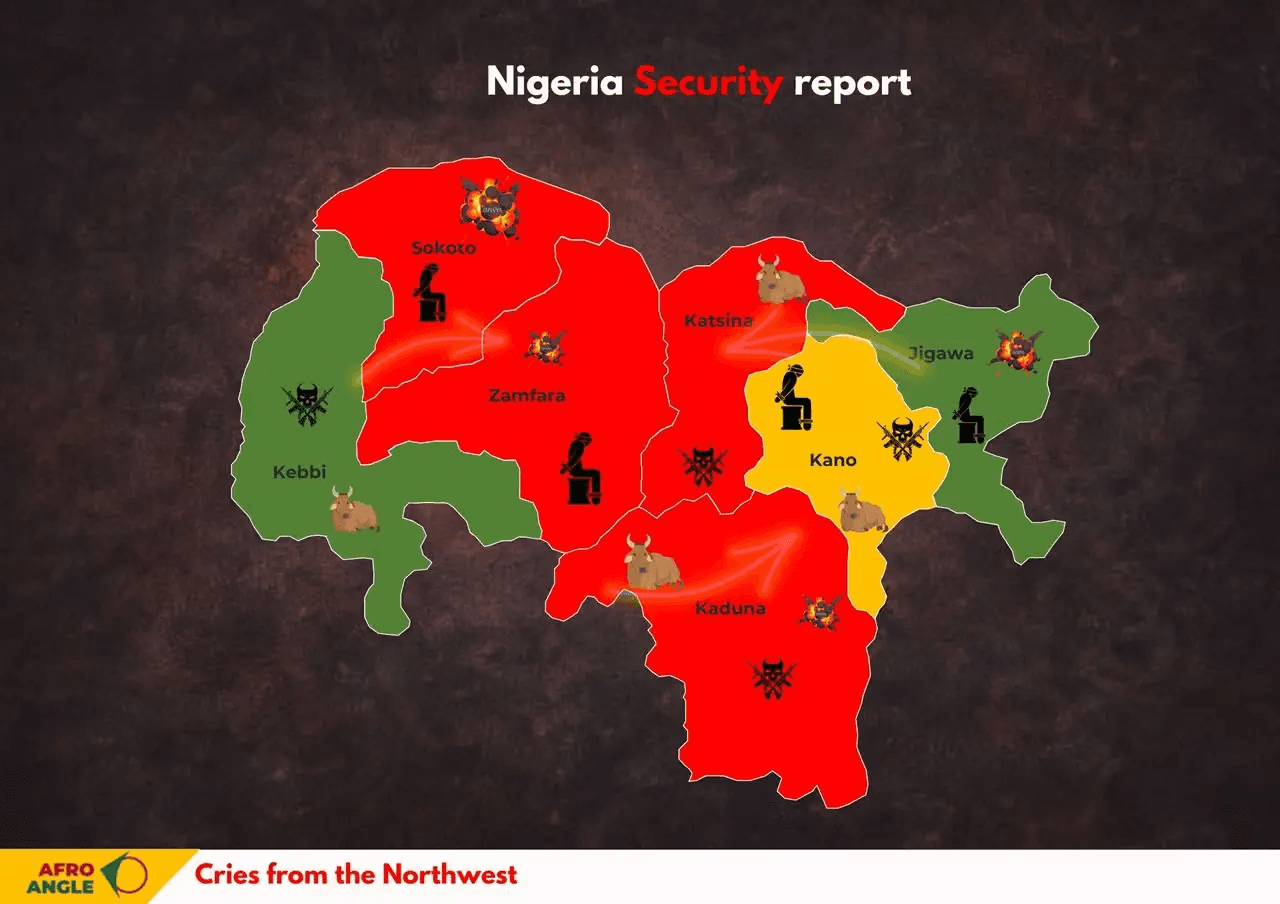
Northern Nigeria Security Situation Report | October 18–24, 2026
Highlights
- Nigeria's state policing initiative has reached a major milestone, with 24 states approving the state police bill, meeting the two-thirds threshold required for the constitutional amendment process to proceed. The development brings the proposal closer to implementation, although further legislative and institutional steps remain before state police can become operational.
- In Zamfara State, a violent clash between rival armed bandit factions reportedly left more than 40 fighters dead, including a younger brother of notorious bandit leader Ado Allero, identified as "Senator". The cause of the confrontation remains unclear, but the incident points to continued divisions among armed groups in the state.
- In the North-East, Operation Hadin Kai reportedly killed 103 ISWAP fighters and destroyed logistical assets during eight days of airstrikes across Borno and Adamawa states. The strikes reportedly killed Abu Saleem, identified as ISWAP's wali of the South Lake Chad area, in Monguno LGA, alongside other prominent fighters. The operation could weaken the group's operational capacity in the short term, although its longer-term impact will depend on ISWAP's ability to replace personnel and equipment.
Introduction
As the insurgency in Nigeria's North-East continues, the recruitment and use of children by armed groups remains a serious concern. According to a UN report, approximately 8,000 children have been recruited and used by armed groups in the region since the Boko Haram insurgency began in 2009. A recent investigation by HumAngle examines how Jama'atu Ahlis Sunna Lidda'awati wal-Jihad (JAS), commonly known as Boko Haram, and the Islamic State West Africa Province (ISWAP) train and indoctrinate thousands of children for integration into their future fighting forces. The scale of this reported recruitment raises concerns about the future of the insurgency and the challenges facing Nigeria's counterinsurgency campaign. Children drawn into armed groups may serve in different capacities, from intelligence gathering and logistics to direct combat. Their involvement can help these groups sustain their current operations while potentially creating a pool of fighters for the future.
Weekly Review
Across northern Nigeria, the reporting period was marked by continued armed-group activity, attacks on communities, abductions and clashes involving security forces. Violence also affected areas less frequently associated with the insurgency, while security agencies recorded operational successes against suspected militants.
In the North-West, armed bandits attacked two communities in Rabah LGA, Sokoto State, reportedly burning houses and abducting an unconfirmed number of residents. In Zamfara State, residents and local hunters engaged in a three-day confrontation with an armed bandit group, reportedly killing 30 fighters during the exchanges. The incident highlights the growing role of community-based security actors in confronting armed groups, although prolonged clashes also expose residents to further violence and possible retaliation. In Kebbi State, suspected Mahmudawa militants reportedly attacked Mobile Police Force personnel conducting a patrol in Illo, Bagudo LGA. The incident adds to concerns about the security situation around border communities and the ability of armed groups to target security personnel operating in these areas.
In the North-East, a Nigerian Army patrol vehicle struck an improvised explosive device reportedly planted by ISWAP near Gamboru, close to the Cameroonian border, killing eight soldiers. The attack demonstrates the continued threat posed by roadside explosives, which can inflict casualties even when insurgents are not directly engaging troops. It also highlights the risks military patrols face while operating along routes near the border. In Taraba State, unidentified gunmen attacked Binnari village in Karim Lamido LGA, reportedly killing at least 40 people. The perpetrators have not been identified, and the motive remains unclear. The scale of the reported casualties makes the incident particularly concerning, although further investigation is needed before attributing it to an insurgent group or linking it to the wider conflict in the North-East.
In the North-Central, tensions in Plateau State continued following an attack on a Miyetti Allah chairman in Mangu LGA, which the victim survived. The incident comes amid heightened tensions between Fulani communities and other ethnic groups in the state, raising concerns about possible retaliatory violence. In Kogi State, troops arrested three suspected terrorists at Jakura Hills in Lokoja LGA over alleged involvement in terrorist activities in the area.
Overall, the week's incidents demonstrate the continued spread of security threat across northern Nigeria. While military operations and local security interventions have disrupted armed groups in some areas, attacks on military patrols and civilian communities show that substantial gaps remain in the protection of vulnerable populations.
How Children Are Recruited into Armed Groups
The recruitment and use of children remains a persistent features of Nigeria's conflict, particularly in the North-East, where Boko Haram and ISWAP have drawn children into their operations. In the North-West, armed bandit groups have also reportedly recruited children to support their activities. Their roles vary, ranging from carrying supplies and gathering intelligence to guarding camps and participating in attacks. In some cases, recruitment can progress from auxiliary duties to direct involvement in violence.
The methods used to recruit children differ across armed groups. Boko Haram has relied heavily on abduction, coercion and raids to obtain recruits. Children taken from communities may be subjected to physical abuse, forced religious conversion and ideological indoctrination. Such practices allow the group to obtain recruits by force, removing children from their families and exposing them to prolonged exploitation.
ISWAP, by contrast, has been reported to use more structured recruitment and training processes in parts of the Lake Chad Basin. These reportedly include religious indoctrination, physical conditioning and firearms training. Some reporting has also described dedicated radicalisation and training facilities. One report cited in the wider debate puts the number of such camps at approximately 50, although this figure requires verification. If the reported infrastructure and training arrangements are accurate, they would suggest that ISWAP has developed mechanisms for preparing recruits to serve its operational needs over time.
In the North-West, bandit groups appear to exploit a different set of vulnerabilities. Children from poor households, out-of-school youths, and orphans may be offered money, motorcycles or a share of stolen property and ransom proceeds. Such incentives make recruitment attractive to children with limited economic opportunities, although some may also be coerced or drawn into armed networks through family, community or other social connections.
Children recruited by bandit groups may serve as informants, monitor troop movements and observe civilian routes. Others are reportedly used to transport supplies, guard camps or mining sites, and participate in village raids. These roles can help armed groups gather information and sustain their operations without requiring every recruit to take part in direct combat.
Why Children Are Vulnerable to Recruitment
Children vulnerable to recruitment come from different social and economic backgrounds, but some face greater risks because of limited access to education, family protection and basic necessities. Children living on the streets or experiencing severe deprivation may be particularly exposed to recruiters who offer food, shelter, money or a sense of belonging. Children associated with the Almajiri system have also been identified as potentially vulnerable where they lack reliable access to food, accommodation, formal education and family support.
However, the vulnerability arises from deprivation and gaps in protection, not from participation in the Almajiri system itself. It is noteworthy to state that many Almajiri children are not involved in armed groups, and treating the system as a direct source of recruitment would overlook the wider social and economic conditions that armed groups exploit.
Displacement and the loss of parental care can create similar risks. Children who have lost family members or been separated from their caregivers may have fewer people to protect them from recruiters. Disrupted schooling and the loss of household income can further reduce their options, particularly in communities affected by repeated attacks and displacement. These conditions do not automatically lead to recruitment. Rather, they can make it easier for armed groups to approach children and exploit their immediate needs. The risk increases when state protection is weak and there are few credible alternatives for education, livelihoods or social support. Prevention therefore requires more than public warnings about recruitment. It also requires practical measures that reduce children's exposure to exploitation.
Recruitment Tactics and the Use of Economic Incentives
Abduction remains one of the most direct methods used to recruit children into armed groups. Boko Haram and some bandit factions have abducted children during raids on villages and other civilian targets, taking them to remote camps or forest enclaves. Once separated from their families and communities, children may face coercion, abuse and pressure to comply with the group's demands. Other recruitment methods rely on persuasion, deception or ideological influence.
Armed groups may approach children through religious outreach or use existing social relationships to introduce them to extremist beliefs. Religious instruction itself is not evidence of recruitment, but it becomes a concern when it is used to promote violence, justify attacks or prepare children to serve an armed organisation.
Economic incentives can reinforce these methods. Stipends, food, shelter, motorcycles and promises of a share in ransom payments or looted property may appeal to children with few other means of support. For armed groups, such incentives can provide a relatively accessible way to attract recruits. The combination of coercion, ideological influence and material incentives makes the problem difficult to address through a single intervention.
The Long-Term Implications for Nigeria's Counterinsurgency Campaign
The recruitment of thousands of children has serious implications for the future of the insurgency. Children who are trained and retained by armed groups may support ongoing operations, allowing fighters to delegate intelligence gathering, transport and other tasks. Those exposed to prolonged indoctrination and violence may also face significant barriers to leaving the group, particularly where they fear retaliation or have lost contact with their families. However, children should not automatically be treated as future fighters simply because they have been associated with an armed group. Their roles and circumstances vary, and some may have been abducted or forced to provide support. Distinguishing between children who have been coerced, those who have performed support functions and those who have directly participated in hostilities is important for both security and reintegration efforts.
The reported scale of recruitment also points to a challenge that extends beyond the battlefield. If armed groups continue to exploit children from communities affected by poverty, displacement and weak public services, military operations may disrupt their activities without preventing further recruitment. The long-term effect could be a cycle in which children are repeatedly drawn into armed networks, while communities struggle to recover from conflict.
Nigeria's response therefore needs to combine military pressure with measures to prevent recruitment and support children leaving armed groups. Authorities should improve access to education, basic services and child-protection systems in vulnerable communities. They should also establish reliable procedures for identifying children associated with armed groups and referring them to appropriate protection and reintegration programmes.
Security agencies must also distinguish between children who have been recruited or exploited and adults who organise, facilitate or direct recruitment. This distinction is essential to avoid treating victims solely as security threats. Where children are suspected of involvement in hostilities, responses should follow applicable child-protection standards and the relevant legal framework.
The wider objective should be to reduce armed groups' ability to recruit and retain children. That requires addressing the immediate mechanisms of recruitment while reducing the vulnerabilities that make children accessible to armed actors in the first place. Without this broader response, the use of children may remain a persistent feature of the conflict, even when individual commanders are killed or military bases are cleared.
Outlook
Armed-group activity is likely to continue across northern Nigeria in the coming weeks, with vulnerable communities and security formations remaining exposed to attacks. As political activity surrounding the 2027 election gathers pace, the potential for political tensions to intersect with existing security threats will require attention. In the North-West, the activities of Lakurawa and Mahmudawa will remain important to monitor, particularly if attacks continue across border communities and transport routes. Any potential expansion towards Niger and Kwara states could increase the pressure on security agencies in the North-Central.
In the North-East, ISWAP may continue targeting military positions, including through attacks designed to exploit gaps in patrol coverage and the use of improvised explosive devices. Recent reported airstrikes could disrupt its personnel and logistics in the short term, but the durability of those gains will depend on whether the group can replace losses and sustain its supply networks. In Taraba State, the attack in Karim Lamido LGA requires further investigation to determine the perpetrators, motive and possible links to wider security networks.
In the North-Central, tensions between communities in Plateau State could lead to further attacks and reprisals, particularly if incidents are attributed to ethnic or communal groups before the facts are established.
Afroangel Intel Admin
Afroangle Intel Admin
comments
No comments yet