
ESCALATING VIOLENCE ACROSS NORTHWEST NIGERIA: MASS CASUALTIES, EXPANDING ABDUCTIONS, AND TACTICAL SHIFTS
by
Listen to this article
Security Situation Report (20 February – 01 March 2026)
Banditry in the north-west continues to represent one of the most persistent and adaptive internal security threats in Nigeria. What began as localized cattle rustling and opportunistic kidnapping has evolved into a semi-structured criminal-insurgent ecosystem characterized by mass-casualty raids, abductions, and rural economic sabotage.
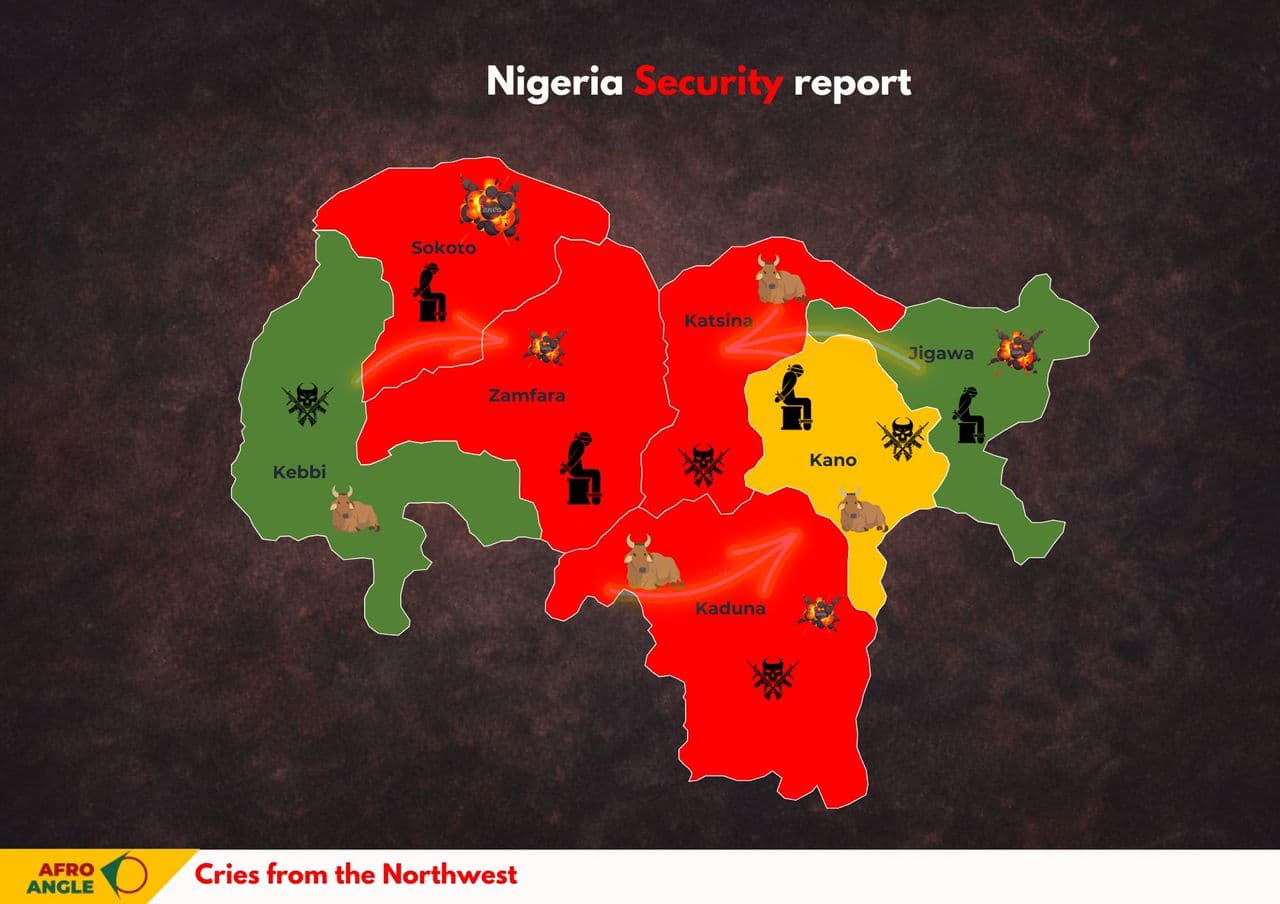
Between 20 February and 1 March 2026, there were several records of coordinated attacks across the region that reflect both operational continuity and evolving methods of armed groups. Zamfara, Katsina and Sokoto remain central theatres of violence, while Kaduna, Kebbi and parts of Kano experienced spillover activity. In this reporting period, we highlight incidents of sustained armed pressure across rural corridors, the growing normalization of ransom-driven abductions and expanding use of improvised explosive devices (IEDs) along transport routes.
Zamfara state: mass casualties and IED escalation
Zamfara state recorded some of the most severe incidents during the period, reinforcing its status as a primary epicentre of armed bandit activity in the north-west. The most devastating attack occurred at approximately 2pm on 20 February 2026, when armed bandits invaded Dutsin Dan Ajiya in Anka LGA, firing sporadically. During the attack, at least 30 civilians, both male and female, were killed, while no fewer than 20 others were abducted. The scale of casualties indicates coordinated operational capacity and numerical strength among the attackers. Additionally, at about 5pm on 20 February 2026, a Nigerian Army Armoured Personnel Carrier (APC) struck an improvised explosive device while escorting civilian vehicles along the Keta–Danjibga road in Tsafe LGA during which the APC was destroyed.
Further incidents were reported along the Magazu–Wanzamai road on 24 February 2026, at least 15 civilians were kidnapped during a highway blockade. At 9am on 25 February 2026, another explosive device detonated along the Gusau–Funtua highway when a commercial cement trailer drove over it. These repeated use of explosives suggests tactical adaptation and increasing confidence among armed groups operating within the Tsafe axis.
In Talatar Mafara LG especially in Jangebe town (Sabuwar Nagarawa area) on 27 February, bandits killed one male civilian and kidnapped at least 17 residents. On 28 February in Tasha Kuturu, two male civilians were killed before soldiers dispersed the attackers. The clustering of attacks across Anka, Tsafe and Talatar Mafara indicates coordinated mobility corridors and operational depth within Zamfara state.
Katsina state:
Katsina state recorded frequent incidents across Batsari, Faskari, Kankara, Bakori, Funtua and Dutsin-Ma LGAs. At approximately 5pm on 20 February, bandits blocked along the Wagini–Batsari road and robbed travellers. They injured a civilian and stole two motorcycles. Around 2pm on the same day, one civilian was killed, two injured and livestock rustled in Faskari LGA.
Kankara LGA saw repeated targeting. At about 10pm on 21 February, two civilians were injured and one abducted. On 26 February, armed men abducted a businessman and his wife from Tudun Daluta.
Bakori LGA also witnessed a financially motivated attack at approximately 9pm on 26 February in Ta-Marke community, where one civilian was killed, another injured and a prominent wealthy resident abducted. These incidents reinforce the continued prioritization of economically viable targets for ransom extraction.
A notable preventive intervention occurred on 27 February, when Nigerian army personnel intercepted armed bandits along the Koramar Goga–Dansabau route, killing three suspected attackers. However, such interventions remain limited relative to overall incident volume.
Sokoto state
Sokoto state, particularly Isa LGA, recorded sustained community invasions.
Isa LGA emerged as a hotspot. At approximately 1:30am on 22 February in Dan Gari, two civilians were injured and at least ten kidnapped. On 23 February, three civilians were killed and one abducted in Bargaja. At about 10:30am on 20 February, one civilian was killed and another injured during a night raid in Tangaza town.
Rarah community in Rabah LGA suffered mass abductions on 25 February with 17 civilians kidnapped. Furthermore, at about 1am on 27 February, Lakurawa militias reportedly killed two civilians and abducted 18 others in Achida, Wurno LGA. The reference to Lakurawa suggests either factional branding or emerging sub-group identity within the broader bandit structure. The clustering of abductions across the Isa axis indicates a sustained ransom-driven operational theatre.
Kaduna, Kebbi and Kano:
Kaduna state recorded incidents in Igabi and Sabon Gari LGAs. At midnight on 24 February, four civilians were kidnapped in Wusar in Igabi LGA. And at about 9pm on 28 February in Sabon Gari, security forces prevented a targeted abduction. In Kebbi state, at about 9pm on 25 February, five civilians were killed and five injured in Dadin-Kowa in Maiyama LGA.
Kano state recorded an attack in Gwarzo LGA at about 2am on 1 March where one person was killed, two injured and several cattle stolen. These incidents indicate continued geographic fluidity across state boundaries.
Overall Assessment and National Trend Context
During the period covered, the northwest region remained under sustained armed pressure. Zamfara and Katsina continue to function as central operational hubs, while Sokoto’s Isa axis reflects concentrated abduction activity. The expansion into Kebbi and Kano reinforces the mobility of armed networks.
When contextualized within broader national trends, several structural dynamics are evident:
- Abduction as Institutionalized Revenue Model: Kidnapping for ransom remains the dominant economic engine of banditry. The targeting of wealthy individuals, traders and community figures demonstrates financial profiling rather than random violence. The locals remain the direct victims of these attacks, where their lives, livelihood are targeted with impunity.
- Tactical Evolution: The increasing deployment of explosive devices (IEDs), particularly along Zamfara transport corridors, signals adaptation beyond small-arms raids. Highway interdictions and convoy ambushes indicate deliberate disruption of both civilian and military mobility.
- Fragmentation and Factionalization: The emergence or branding of groups such as Lakurawa suggests splintering within the broader armed ecosystem, complicating negotiation and intelligence penetration.
- Economic Sabotage: Livestock rustling, rural taxation and farmland destruction continue to undermine agricultural stability, reinforcing displacement cycles.
- Reactive Security Pattern: While security forces have recorded occasional tactical successes, interventions remain largely reactive. Sustained territorial dominance in rural forest belts remains limited.
Strategic Outlook
Banditry in north-west Nigeria now reflects a hybrid criminal–insurgent structure sustained by ransom economies, mobility corridors and weak rural governance.
Without sustained rural dominance operations, strengthened intelligence penetration, coordinated cross-state enforcement and disruption of ransom financing networks, patterns of mass killings, highway ambushes and systematic abductions are likely to persist in the near term.
Salihu Abdulmumini Bamle
Salihu Abdulmumini Bamle is a Security and Crisis Management specialist and conflict journalist covering insecurity and humanitarian crises in the Northwest Nigeria.
comments
No comments yet