
How cattle rustling is sustaining violent activities in Northern Nigeria.
by
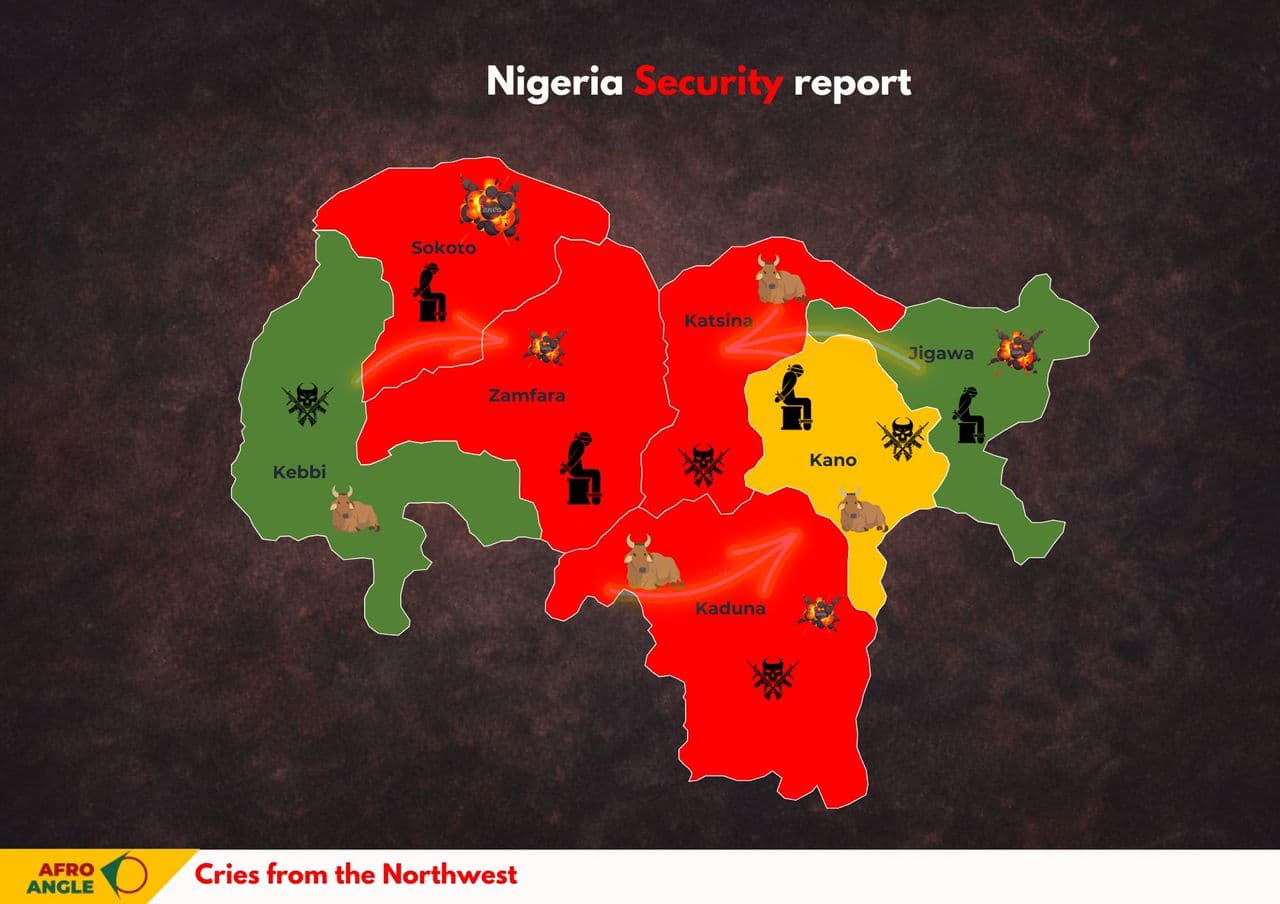
How cattle rustling is sustaining violent activities in Northern Nigeria.
Northern Nigeria: Security Situation Report (July 5 – July 11, 2026)
Highlights of the Week
Oyo Kidnap Victims Rescued
Following weeks of captivity of the abducted Oyo pupils and teachers, Nigerian security forces successfully rescued all the victims. The rescue operation sparked widespread public joy across the country, concluding weeks of a campaign characterized by sustained intelligence gathering and relentless operational pressure on the group responsible for the abduction. The rescue efforts relied on a broad combination of special forces drawn from the DSS, the tactical forces of the Office of the National Security Adviser, the Navy, the Army, and the Police.
This coordinated rescue effort ultimately led to the elimination of the abductors and the arrest of a suspect, bringing a measure of relief to the people of Oyo State. However, the incident does not diminish the ongoing threat posed by the armed group to the region and points directly to the growing vulnerability of the area to violent attacks. Likewise, it highlights the critical need to expand these coordinated, intelligence-led rescue operations to save other victims still held in captivity in Woro, as well as the school children in Borno State.
Security Forces Target ISWAP Militants in Borno
Further north, the security situation remains characterized by both operational successes and continued violent activities. In the Northeast, precision airstrikes by the Nigerian Air Force led to the destruction of terrorist enclaves and infrastructure alongside the elimination of several fighters. This comes as the military sustains its operations to maintain battlefield pressure on the terrorist groups following recent setbacks these armed factions suffered in the region, setbacks that have culminated in a weakened leadership structure and declining morale within the rank and file. Despite these battlefield successes, the group continues to demonstrate tactical resilience; this was evident when the Islamic State – West Africa Province (ISWAP) launched an attack on a troops' Forward Operation Base in Logomani, within the Ngala Local Government Area.
Although the assault was reportedly repelled, portions of the base were destroyed, along with a police outpost and a primary healthcare center. Meanwhile, the North-Central region remains volatile, highlighted by a recent Improvised Explosive Device (IED) detonation targeting a military vehicle in the Babanna area of Borgu, Niger State. This incident underscores the growing sophistication of these groups' capabilities, representing a trend that has been ongoing since the beginning of the year.
Notorious Bandit-Leader Killed in Security Raid
In the Northwest, violence continues unabated as bandits persist in ravaging communities, with civilian abductions continuing across Katsina, Zamfara, and Sokoto states, alongside a recent surge in Kano State following weeks of declining violent activity in the northern commercial hub.
In a significant operational success in the Northwest, a notorious bandit commander known as Kachalla Sani Yellow was killed by security forces in the Anka Local Government Area of Zamfara State. The prominent bandit leader was widely known for coordinating numerous attacks along the Anka-Bagega road, and his elimination is highly likely to disrupt criminal activities in the immediate area in the short term.
Nevertheless, across all these operational threat theaters, particularly within the northern region, a common feature has emerged that is widely recognized as a primary driver sustaining the violent activities ravaging local communities. Cattle rustling has become a core financier of these groups' operations. The financial returns generated from this illicit trade directly boost the coffers of these syndicates, which in turn sustains their capabilities in terms of logistics, operations, and, in some instances, the payment of foot soldiers. Consequently, this funding mechanism continues to perpetuate a relentless cycle of violence across the country.
Weekly Review
Data emerging from the Northwest operational theaters indicates a moderate decline across all tracked security metrics during the reporting week, primarily driven by sustained counter-terrorism operations across the region. The number of recorded incidents fell from 37 in the previous week to 25, representing a 32% decline. Fatalities followed a similar pattern, decreasing from 43 in the past week to 36, reflecting a 16% reduction. The abduction rate also trended downward, with the number of kidnapped victims falling from 138 to 99 in the reporting period; while this volume remains high, it represents a 28% drop from the previous week.
In one notable incident, a bandit faction reportedly affiliated with the notorious commander Bello Turji conducted an assault on the Lajinge community in the Sabon Birni Local Government Area, killing five individuals and abducting 18 others, an event that underscores the near-total control and operational freedom enjoyed by these groups.
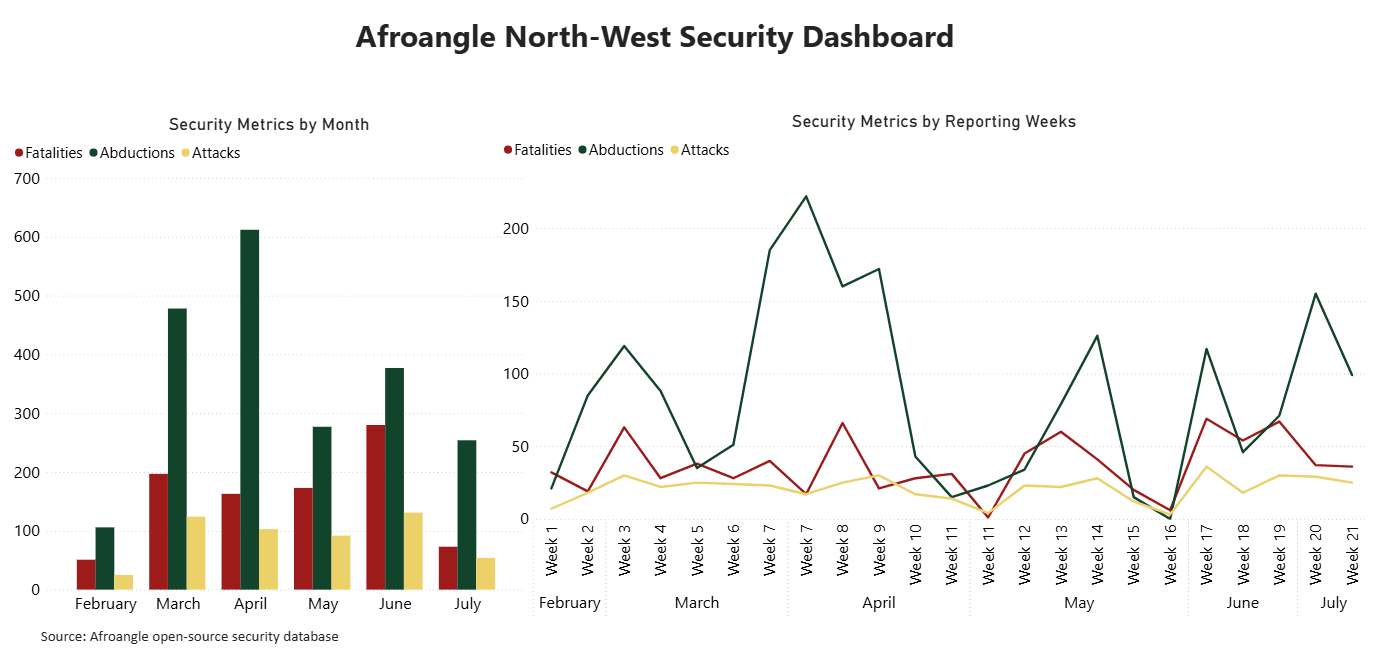
At the state level, Katsina, Sokoto, and Zamfara remain heavily affected, emerging as the epicenter of the violence ravaging the region. In terms of incident tracking, Katsina recorded the highest volume with 10 incidents, followed by Zamfara with 8. Regarding casualties, Zamfara accounted for 18 fatalities, while Sokoto recorded 11. Abductions, however, remain heavily concentrated in Zamfara with 45 victims kidnapped, alongside Katsina with 36 victims. These figures reinforce the continuous exposure of civilians to kidnapping and armed attacks across the region.
Analysis: Cattle Rustling Enabling and Fueling Violence in Northern Nigeria
Livestock herding has historically served as a vital livelihood for communities across Northern Nigeria, particularly within Fulani and, to some extent, Hausa demographics. Over the years, this economic activity has sustained Nigeria’s livestock supply chain, establishing the country as home to the region's largest cattle market with an estimated 54 million head of cattle nationwide. While this vast livestock population has driven legitimate economic activity, cattle rustling has been increasingly leveraged by armed actors in recent years, transforming it into a major financial stream for armed groups and a potent driver of communal and ethnic tensions.
Northern states remain the epicenter of cattle rustling, with Zamfara, Sokoto, Katsina, Kaduna, Kebbi, and Niger leading among the states most vulnerable to these armed incursions. This vulnerability is due to the sheer volume of livestock within these territories and their proximity to viable commercial markets. Rustled cattle are rarely consumed locally; instead, they are systematically transported in large commercial trucks to major markets. Research reveals that the majority of cattle rustled in the Northwest are sold in urban markets across the southern region, moving along transit routes through Niger State toward commercial centers in Lagos, Ibadan, Port Harcourt, and Enugu. Similarly, a portion of the stolen livestock is trafficked into markets in neighboring countries, particularly Niger. The financial gains from these illicit activities are directly utilized to fund weapon and supply procurement, as well as to recruit new fighters. Conversely, these activities sustain localized organized crime and terrorism, serving as a mechanism of forced governance to assert dominance over local populations. This convergence between illicit commerce and armed conflict has become the defining feature of Nigeria’s war economy in the northern region, particularly the Northwest, sustaining ongoing violence in these areas.

Source: Global Initiative Against Transnational Organised Crime (GI-TOC)
Furthermore, cattle rustling serves as a primary driver of communal friction. In highly volatile areas, including northern Plateau and southern Kaduna, rustling has integrated into long-standing farmer-herder conflicts, exacerbating violence and deepening polarization. These tensions frequently culminate in retaliatory conflicts, where criminal militias rustle the livestock of populations perceived as hostile to their communities or destroy agricultural farmlands, with some militias even poisoning or killing cattle. This destructive cycle subsequently regenerates a continuous demand for small arms from both the perpetrators of these crimes and the communities seeking to defend themselves. Crucially, the high frequency of cattle rustling also exerts indirect pressures on local economies, fluctuating the market prices of essential protein sources.
In response, the government has deployed a series of countermeasures to combat cattle rustling, including launching specialized military operations and police collaborations to recover stolen livestock, alongside establishing the National Animal Identification and Traceability System to curb illicit sales. However, these policies have yielded limited efficacy as rustling persists.
A core challenge remains the government’s inability to dismantle the illicit supply chain that facilitates the theft, transportation, and sale of livestock before it reaches end consumers. A highly coordinated supply chain network enables these illicit activities; consequently, redirecting strategic focus toward disrupting this criminal network will be vital to containing persistent cattle rustling and diminishing the primary financial streams of armed groups across the country.
Outlook
In the coming weeks, Nigeria must maintain its crackdown on criminal elements and sustain counter-terrorism operations nationwide. While violent extremist groups and bandits are expected to continue targeting communities and security forces, a sustained and coordinated response remains essential. Following the neutralization of the Oyo abductors, Nigerian security agencies, alongside local security outfits, should maintain a strong operational presence within the Old Oyo National Park, conducting regular clearance and surveillance operations to deny armed groups sanctuary in the vast forest belt.
In the Northeast, coordinated and tactical air support must be consistently provided to frontline troops to thwart any attempts to overrun military formations, while simultaneously sustaining counter-banditry operations in the Northwest. Crucially, given the recent surge in communal friction in Plateau State, coordinated government and localized conflict resolution frameworks must be urgently deployed to halt the recurring cycle of violence in the state.
Afroangel Intel Admin
Afroangle Intel Admin
comments
No comments yet