
School Abduction as a Recurring Armed Group Strategy amid Security Failures
by
Northern Nigeria Security Situation Report (July 12 – July 18, 2026)
Introduction
The operational theater in the Northern Nigeria was marked by persistent violent activity across multiple conflict zones. In the Northwest, a continuous pattern of civilian targeted attacks, looting of properties, and phone confiscations, likely executed by insurgents affiliated with Lakurawa or Jama'at Nusrat al-Islam wal-Muslimin (JNIM), continues to reshape the regional conflict dynamics.
In Zamfara State, armed bandits mounted a road blockade along the Gurusu-Anka axis in Anka Local Government Area (LGA), resulting in the death of a commercial truck driver. Concurrently in Katsina State, bandits attacked the Soro Daya Market in Kankia LGA, killing five people. Despite these incursions, the reporting period also recorded notable community-level resistance; local vigilantes and community watch groups successfully repelled an attack in Yargigi, Musawa LGA, while community vigilantes in Kano State thwarted a similar abduction attempt targeting a former All Progressives Congress (APC) local government chairman.
In the Northeast, Nigerian security forces maintained operational momentum. The Nigerian Air Force conducted a precision airstrike on an Islamic State West Africa Province (ISWAP) assembly point in Yaganari, Borno State, neutralizing 12 fighters as part of an ongoing sustained aerial campaign. Complementing these strikes, ground forces intensified operations into insurgent strongholds around areas such as Gubio. Meanwhile, in the North-Central region, communal friction and farmer-herder clashes escalated across established hotspots in Plateau State, particularly within the Riyom and Barkin Ladi LGAs. In a separate legal development, the Federal Government of Nigeria formally filed terrorism charges against three individuals implicated in the recent Oyo State abductions, reflecting an effort to expedite terrorism prosecutions.
Furthermore, the deliberate targeting of schoolchildren has evolved from isolated pressure tactics into an embedded operational strategy for non-state armed groups across Nigeria. Following the successful rescue of the Oyo pupils in previous weeks, fresh attacks and abduction attempts were recorded in Kogi and Borno states, and similarly where pupils from Askira-Uba remain in captivity. The persistent targeting of educational facilities demonstrates that armed groups view soft targets as high-leverage assets designed to extract tactical, financial, and strategic concessions from the state.
Weekly review
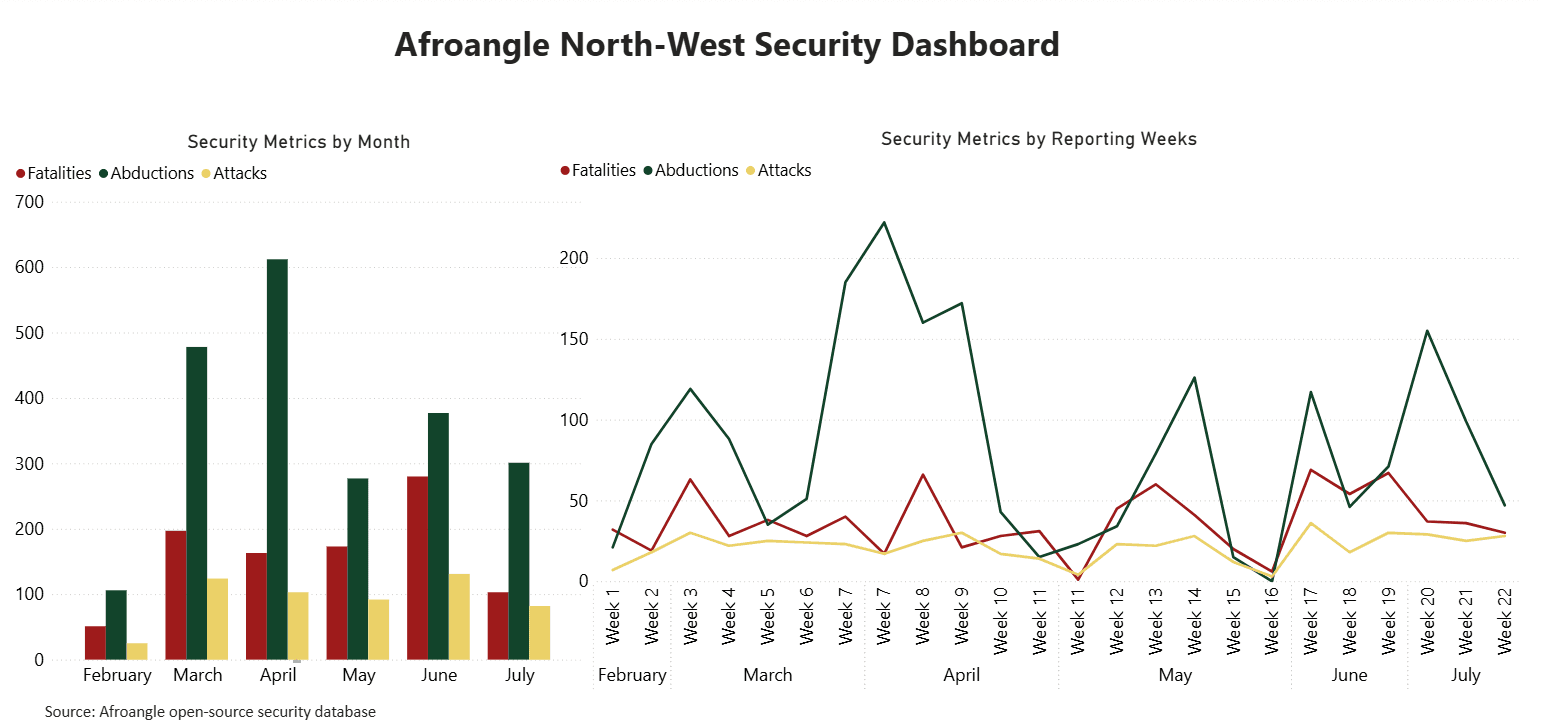
The general downward trajectory in tracked security metrics observed over the preceding week largely persisted through the current reporting week, despite minor localized fluctuations. The total number of recorded violent incidents rose slightly from 25 in the previous week to 28, representing a 12% increase. However, casualty figures continued to decline, with 30 fatalities recorded compared to 36 in the prior period, marking a 16% drop. Abduction metrics registered a sharp reduction; the number of kidnapped victims fell from 99 to 46, representing a 53% week-on-week decline.
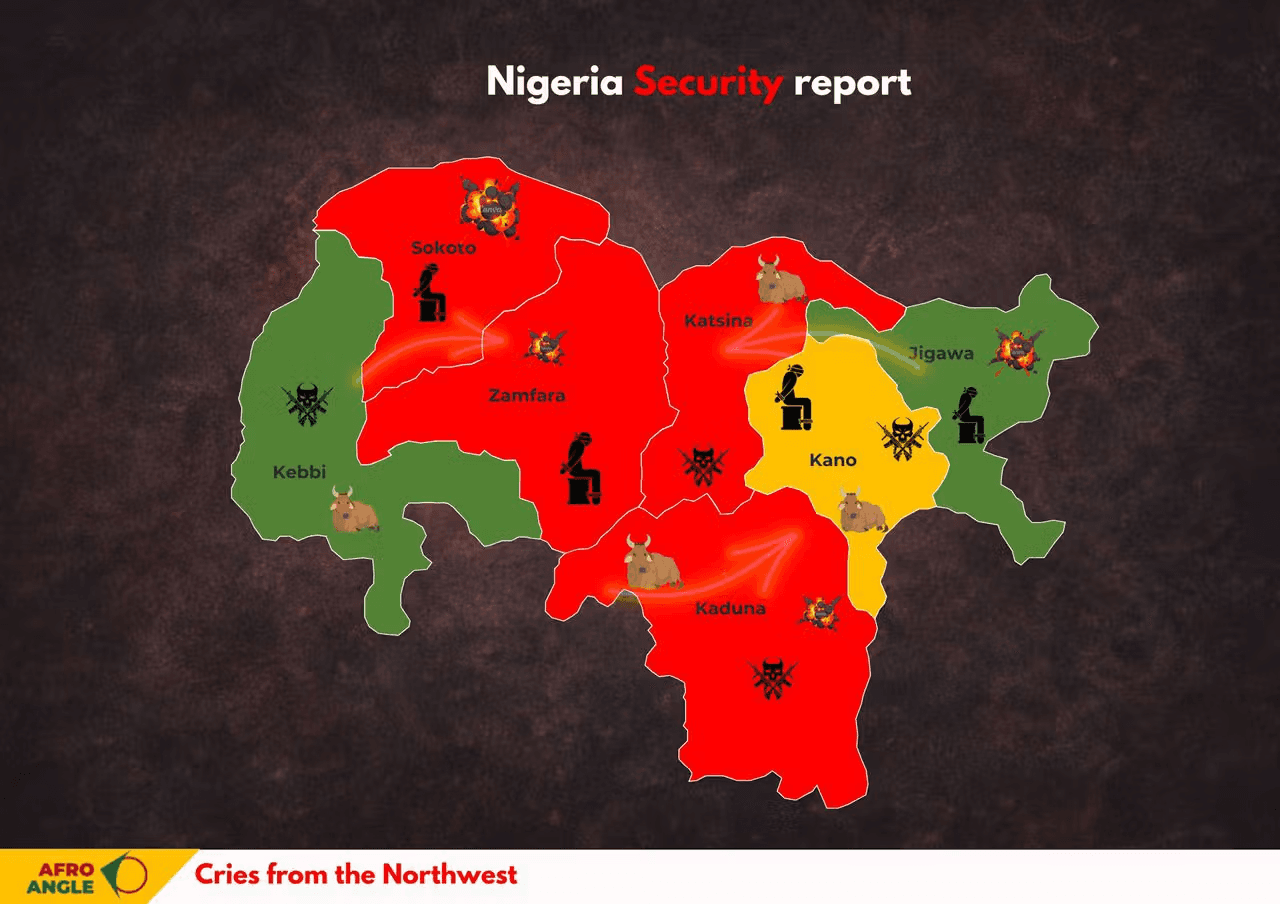
Despite these lower aggregate numbers, violence remains heavily concentrated across specific geographical epicenters. Katsina, Sokoto, and Zamfara states continuously bear the brunt of the instability. Sokoto State recorded the highest fatality count with 15 deaths, followed by Katsina with 11. Sokoto also led in abduction figures with 35 victims kidnapped, while Zamfara recorded 6. In terms of overall incident frequency, Katsina logged 16 incidents and Sokoto recorded 6, highlighting the persistent, localized nature of armed insecurity across these core northwestern states.
Analysis: Understanding the Rise of Mass School Abductions
Mass student abductions have historically defined Nigeria’s security landscape, traceable to major watershed events such as the Chibok abduction in 2014, Dapchi in 2018, and the Kankara schoolboys abduction in 2020. However, the period beginning in late 2025 marked a distinct resurgence of mass kidnapping, evidenced by the abduction of 25 students in Kebbi and the kidnapping of 303 students alongside 12 teachers in Niger State. This trend has accelerated through the first two quarters of 2026, with six separate student abductions recorded across Oyo, Kogi, and Borno states. The Northeast continues to suffer from persistent school attacks, exemplified by the 42 pupils abducted from Askira-Uba who remain in captivity after more than two months, alongside a recently repelled abduction attempt in Monguno.
In response to these pervasive threats, the federal and state authorities implemented various precautionary measures. In late 2025, the Federal Government temporarily closed 47 federal Unity Colleges, while governments in Niger, Katsina, Plateau, Kwara, and Edo states enacted similar temporary school shutdowns. Despite these interventions, attacks on primary and secondary educational institutions have driven widespread population displacement, kept thousands of children out of the classroom, and severely eroded public confidence in the state’s ability to guarantee basic security. A structural analysis of these incidents reveals three core operational incentives driving armed groups to target schools: political leverage, financial gain via ransom, and tactical protection.
Regarding political leverage, armed groups use hostages to force policy concessions from the state. During the Oyo State school abduction, the perpetrators explicitly demanded the release of detained commanders in exchange for the captives. A similar dynamic was reported during the Papiri incident, where the government reportedly released two detained Boko Haram commanders as part of non-public negotiations, a claim the government denied and which remains independently unverified. For financial incentives, student abductions generate immense public outcry and media attention, placing immediate political pressure on the state to resolve the crisis rapidly.
Armed groups capitalize on this pressure to demand substantial ransom payments; unverified reports following the Papiri incident claimed that approximately two billion Naira was paid to secure the victims' release, illustrating how these operations function as major financial drivers for armed syndicates. Finally, for tactical protection, armed groups under heavy military pressure utilize mass captives as human shields to deter direct air campaigns and ground offensives, fearing collateral damage. This strategic calculation delayed the operational rescue of the Oyo captives and likely explains the continuous attempts by insurgent factions in Borno State to secure student hostages amid ongoing military offensives.
While the intelligence-led operation that successfully freed the Oyo captives demonstrates growing tactical capability within Nigeria’s security agencies, questions remain regarding whether such resource-intensive operations can be replicated nationwide. Given that armed groups remain focused on soft targets, there is an urgent need for a comprehensive overhaul of school security protocols in high-risk zones and a critical review of the Safe Schools Initiative.
Outlook
In the coming weeks, northern operational theaters are expected to remain volatile, with civilian communities continuing to face heightened risks of armed attacks and abductions. In the Northeast, the military will likely sustain its combined air and ground offensives to further degrade insurgent capabilities.
In the North-Central region, immediate government attention is required to address escalating communal violence in Plateau State, where community-led conflict resolution frameworks must be deployed to de-escalate tension. Overall, the persistent threat to learning institutions confirms that armed groups will continue leveraging school abductions as a core strategic tool to compel state concessions and offset military pressure.
Afroangel Intel Admin
Afroangle Intel Admin
comments
No comments yet