
The Nexus between Resource Mining and Conflict in Northern Nigeria
by
Northern Nigeria Security Situation Report (September 13 - September 19, 2026)
Introduction
The reporting week began with a strategic procurement by the Nigerian Air Force, following the delivery of five new helicopters as the government accelerates efforts to modernise Nigeria’s airpower capabilities. The platforms comprise three AW-109 Trekker B helicopters and two H-125 helicopters, which are expected to strengthen ISR capabilities, close air support, armed escort and combat search and rescue as Nigeria continues to expand its airpower capabilities amid growing security threats. The national security threat level was also raised after the Nigeria Police issued a nationwide alert based on intelligence indicating plans by armed groups to carry out coordinated attacks on places of worship, schools, NYSC orientation camps and other vulnerable locations. The intelligence points to increased mobilisation by terrorist elements targeting high-risk areas across the North-east, North-west, North-central and parts of the South-west. On the legal counter-terrorism front, the Department of State Service (DSS) re-arraigned five members of Ansaru accused of participating in the attack in Orire Local Government Area. The prosecution comes as the federal government accelerates the prosecution of terrorism cases before the courts.
Furthermore, the Islamic state in West Africa Province (ISWAP) leadership crisis that has affected the group since the US-Nigeria operation continues to deepen. According to open-source reporting, intelligence indicated that prominent commanders within the group were accusing its leader, Ba Shuwa, of ordering the execution of senior members of the Buduma Shura Council after reports that some Buduma commanders were considering defection to JAS/Boko Haram or surrendering to Nigerian troops. Among those reportedly arrested was Yaku Abu Adam, who was recently appointed Deputy Amir al-Jaysh. Open-source reporting indicates that this is the third major purge within the group in three years. However, Afroangle's intelligence team could not independently verify these claims. If confirmed, the development could further weaken the group as ISWAP continues to face increased kinetic pressure from the Nigerian military amid the ongoing offensive campaign.
The incident in Niger State involving the reported deaths of 30 miners in the custody of the Nigeria Security and Civil Defence Corps has also generated widespread concern. More importantly, it highlights how mining activities, whether legal or illegal, are increasingly converging with organised crime, insecurity, the involvement of security officials and allegations of extrajudicial killings by state security forces. For years, the exploitation of critical mineral resources has been linked to insecurity across parts of northern Nigeria. Although the circumstances surrounding the deaths remain unclear, the incident adds to growing concerns over the intersection between mining activities, criminal networks and violence in the region.
Weekly Review
In the North-central, Nigerian troops in Niger State discovered and safely recovered nine Improvised Explosive Devices (IEDs) along a critical road in Borgu Local Government Area. The IEDs were discovered at different locations between Machan, Gyada and Masaka villages along the Baruten-Daji-Dekara road. The discovery raises concerns over the potential disruption of military operations and civilian movement along the corridor. IED installations have become a recurring feature of critical highways around Borgu and extending towards Wawa and Babana. Following the emergence of Lakurawa in the area earlier this year, several IEDs have either exploded or been discovered along critical roads in the area.
In the FCT, a significant operational success was recorded following the arrest of about 300 suspected criminals during raids on identified crime hotspots, shanties and uncompleted buildings across the territory. The operations in several targeted locations also led to the recovery of knives, a toy gun, cannabis and other illicit drugs. In Niger State, another incident generated widespread outcry following the reported deaths of 30 illegal miners in the custody of the Nigeria Security and Civil Defence Corps. The deaths followed the arrest of the miners, while the command stated that the victims died following a disease outbreak in the detention facility. In Plateau State, armed attacks continued, with unidentified gunmen attacking a crop market in Mangu town, Mangu Local Government Area, killing three people and injuring others. The motive for the attack remains unclear, but it occurred against the backdrop of continued violence in several conflict hotspots across the state.
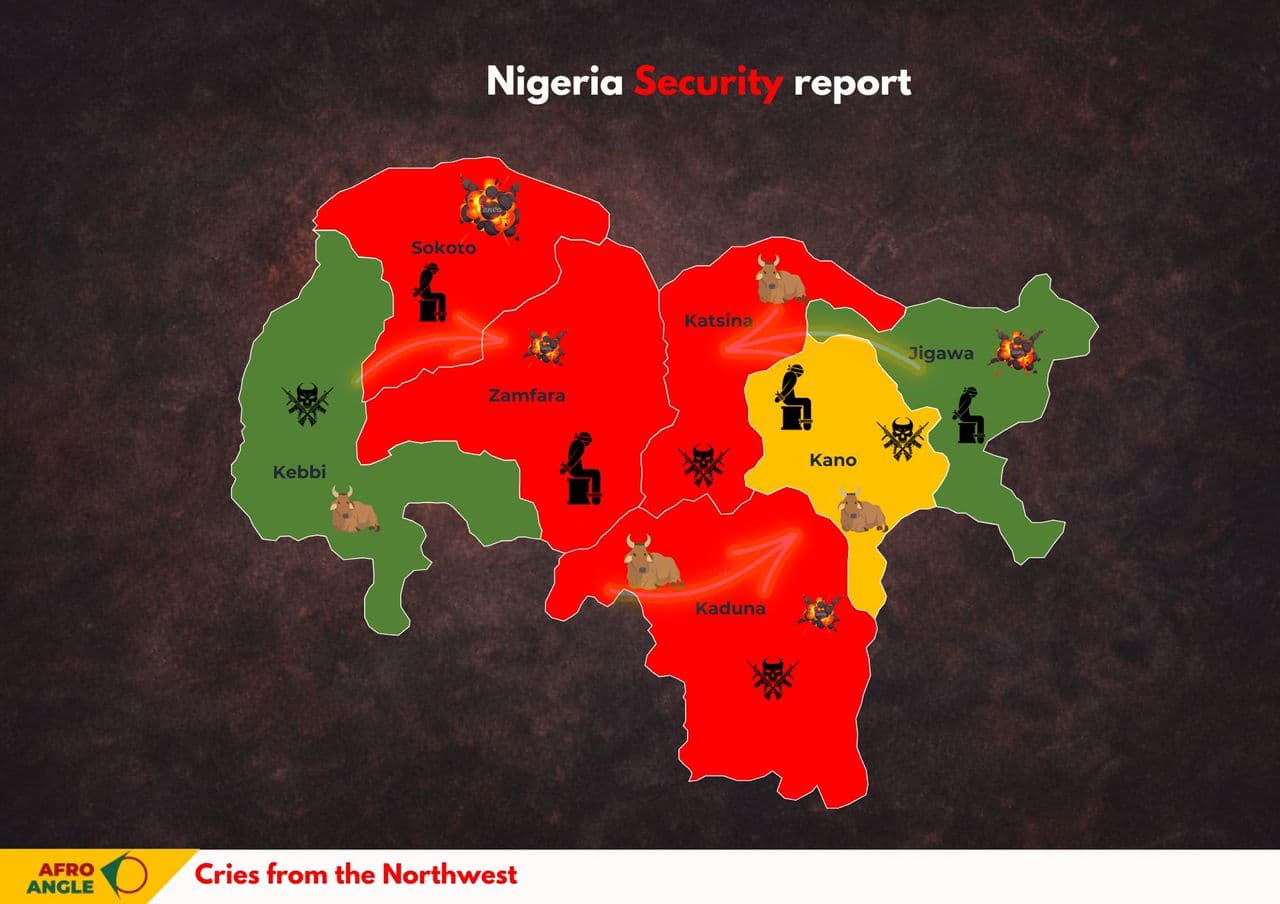
In the North-west, the period was largely characterised by operational successes by security forces. In Sokoto State, police operatives conducting an operation in Tureta Local Government Area killed several suspected bandits and recovered motorcycles. In Kebbi State, the state police command, working with the military, reported killing several bandits in the Gumki forest in Kangiwa, Arewa Local Government Area. The operation also resulted in the recovery of several weapons, including one PKT rifle and an AK-47, alongside other supplies. The reporting period therefore recorded a mix of operational successes and continued levels of violence across the region.
Critical Resources Mining and Insecurity in Northern Nigeria
The recent incident in Niger State brings further attention to the long-standing impact of illegal and unregulated mining across northern Nigeria. Mining has become a wider economic, security, social and environmental problem in the region. States including Zamfara, Kaduna, Katsina, Niger and Plateau have significant deposits of gold, lithium, lead, zinc and other minerals, attracting both local artisanal miners and more organised actors. For many local miners, illegal mining is a livelihood activity driven by poverty, limited economic opportunities and the need to survive. While legal mining also takes place across the region, the growing scale of illegal mining involving local and foreign actors has created significant losses for the country, with estimates putting the annual cost of unregulated mining at about $9 billion. The sector has also increasingly become connected to the wider security challenges affecting northern Nigeria.
The overlap between mining and banditry is particularly visible in areas such as Shiroro, Birnin Gwari, Rafi, Munya and Paikoro. Insecurity in these areas has pushed some traditional miners away and created opportunities for better-connected actors to move into the sector. This has also allowed criminal networks and armed groups to move in and gain greater control over mining sites. Armed groups controlling these areas, then impose taxes and levies on miners in exchange for access, movement of minerals and protection. Revenue generated from mining can then support other criminal activities, including arms procurement, recruitment and logistics.
Geography also helps sustain these activities. Heavily forested areas and porous borders provide armed groups with the space to move, store weapons and evade security forces. The same conditions have also created informal cross-border mineral trading networks, through which resources mined in Nigeria can be moved across the Sahel. This makes illegal mining difficult to address through local enforcement alone, particularly where criminal networks operate across state and national boundaries.
The environmental costs of illegal mining are well documented. Mining activities can destroy farmland, contaminate streams, create open pits and damage grazing areas. The social effects are also becoming more visible, with children working in dangerous mining sites and young women reportedly facing sexual assault and harassment before gaining access to some mining areas. The government, on the other hand, has responded with stronger enforcement and regulatory reforms, although these measures have yet to fully address the conditions that allow illegal mining to thrive. In 2026, the Minister of Solid Minerals Development reported that more than 3,000 mining licences had been revoked and about 2,500 Mining Marshals recruited from the Nigeria Security and Civil Defence Corps had been deployed nationwide. More than 800 illegal operators had reportedly been apprehended, with over 142 facing prosecution. The government has also promoted the formalisation of artisanal mining through cooperatives and the digitisation of the mining licensing system.
A more effective response would need to target the wider mining chain. This includes identifying and disrupting the financiers, mineral buyers, transporters and smuggling routes connecting mining sites to criminal networks. Security operations should also focus on armed groups and influential private actors controlling mining areas, rather than treating individual miners as the primary threat. At the same time, formalising artisanal mining, providing alternative livelihoods and strengthening environmental enforcement would help reduce the incentives that keep vulnerable communities dependent on illegal mining. The key challenge is bringing mining activity under effective state and community regulation without pushing legitimate artisanal miners further into the informal economy.
Outlook
In the coming weeks, security agencies should increase surveillance and intelligence gathering around soft targets and vulnerable locations following the nationwide intelligence alert issued by the police across affected areas in the North-central, North-west, North-east and South-west. In the North-east, the military should continue monitoring the internal leadership purge within ISWAP to identify divisions that could provide operational opportunities, while maintaining pressure through ongoing counter-terrorism operations and ensuring adequate force protection for troops on the frontline.
The North-west is likely to continue experiencing a combination of bandit attacks and military pressure, while Plateau State in the North-central should remain under close observation as communal clashes continue. The recovery of IEDs in Borgu Local Government Area of Niger State also requires continued monitoring of critical highways linking the Kwara-Niger-Kebbi corridor, which remains an important route for the movement of armed groups and their capabilities.
Afroangel Intel Admin
Afroangle Intel Admin
comments
No comments yet