
THUGGERY, SMALL ARMS, AND SURVIVAL OF THE FITTEST IN LAGOS STATE
by
Listen to this article
A city can be so loud and fast that it teaches you vigilance before it teaches you peace. In Lagos state, “societal consciousness” is not a lifestyle brand; it is a daily discipline. You learn to read faces quickly, to measure a street before you enter it, to keep your valuables close, and to interpret small cues, posture and the sudden gathering of people as early warnings.
Many Lagosians do these things almost instinctively–a phenomenon that has now earned the popular tag of “street smartness”. But beneath this everyday skill is a harder truth: the social reality of thuggery, and the increasing presence of small arms among non-state actors. This emerging reality, tinged with fear and insecurity, has significantly reshaped the everyday experience of city life in Lagos state.
Lagos State is a bustling and the most developed state in Nigeria. According to Ojewale, a researcher focusing on urban governance and security, the state serves as the nerve center of economic activities in Nigeria and home to over 21 million residents. It hosts the country’s busiest seaports, which control over 75% of Nigeria imports, and 180 kilometers of coastline. Without a doubt, it remains the most huge and accessible market in West Africa. These realities help explain why Lagos attracts people and capital.
While these facts have created a positive outlook for the state, we cannot shy away from pointing out that they have created a lot of unattended issues such as insecurity, thuggery, and illicit possession of small arms by non-state actors.
This essay argues that thuggery in Lagos has become more than isolated criminality. It has become a social pattern shaped by survival pressures, everyday socialization, and the uneven governance of a megacity under strain. What turns this pattern from street disorder into deep insecurity is the availability and circulation of small arms and other weapons (conventional and locally manufactured) among groups that operate in the grey space between the informal economy, community authority, and political patronage. If we want to understand why many residents experience Lagos as both an opportunity and a threat, we must examine how thuggery is learned, normalized, and then made deadly when weapons become accessible.
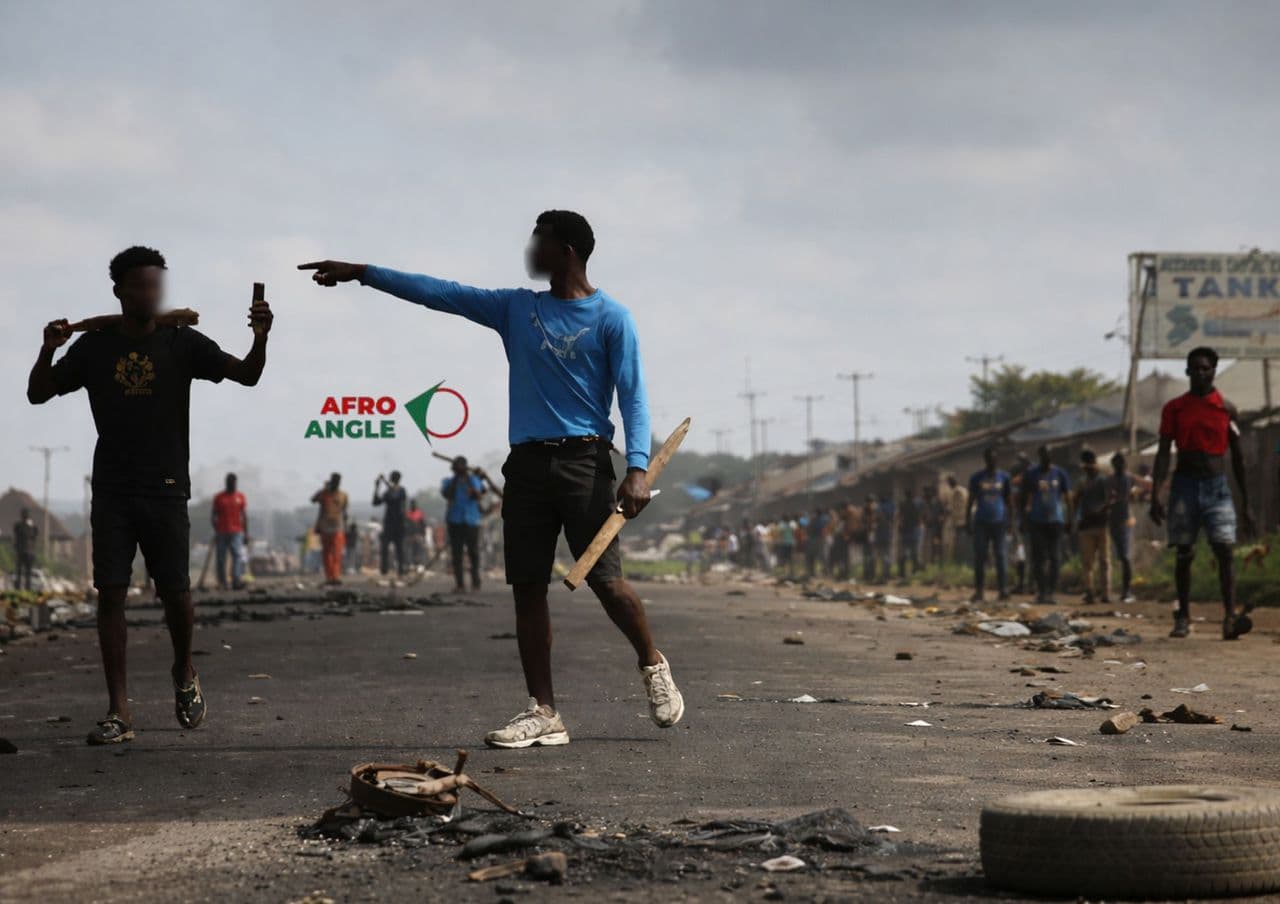
Thuggery, an act of violence and disorder, has become a way of life for many residents in Lagos. It is a Lagos city performance that has become integral to the socialisation of residents either through learned bullying, instigation of violence, or self-protection from people exhibiting such acts. In Lagos, you are either a JJC (a newbie) or you are a suegbe (not smart enough) when you become vulnerable or suffer from the calamity of violence caused by miscreants, louts, and cultists. In a way, the need for self-protection has turned thuggery into a weapon of survival either by inflicting harm on people or escaping being harmed through rehearsed acts that make violent actors scared.
This is not to argue that everyone in Lagos is a thug, or that violence is the only language Lagosians understand. Rather, it is to say that the logic of intimidation; “act tough so you are not treated as prey” has moved from the margins into many everyday interactions. Some people adopt it as a posture. Others are forced into it out of the need for defence thereby making Lagos the city where the existential pressure to “not look weak” now shapes how people speak, walk, negotiate, and even relate with strangers. Many residents have now been conditioned to think it is a good approach to deter bullies and to show off their capacity to speak in aggressive terms of physical violence. But this only underscores how a society gradually trains itself to accept roughness as intelligence, and intimidation as competence.
Small Arms as Accelerants
Where violence persists, weapons follow. Scholars have consistently found that the presence of small arms and light weapons intensifies and sustains urban insecurity. A 2023 Organised Crime: West African Response to Trafficking (OCWAR–T) report stated that arms trafficking and proliferation are both enablers of insecurity in urban centers like Lagos and are driven by heightened instability.
While formal definitions of small arms often focus on firearms and military-grade weapons, the ECOWAS Convention on Small Arms and Light Weapons (SALWs) broadly encompasses ammunition and any related materials capable of inciting violence and causing harm. By this definition, the knives and locally manufactured weapons that are most prevalent and easily accessible in Lagos qualify fully. Opeoluwa Oluyemi, a senior lecturer in Political Science and International Relations at Achievers University, Ondo State, confirmed that gangs procure their illicit arms through local blacksmiths and a range of other sources. In other words, the tools of serious violence are not remote from daily life. They are embedded in the same city economy that many depend on.
Lagos, thuggery, and small arms form a social reality that has traumatized many of its residents. While some might argue that being a Lagosian at any given time is handy when it comes to security awareness and preventing an unforeseen calamity elsewhere, they fail to highlight that it is a direct symptom of sustained social trauma that indirectly affects social interactions tinged with verbal and physical violence.
The Making of Thuggery
Growing up in Lagos exposes many residents to the realities of violence and insecurity. On X (formerly Twitter), a user named Sasha (@Bighantyy), shared a thread listing what she described as the ten most dangerous places to live in Lagos.
Another user, @ThatBlaqBoi, recounted his childhood in Mushin, where he became familiar with the shapes of bullets, different types of ammunition, and sounds of firearms used by cult groups and gangs.
Similarly, @johnpau10018058 reflected on the importance of raising street-smart children, noting how his own naivety and gullibility left him vulnerable while growing up.
These accounts highlight the challenges of raising children in violence-prone environments, where constant exposure to crime can shape their perceptions, life choices and potentially lead them toward harmful pathways.
Despite the government’s welfarist agenda focusing on free and accessible education for all, the theatre of learning in Lagos sometimes serves as an incubating arena for thuggish behaviour in children. The school environment designed to facilitate exchange among students from various backgrounds is vulnerable to the influence of violence external to the school premise. In other words, the society’s failing in protecting children through constant exposure to violence trickles down to how they engage with each other in school. This is why the opinion of Lagosians like John Paul is important in understanding the social dynamics of growing up in Lagos and the influence children have on each other.
In 2022, the Guardian News reported disturbing clashes among secondary school students from one school attacking other schools. An example was cited of pupils of a particular school that went to Ansar-ud-deen High School, Falolu, Surulere to unleash terror on the students. Some eyewitnesses said the attack was unprovoked, as no tangible reason was adduced to have warranted it. Yet stones, dangerous items, and other weapons were freely deployed while the fight lasted.
These violent activities lay the foundation that sharpens young people’s becoming and transform them into social and everyday terror when they grow older. This act of thuggery that may be justified as that of self-defense can embolden some youths to seek survival through menace.
The lesson acquired from inflicting violence on people could then morph into an obsession to assert dominance, even if it means going as far as possessing the most dangerous weapons. This is the way thuggery may be institutionalised to become an incubation of violence that orders the social fabric of Lagos State.
The Price of Peace in Lagos State
These experiences and references do not uniquely mean violence is endemic to Lagos. It simply emphasises the normalisation of thuggery to a point of concern. The journey often begins with small humiliations and everyday bullying, where “acting tough” is the price of peace. It then evolves into group rivalries and youth clashes, where violence becomes performance and pride. It can then mature into street authority “egbon adugbo” where intimidation becomes an occupation.
Finally, it becomes lethal when small arms and other weapons circulate widely, and when some violent actors enjoy political protection. At that stage, the cost is not only bruises. It is blood, trauma, and the making of a city that trains its people to anticipate danger. If Lagos must maintain its status as the nerve center of Nigeria’s economic life, it must also become a place where survival does not require thuggery, and where street smart does not equate to a propensity for violence.
Muaz Akanni Abdulganiyu
Muaz is a defense and security specialist, conflict analyst, and peace advocate. He holds a First-Class degree in French from Lagos State University, Nigeria, and a Master's degree in International Affairs and Diplomacy with specialization in Defense and Security Studies (Distinction) from Ahmadu Bello University, Zaria.
comments
Olaide
32w
Eko!Eko-ile….well written piece. As someone who is born and brought up in Lagos,I’d say you hit the nail on the head. Nevertheless,Lagos brought/bring up smart people. Allahuma barrik,Akanni!👍🏻😊
Abdulkareem
32w
This is a thoughtful and well written piece. I appreciate how you went beyond surface level narratives and examined the psychological impact of insecurity in Lagos, especially the pressure many people feel to not look weak. As someone who also lives in Lagos, I can relate to that constant awareness and the need to stay alert. You captured that reality without reducing the city to stereotypes, and that balance is important. Thank you for shedding light on this perspective.
Faith
33w
You've said it all. Almost everyone in lagos is aggressive. Even the aged people aren't exempted. People get triggered for reasons only God knows about. It is well.
Sadiq
33w
It really is funny how the majority of the 'thugs', do so for the sake of 'protection' or to be 'seen' without putting into consideration the longterm effect and consequences of that decision
Ayomide
33w
Profoundly expressed. Lagos State is experiencing growth, yes but real development is not just investment and infrastructure. It is everyday security of its people.