
Horse Riding, Fashion, and Homecoming Moments at the Heart of Ojude Oba Festival
by
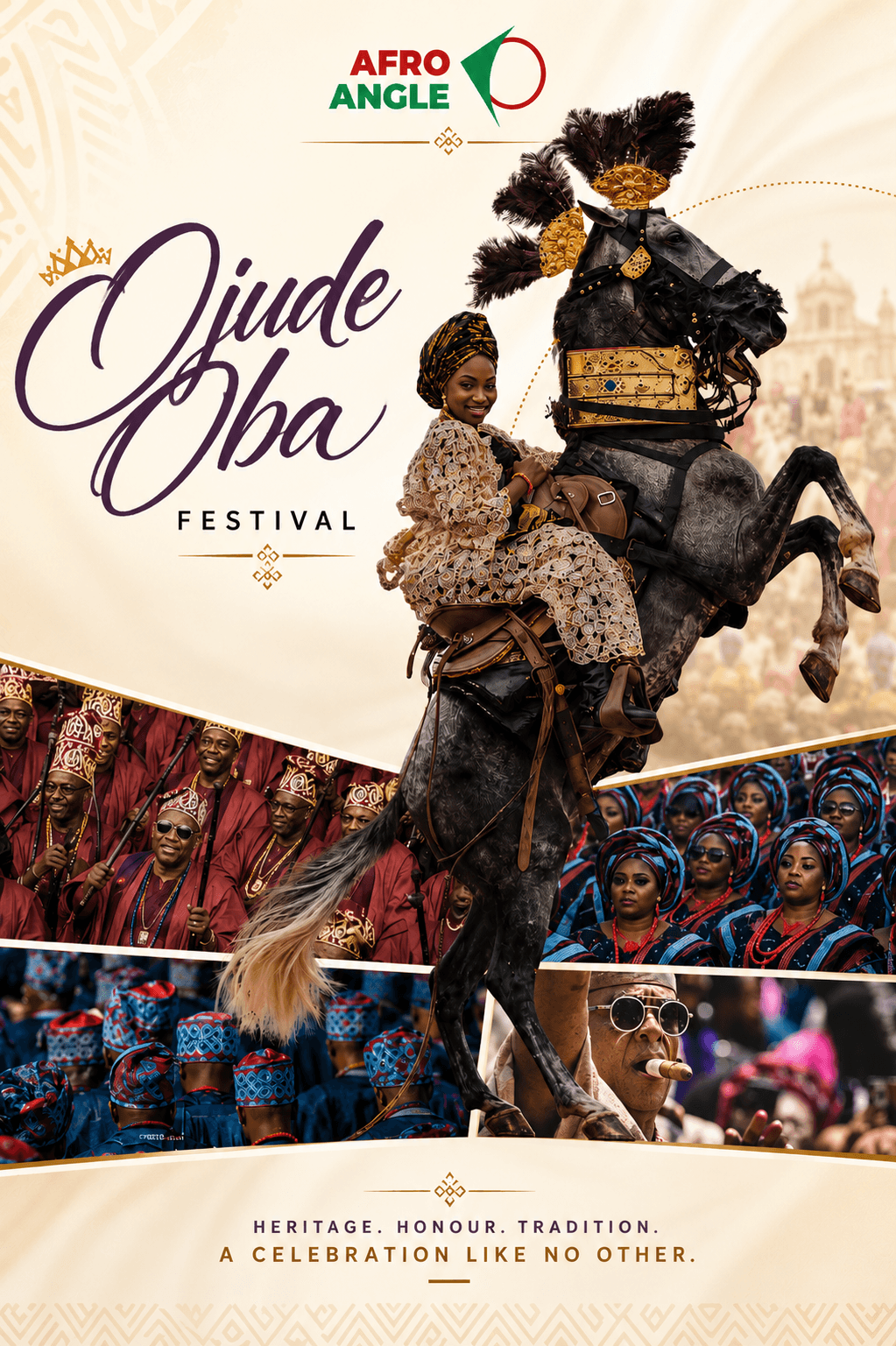
Every year during the Ojude Oba Festival, the rhythmic galloping of horses, the shimmer of embroidered regalia, and the display of mounted riders transform the ancient town of Ijebu-Ode into a living theatre of culture, fashion, prestige, and history. While the Ojude Oba festival is widely celebrated for its colorful parades, regberegbe age-grade groups’ uniformity, and royal homage to the Awujale of Ijebuland, its equestrian tradition remains one of the festival’s deepest cultural symbols and most enduring spectacles.
The historical roots of the festival itself are linked to Balógun Kúkù, one of the most influential Muslim converts in nineteenth-century Ijebuland. Historical accounts trace the origins of Ojude Oba to the late 1800s after Balogun Kuku converted to Islam and led fellow Muslim converts to pay homage to the Awujale of Ijebuland in appreciation for allowing them practice their religion freely. At the time, this annual visit to the palace served as a replacement to the Odeda festival that honoured indigenous deities. Also, it was primarily religious and political rather than cultural spectacle. The procession symbolized loyalty to the monarchy and the peaceful accommodation of Islam within Ijebu society. Over time, however, the event evolved beyond its Islamic roots into a broader celebration of Ijebu identity itself.
The significance of Balogun Kuku’s role cannot be overstated because he represented more than a religious figure; he belonged to one of Ijebuland’s powerful aristocratic and military families. The title “Balogun” historically referred to war leaders within Yoruba political systems. In precolonial Ijebuland, horses were associated with military mobility, nobility, and elite authority. While Yoruba warfare did not depend on cavalry systems as extensively as some Northern Nigeria kingdoms, mounted riders still symbolize status and power within aristocratic circles. Thus, the horse procession that gradually became central to Ojude Oba reflected older traditions of military prestige and hereditary leadership.
Historically, the palace procession linked to Balogun Kuku’s conversion was organized around the Islamic calendar and held shortly after Eid-el-Kabir, locally known as Ileya. Over time, the celebration became fixed around the third day after Ileya, a timing that remains central to the festival’s structure today. This scheduling was significant because it allowed Muslim faithful who had completed the Eid celebrations to gather collectively and pay homage to the Awujale. The procession to the palace was therefore not a random spectacle but a carefully timed act of communal loyalty, religious gratitude, and aristocratic visibility. Even as Ojude Oba evolved into a globally recognized cultural festival, its timing still reflects these Islamic and historical roots tied to Balogun Kuku’s original homage procession.
The Regberegbe System and the Transformation of the Festival
The most significant structural shift in Ojude Oba occurred in the twentieth century with the formal incorporation of the regberegbe age-grade system. The regberegbe groups brought men and women together by age and social standing. Over time, they changed the procession. What was once an aristocratic homage became a mass civic celebration of Ijebu identity. This expansion is widely associated with developments during the reign of the late Awujale, Sikiru Kayode Adetona, whose long reign (1960–2025) provided institutional stability and cultural visibility that allowed the festival to evolve into its modern form.
Under his reign, the regberegbe system became a structured part of the festival, introducing competitive displays of fashion, choreography, music, and social prestige. This was also the point at which Ojude Oba moved decisively beyond a palace-centric ritual into a broader civic performance involving diaspora participation, local elites, and youth organisations. The regberegbe did not simply join the procession, they redefined its scale and meaning, turning it into a collective cultural performance rather than a restricted aristocratic rite.
This transformation also coincided with Nigeria’s post-independence urbanization and migration patterns. As Ijebu sons and daughters relocated to Lagos, Abuja, Europe, and North America, the festival increasingly became a transnational reunion space. The diaspora collective played a crucial role in amplifying the festival’s visibility, financing participation, and extending its cultural reach beyond Nigeria. This global connection laid the groundwork for Ojude Oba’s eventual digital and international circulation.
Horse Culture, Fashion, and the Performance of Ijebu Prestige
While the equestrian display remains the most visually dominant feature of Ojude Oba, it should not be understood in isolation. Horses function as part of a broader Ijebu aesthetic system that includes fashion, regalia, performance, and public self-presentation. The riders, often from elite or historically significant families, present themselves in meticulously tailored agbadas, embroidered aso-oke, coral beads, walking sticks, and coordinated family attire. The horse, therefore, amplifies a wider cultural logic of panache, elegance, and status display.
In this sense, the festival is as much about fashion as it is about horsemanship. The visual identity of Ojude Oba is constructed through the fusion of human attire and animal ornamentation. Horses are decorated with fabrics, bells, and symbolic embellishments that mirror the riders’ clothing, creating a unified aesthetic of aristocratic performance. This reinforces the idea that prestige in Ijebu culture is not only inherited but also publicly performed through visual coherence and spectacle.
This broader cultural framing is important because it explains why Ojude Oba has remained adaptable. The festival is not simply preserving an ancient horse tradition; it is continuously reinventing a visual language of identity that merges fashion, lineage, and performance into a single cultural expression.
Importantly, participation in the equestrian procession remains closely tied to economic status. Maintaining horses in modern Nigeria is extremely expensive due to feeding costs, transportation, veterinary care, and training requirements. As a result, the parade continues to reinforce older aristocratic and elite structures within Ijebu society. Families that participate regularly often treat the procession as both cultural duty and public affirmation of lineage identity.
Yet younger generations are increasingly reshaping what participation looks like. While older riders often emphasize tradition and family history, younger participants blend cultural heritage with modern fashion culture and digital visibility. This generational shift has become particularly visible in recent years as younger diaspora riders return to participate in the festival.
Digital Virality and the Rebranding of Tradition
A major turning point in the modern evolution of Ojude Oba came in 2023 when Niyi Fagbemi, a cinematographer released a stylized video of the festival set to Lagbaja’s Konko below. The video, which blended slow-motion horse processions, rhythmic drumming, and fashion-forward visuals, went viral across digital platforms. It reframed Ojude Oba for younger audiences as not just a traditional festival but a cinematic cultural experience.
The following edition of the festival marked another shift in perception, driven largely by the unexpected virality of Farooq Oreagba’s appearance. His horseback procession, characterized by bold tattoos, sunglasses, and carefully curated Yoruba attire, circulated widely across Instagram, TikTok, and X. Oreagba became an emblem of a new kind of cultural expression: one that merges global elite identity, intellectual cum professional acumen, Yoruba heritage, and contemporary visual aesthetics. His image contributed significantly to repositioning Ojude Oba as both heritage and lifestyle spectacle.
By 2024 and 2025, this digital amplification had tangible effects. A noticeable rise in younger horse riders, particularly from diaspora communities, began to shape the festival’s visual composition. Participation was no longer limited to inherited aristocratic families; it increasingly attracted globally exposed, fashion-conscious individuals who viewed the festival as both a cultural homecoming and a performance of identity. Nigerian celebrities also became more visibly connected to the celebration. Artists such as Lil Kesh returned to participate in the festivities, while conversations around the festival gained even wider pop-cultural relevance after Wizkid publicly expressed interest in joining the horseback procession following the viral popularity of Farooq Oreagba’s appearance. Social media therefore became a major driver of Ojude Oba’s globalization, accelerating a cultural momentum that diaspora engagement had already helped build over several decades.
A Festival at a Turning Point
Ojude Oba stands at a historical crossroads. The death of the Awujale in 2025 has left the stool temporarily unoccupied, raising questions about continuity, authority, and the symbolic structure that has long anchored the festival. Without the traditional royal figure at its centre, how will the procession redefine its meaning? Will regberegbe groups, diaspora communities, and elite families maintain the same level of cohesion and investment in the absence of a reigning monarch?
There are also broader uncertainties. Nigeria’s current economic pressures may affect the scale of participation, particularly given the high cost of horse maintenance, fashion production, and event logistics. At the same time, global attention and digital virality continue to expand, suggesting that the festival’s international profile may grow even if local conditions become more constrained.
This raises a final question: as Ojude Oba enters a new era without its longstanding royal anchor, will its equestrian and fashion spectacle deepen as a global cultural brand or will it fragment under the weight of economic and institutional transition?
Abdulkabeer Tijani
Abdulkabeer Tijani is a Nigerian freelance journalist and visual storyteller with expertise on Nigeria’s media landscape. He has written for leading international media outlets including Al Jazeera, Minority Africa, International Journalists Network, The Continent, University World News and The Republic.
comments
No comments yet