
What is Ojude Oba Without an Awujale?
by
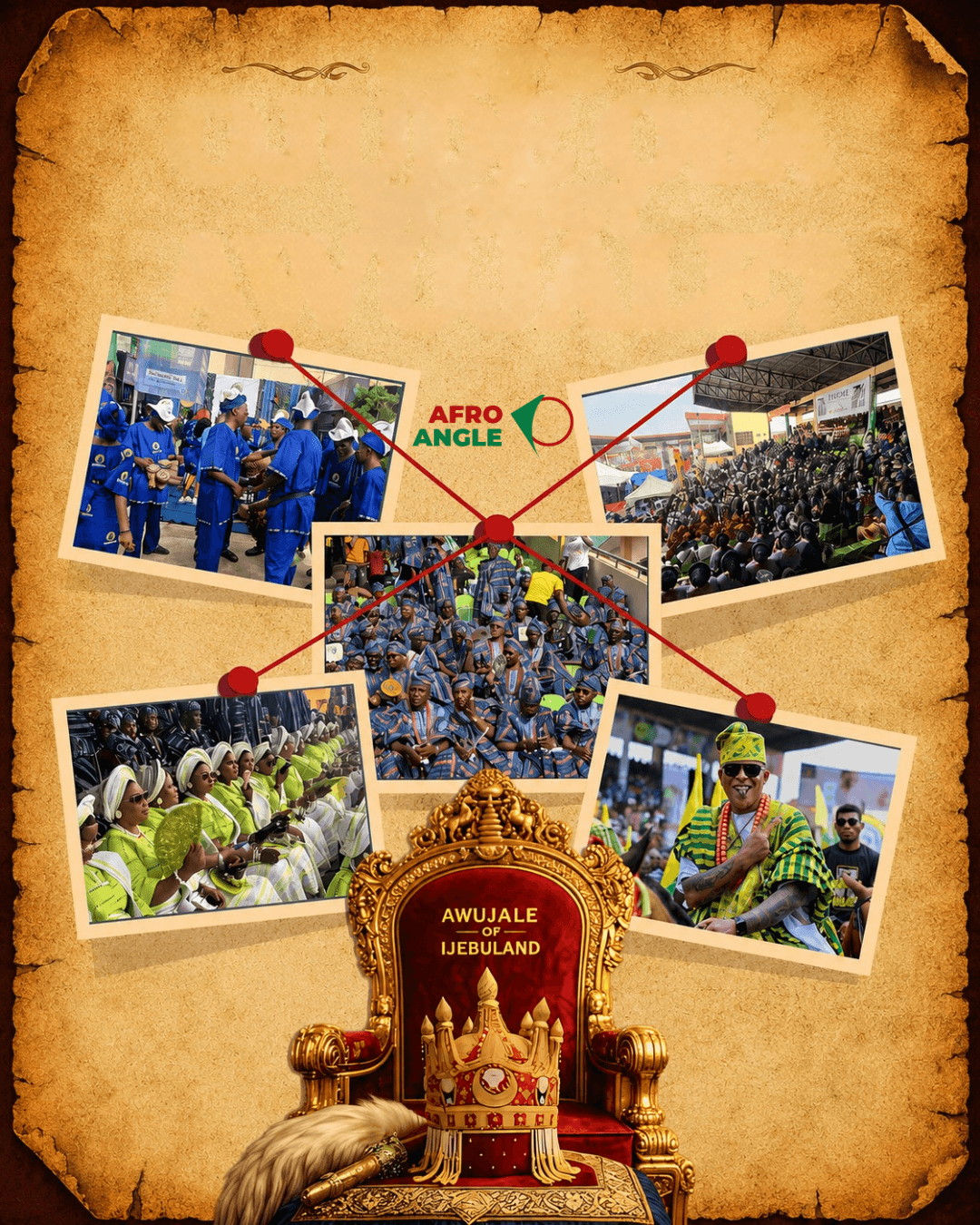
The 2026 edition of the Ojude Oba festival presents one of the most significant moments in the contemporary history of Ijebuland. For well over a century, the festival has been understood as an act of homage to the Awujale of Ijebuland, a public reaffirmation of loyalty between the people and their monarch. Yet the 2026 celebration took place under extraordinary circumstances. Following the demise of Oba Sikiru Kayode Adetona, the Awujale of Ijebuland, in July 2025 after a reign spanning more than six decades, the festival was held during a period in which the throne was effectively in transition. The event remained largely intact: the regberegbe age-grade groups arrived in coordinated attire, horse-riding families paraded through the festival’s premises, and thousands of attendees gathered from across Nigeria and the diaspora. Nevertheless, the absence of a reigning Awujale raised a profound historical and cultural question: can a festival whose very identity is tied to the institution of kingship retain its meaning when the king himself is absent?
Ojude Oba as a Ritual of Royal Homage
To address this subject, it is necessary to return to the historical origins of Ojude Oba. Contrary to contemporary perceptions of the festival as a celebration of fashion, tourism, and social prestige, Ojude Oba emerged from a specific political and religious context in nineteenth-century Ijebuland. Historical accounts trace its origin to the reign of Awujale Ademuyewo Afidipotemole, when Balogun Kuku, one of the most influential figures in Ijebu history, converted to Islam alongside a growing community of Muslim adherents. Following their conversion, these Muslims sought permission to gather annually after Eid prayers to pay homage to the Awujale. The monarch granted this request, and what began as a simple gesture of gratitude and loyalty gradually evolved into an organized public ceremony. The very name “Ojude Oba” literally translated as “the king’s forecourt” underscores the centrality of the monarch to the event. The festival was not originally conceived as a cultural exhibition; it was fundamentally a ritual of allegiance performed before the king.
The Awujale and the Architecture of Ijebu Identity
This historical context is crucial because it reveals that the Awujale is not merely a ceremonial participant in Ojude Oba but the symbolic centre around which the festival was built. In traditional Yoruba political thought, kingship extends beyond governance. The oba serves as a custodian of history, culture, communal identity, and spiritual continuity. Among the Ijebu, the Awujale occupies an especially significant position because of the historical prominence of Ijebu-Ode as a political and commercial centre. The institution survived colonial rule, political restructuring, and modernization because it provided a sense of continuity amid social change. Consequently, the annual gathering before the Awujale came to symbolize not merely respect for a ruler but the collective reaffirmation of what it means to belong to the Ijebu community.
The significance of the Awujale became even more pronounced during the reign of Oba Sikiru Kayode Adetona, who ascended the throne in 1960 and became one of Nigeria’s longest-serving traditional rulers. His reign coincided with Nigeria’s postcolonial transformation, and he played a pivotal role in redefining both the monarchy and Ojude Oba for a modern age. Under Adetona, the festival expanded from a largely regional celebration into a globally recognized cultural event. The incorporation of regberegbe groups, the growing participation of corporate sponsors, the involvement of the Ijebu diaspora, and the increasing media attention transformed the festival into one of the most visible expressions of Yoruba cultural identity. Yet even as the festival expanded, the Awujale remained its focal point. Every procession ultimately converged on the monarch. Every display of wealth, fashion, horsemanship, and communal pride was performed before the throne. The festival’s modernization therefore did not diminish the importance of the king; rather, it elevated his symbolic significance.
The 2026 Festival and the Question of Historical Continuity
This edition represents an unusual departure from established practice rather than a new norm according to available historical evidence. While periods of succession disputes and interregnums have occurred throughout the history of the Awujale institution, there is little evidence that the modern festival developed as a tradition detached from the monarchy. For generations, the presence of the Awujale served as the ritual culmination of the event. The absence of a reigning monarch therefore creates a symbolic vacuum that cannot be entirely filled by administrative continuity or ceremonial substitutes. To hold Ojude Oba without an Awujale may be practically possible, but it raises questions about whether the festival risks becoming disconnected from the institution that gives it historical legitimacy.
This does not mean that the 2026 festival lacked significance. On the contrary, it demonstrated the remarkable resilience of Ijebu cultural institutions. The ability of the community to sustain the festival during a period of transition reflects the strength of the social networks, age-grade associations, and communal traditions that have developed around it over generations. Yet resilience should not be confused with permanence. If future editions were to proceed routinely without a substantive relationship to the Awujale institution, the festival could gradually shift from being a ritual of communal memory to a spectacle of cultural consumption. Such a transformation would not necessarily diminish its popularity, but it would alter its meaning.
Tradition Beyond the Throne: Preserving the Meaning of Ojude Oba
The broader implication extends beyond Ojude Oba itself. Across Africa, traditional institutions continue to negotiate their place within rapidly changing societies. Festivals often survive because they adapt to contemporary realities, but they also survive because they preserve a connection to the historical structures that produced them. Ojude Oba’s enduring appeal lies precisely in its ability to balance continuity and change. It remains a celebration of fashion, commerce, diaspora identity, and cultural pride because it is anchored in a deeper history of kingship and communal belonging.
Ultimately, the 2026 festival should be understood not as evidence that Ojude Oba no longer needs an Awujale, but as a reminder of why the institution of the Awujale remains important. The festival’s success during a period of transition demonstrates the strength of Ijebu culture; however, its long-term significance depends upon preserving the relationship between the people and the throne that gave birth to it. Ojude Oba is not merely a festival held in front of a palace. It is a historical conversation between a community and its monarch, renewed annually across generations. To separate the festival entirely from that relationship would be to transform its character fundamentally. The challenge for Ijebuland in the years ahead is therefore not simply to preserve Ojude Oba, but to preserve the historical meaning that has made it one of Africa’s most remarkable cultural institutions.
Abdulkabeer Tijani
Abdulkabeer Tijani is a Nigerian freelance journalist and visual storyteller with expertise on Nigeria’s media landscape. He has written for leading international media outlets including Al Jazeera, Minority Africa, International Journalists Network, The Continent, University World News and The Republic.
comments
Aregbesola Favour Moyosore
19w
This is very insightful and thought-provoking. I was quite familiar with the Ojude-Ade festival, but I never knew of it's historical origin. I especially appreciate how you were able to properly communicate your concerns on the need to preserve the historical meaning that has made it one of Africa’s most remarkable cultural institutions, and still recognize the remarkable resilience of the Ijebus displayed through their ability to sustain the festival during a period of transition.