
HOW ANGRY IS TOO ANGRY FOR DEMOCRATIC POLITICS IN AFRICA?
by
Listen to this article
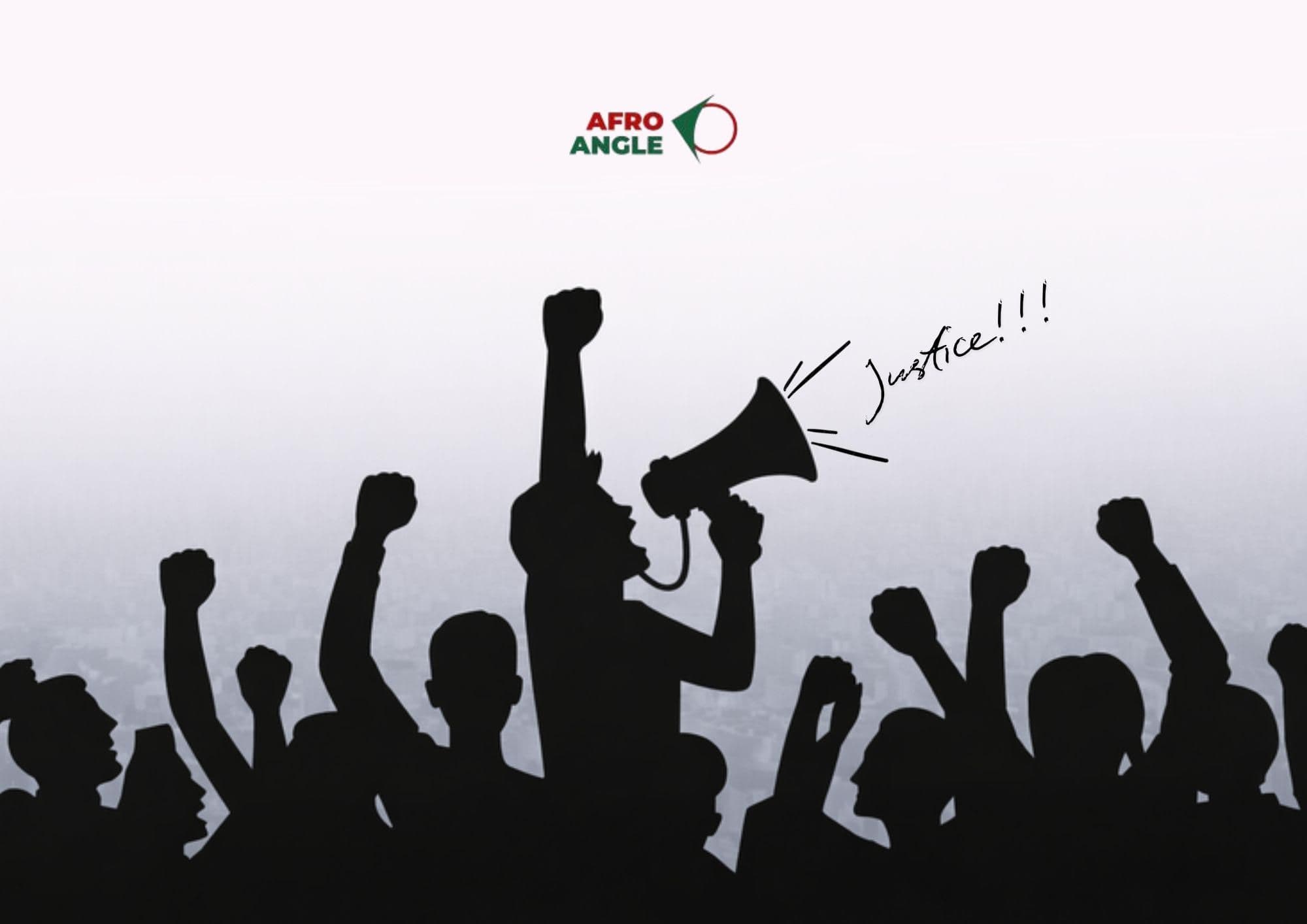
At what point does public anger cease to be a democratic expression and begin to be seen as a threat to the state? Across Africa today, that line is being drawn faster and more aggressively than ever before. Anger now fills streets during protests, animates election campaigns, dominates digital platforms, and increasingly shapes how citizens relate to power. From demonstrations against police brutality and the rising cost of living to viral political outrage online, anger has become a defining feature of political engagement. Yet African political systems remain deeply uneasy with it.
The same anger that once fuelled liberation struggles is now routinely framed as a danger to stability, order and democracy itself. This tension between anger as participation and anger as threat presents one difficult but unavoidable question: how angry is too angry for democracy?
To ask this question seriously requires one to give up a convenient assumption that anger is inherently irrational and anti-democratic. Historically, anger has been one of the most productive political emotions. Anti-colonial struggles across Africa were not driven by polite disagreement but by moral outrage at exploitation, exclusion, and political violence. Anger named injustice when existing institutions refused to recognise it. It is, therefore, a democratic signal that arises when formal mechanisms of representation fail to absorb social grievances.
This has long been recognised by political theorists. Anger is not simply an emotion; it is a judgment that expresses a perception that something is wrong and that responsibility lies somewhere. When citizens are angry, it does not mean that they are withdrawing from politics, instead, they are demanding to be included within it. To dismiss anger as disorder is therefore to misunderstand democracy itself, which is not built on consensus alone but on conflict, contestation and disagreement.
Is Anger a Threat to Democracy?
Contemporary African states increasingly frame public anger as a threat rather than a form of participation. Protest often becomes chaos, digital outrage becomes misinformation or foreign manipulation, and youth anger becomes impulsive noise rather than political speech. Rarely do governments claim that they are against justice or accountability; they instead categorise opposition as ‘violence’, ‘hatred’, or ‘instability’ to shift the debate from political grievance to the issue of public order. This is evident during and after Nigeria’s #EndSARS protests against police brutality.
While the movement clearly demanded for accountability and reform, political authorities quickly re-described the moment as a breakdown of law and order. As the Lagos State Governor, Babajide Sanwo-Olu, puts it in a statement:
“As a government, we will never encourage thuggery or any act of violence that may put the lives and businesses of Lagosians at risk. We are strongly committed to ensuring that our youths, who have taken to the streets to air their views, are well protected.”
On the surface, the language appears to be conciliatory and even protective. Discursively, however, it performs a subtle reclassification: protesters become ‘youths’ to be managed, anger becomes ‘thuggery’ to be contained, and political claims are displaced by security claims. Here, the issue is no longer police violence or state accountability but order maintenance and economic normalcy. The result is a narrative shift that legitimises repression while sidestepping the structural conditions that caused the anger in the first place.
In the same vein, youth anger against economic exclusion, political stagnation and repression in Uganda, especially around election periods, has been consistently framed by state officials as criminality or foreign-backed subversion. In a televised address during the #March2Parliament protests in 2024, President Yoweri Museveni warned citizens that they were ‘playing with fire,’ accused organisers of planning ‘illegal demonstrations, riots and implicitly cast their anger as a national security threat rather than a legitimate political claim.
This kind of language pre-emptively delegitimises dissent. It is very rare to see the state describe opposition mobilisation as a legitimate political expression. Instead, it is portrayed as chaos waiting to happen. The lexical choices the state employs turn political emotion into justification for surveillance, arrests, and restrictions on civic space.
In Senegal, a country long considered a relatively stable democracy, authorities have likewise expanded the definition of threat in response to protests. For instance, when the government banned access to TikTok and restricted mobile internet during periods of unrest caused by dissolving the main opposition party and holding its leader in detention in 2023, the minister of communication, Moussa Bocar Thiam, justified these moves by claiming the app was ‘favoured by people with bad intentions to spread hateful and subversive messages,’ framing digital mobilisation as a kind of dangerous misinformation rather than political communication.
Once again, the issue is not whether anger is justified, but whether it is allowed to exist as a political expression at all. Both Uganda and Senegal shift the narrative from structural frustration to security risk by situating public anger within a lexicon of threat—whether “fire,” “hateful messages,” or “subversion.” This, thereby, normalises repressive responses and avoids substantive engagement with the socio-political grievances that fuelled the anger in the first place.
These cases highlight an important point! African states do not fear anger per se; what they fear is losing control over the narrative that legitimises power. Anger becomes dangerous and threatening when it escapes the scripts the government uses to account for inequality, failure, and exclusion. Once citizens begin to name problems in their own terms: ‘corruption,’ ‘police violence,’ ‘elite impunity,’ and ‘broken promises,’ the state’s carefully managed language of development, reform, and national unity begins to break down. Digital media has escalated this struggle.
Social media platforms allow anger to circulate quickly, horizontally, and beyond official mediation. Hashtags, videos, memes, and live streams circumvent the traditional gatekeepers and eliminate the distance between personal grievance and public accusation. While this has expanded democratic voice, it also unsettled governments since they are used to controlling the political tempo and tone. The response has often been reactive and mostly included arrests, internet blackouts, vague cybercrime laws, and appeals to so-called ‘responsible speech’.
Anger, however, is not politically innocent, and acknowledging its democratic value does not mean romanticising it. Anger can mobilise, but it can also exhaust. When it comes to political anger in Africa today, its strength is not matched by its longevity. The result is protest cycles that erupt powerfully and then dissipate. Online outrage that rises and falls within days. The emotional energy is real but weakly institutionalised.
If organisational infrastructure, leadership, and political demands are not well-articulated, anger is likely to become an end in itself rather than a means to political transformation. This is where the question of “too angry” becomes analytically useful. Anger becomes democratically risky not by loudness or disruption but by political intranslatability. When anger lacks organisation, leadership, and direction, it becomes democratically risky, as it is susceptible to manipulation by elites who seek to capitalise on it in ethnic or partisan hostility, populists who benefit from a permanent state of crisis, or states that criminalise it through repression.
In such cases, anger no longer puts pressure on power, but circulates through it. Governments learn to wait it out, rhetorically absorb it, or selectively repress it while maintaining an appearance of order. Citizens, in turn, become trapped in a cycle of outrage and disappointment, increasingly sceptical that participation can produce change. Democracy does not fail in such circumstances but becomes hollowed out. The irony is that many African governments themselves use democracy to justify their control of anger.
Stability is presented as a democratic value, and order becomes synonymous with legitimacy. The tone and timing of dissent determine whether or not it will be tolerated. But a democracy that cannot accommodate anger is not a democracy; it is a managerial governance with electoral rituals. Conflict does not disappear; it is only ‘relocated’ in its informal, unpredictable, and sometimes explosive forms.
So when is anger ‘too angry’ for democracy?
The answer is not a matter of volume or visibility. Anger becomes too much for democracy when political systems fail to engage it at meaningful levels by criminalising it, emptying it of meaning, or refusing to translate it into policy debate. At the same time, anger becomes counterproductive from a democratic perspective when it becomes completely detached from strategy, organisation and political imagination. Anger is necessary for democracy, but so are the pathways through which it can be translated into claims, demands, and accountability.
This leaves African democracies in a state of unresolved tension. While suppressing anger leads to authoritarian drift and deepens alienation, allowing it to circulate without political translation also risks instability, fragmentation, and fatigue. There is no neat resolution to this dilemma. What is clear, however, is that the future of democracy on the continent will depend less on managing elections than on managing political emotions, particularly anger. Anger is not the enemy of democracy. The refusal to listen to it is.
Baqau Hassan Omotayo
Baqau Hassan Omotayo (he/him) is a graduate of BRAC University, where he majored in Applied Linguistics and ELT. He has a strong passion for research and a deep curiosity about how language reflects and reinforces social structures. His research interests include discourse analysis, corpus linguistics, sociolinguistics, and computer-assisted language learning (CALL), with a particular focus on political and social media discourses as lenses for interrogating social issues and power relations. In his rare leisure moments, you'll likely find him watching or reading political speeches from around the world and contemplating the intricacies of global affairs.
comments
Mudathir mahbub
32w
You're shoo-in, brother